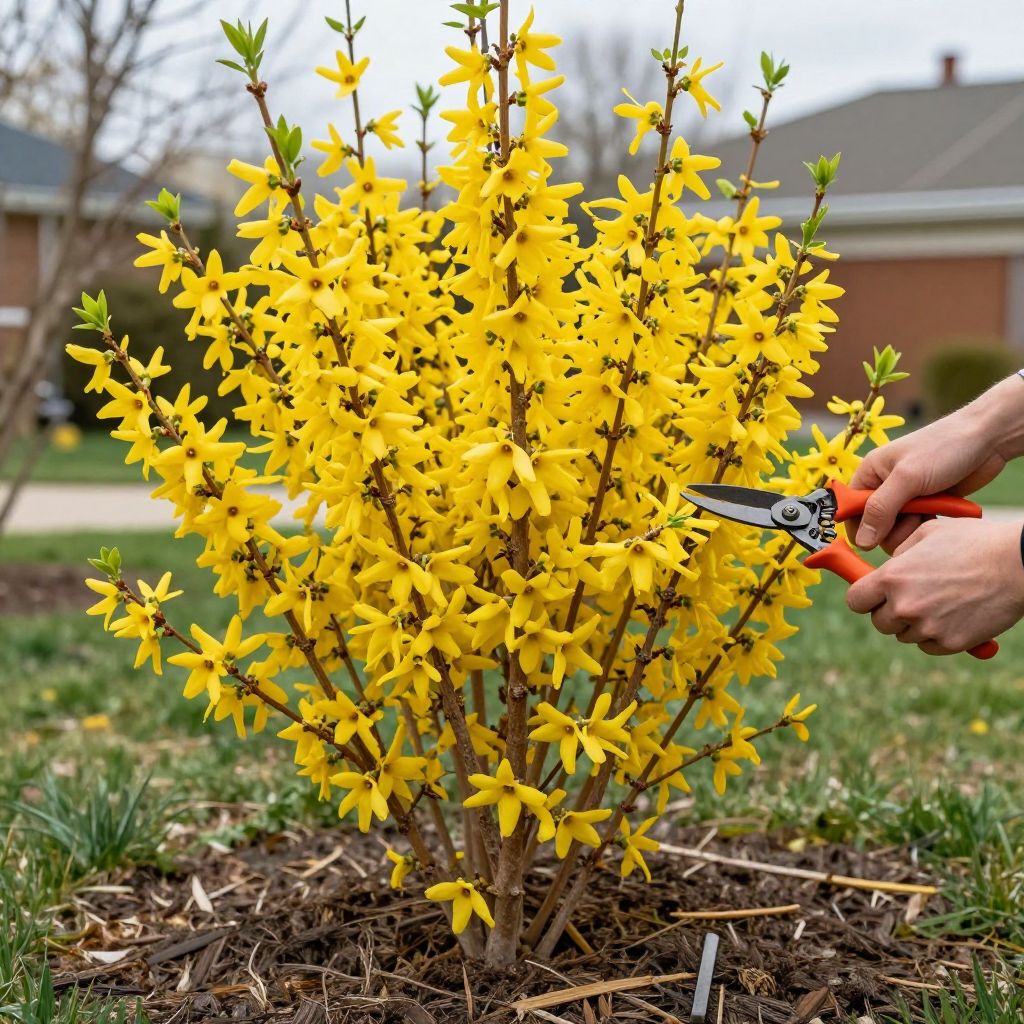
Wondering when to prune forsythia without losing next spring’s flowers? The timing matters because forsythia blooms on old wood, so pruning at the wrong time can remove the buds you want to enjoy.
The good news is that for most gardeners, the best time to prune forsythia is right after flowering in spring. That gives the shrub time to produce fresh growth and set flower buds for next year while keeping the plant healthy, shaped, and manageable.
When to prune forsythia?
Prune forsythia immediately after flowering, usually in late spring, once the blooms fade but before summer growth hardens off. Avoid heavy pruning in late summer, fall, or winter, because you may remove next year’s flower buds and end up with fewer blossoms.
Why timing matters for forsythia
Forsythia forms its flower buds on stems that grew the previous season. That means the branches you prune off in autumn or winter are often the same branches that would have flowered in spring.
If you prune at the right time, you can shape the shrub and encourage vigorous new stems without sacrificing bloom. If you prune at the wrong time, the plant may still grow well, but it can look leafy and sparse instead of covered in flowers.
Best pruning window by season
- Right after flowering: Best time for shaping and size control.
- Late spring to early summer: Still acceptable if you missed the first window, as long as you prune soon after bloom.
- Late summer, fall, winter: Not ideal, because flower buds for next spring are already forming.
How to prune forsythia the right way
Forsythia responds well to pruning, but it looks best when you avoid shearing it into a tight ball or hedge unless that is the style you want. A natural, open shape usually gives better flowering and healthier growth.
- Start with dead, damaged, or crossing stems. Remove them at the base or back to a healthy side branch.
- Thin out older canes. Cut some of the oldest, thickest stems to the ground to open the shrub and stimulate new growth.
- Shorten long, arching shoots if needed. Make cuts just above an outward-facing bud or side branch.
- Step back and check the shape. Aim for a balanced, airy shrub rather than a flat, clipped outline.
For routine maintenance, removing about one-third of the oldest stems each year is often enough to keep the plant vigorous without overdoing it.
Tools that make the job easier
- Hand pruners for stems up to about 1/2 inch thick
- Loppers for thicker canes
- A pruning saw for very old, woody stems
- Gloves and eye protection, especially on dense shrubs
How hard can you prune forsythia?
Forsythia can handle fairly hard pruning, especially if the shrub has become overgrown or tangled. If it is large and messy, you can rejuvenate it by cutting the oldest stems to the ground over 2 to 3 years, or by cutting the entire shrub back very hard after bloom if you accept a temporary loss of shape and possibly reduced flowering for a season.
For most home gardens, gradual renewal pruning is safer and more attractive than severe cutting all at once. That approach keeps some flowers each year while replacing older wood with younger, more productive stems.
When rejuvenation pruning makes sense
- The shrub is too large for its space
- Flowering has declined because the plant is crowded with old wood
- Branches are crossing, weak, or tangled
- You want to restore a neglected hedge or foundation planting
Common mistakes to avoid
Many forsythia problems come from pruning at the wrong time or using the wrong technique. A few simple adjustments can preserve flowers and keep the shrub looking natural.
- Do not prune in winter if you want spring blooms.
- Avoid shearing repeatedly into a tight shape. This often creates a dense outer shell with few flowers inside.
- Do not remove all old stems at once unless you are prepared for a temporary reset.
- Do not leave stubs. Cut cleanly to a branch junction or near the base.
- Do not ignore the shrub after bloom. Waiting until later in the season makes it harder to preserve next year’s buds.
What if your forsythia is overgrown?
If your forsythia has become a tangle of tall canes with flowers only at the tips, it probably needs renewal pruning rather than a light trim. The goal is to bring light and air back into the shrub and encourage younger stems from the base.
Simple renewal plan
- After flowering, remove 1/3 of the oldest stems at ground level.
- Next year, repeat with another 1/3 of the oldest stems.
- In the third year, remove the remaining oldest stems if needed.
This staggered method helps you avoid a bare-looking shrub while steadily improving bloom and structure.
How pruning fits with overall forsythia care
Forsythia is generally easy to grow in full sun and well-drained soil. Good growing conditions help the plant recover quickly after pruning and produce stronger flowering wood for the following year.
Helpful growing conditions
- Sunlight: Best flowering usually comes in full sun, though light shade is often tolerated.
- Soil: Average garden soil is usually fine if drainage is decent.
- Watering: Water new plantings regularly until established; mature shrubs usually need less frequent watering unless conditions are very dry.
- Mulch: A 2- to 3-inch layer helps conserve moisture and reduce weeds, but keep mulch away from the stems.
If your shrub is flowering poorly even when pruned correctly, check for too much shade, crowded roots, or very old wood that needs renewal. Poor light is one of the most common reasons for weak bloom.
Can you prune forsythia after it blooms in spring?
Yes, and that is usually the best approach. Once the flowers fade, you can shape the shrub, remove dead wood, and thin out older stems without sacrificing next year’s bloom cycle.
If you wait until midsummer, the shrub may still survive the pruning just fine, but you are more likely to remove developing flower buds. The earlier after bloom you prune, the better.
Signs your pruning was done at the right time
After proper pruning, forsythia should respond with healthy new shoots during the growing season and a strong bloom the following spring. You may also notice better light penetration and fewer tangled stems.
- New growth appears from the base and along older stems
- The shrub looks more open and balanced
- Flowering improves on younger wood next season
- The plant stays within its space more easily
Quick pruning checklist
- Wait until the flowers fade
- Remove dead, damaged, and crossing stems first
- Thin out some of the oldest canes at the base
- Shape lightly rather than shearing hard
- Never prune late in the season if bloom is your priority
Conclusion
If you remember one thing about when to prune forsythia, make it this: prune right after flowering. That timing protects next year’s buds, keeps the shrub vigorous, and helps you maintain a neat shape without losing the spring display. Grab your pruners after bloom, remove a few old canes, and let the plant rebuild for next season.
If you are planning more shrub care, you may also find these guides useful: when to prune azaleas and when to prune hibiscus.