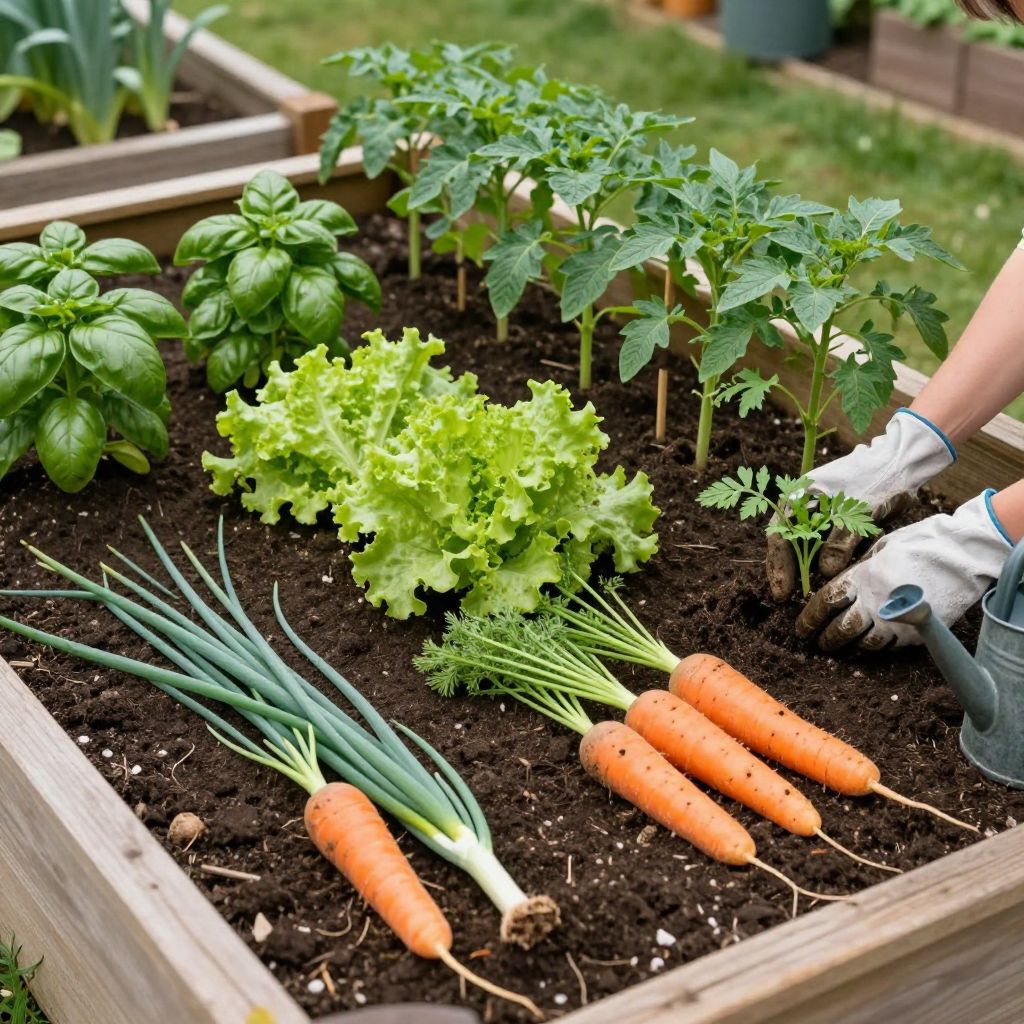
Wondering what vegetables can be planted together without crowding, competing, or causing problems later? The best combinations are plants that use space differently, need similar light and moisture, and don’t attract the same pests in the same way. Good companion planting can help you make better use of a bed, but spacing and airflow still matter most.
Below, you’ll find practical pairings, combinations to avoid, and simple planning tips so your vegetable garden grows more smoothly from planting to harvest.
What vegetables can be planted together?
Vegetables that can be planted together are crops with similar growing needs or complementary habits, such as shallow and deep roots, fast and slow growth, or upright and low-growing forms. Good examples include lettuce with carrots, beans with cucumbers, and radishes with slower crops like beets. The best pairings still need proper spacing, sun, and airflow.
How to choose good vegetable companions
Start by matching plants with similar needs for sunlight, soil moisture, and temperature. Then think about how each plant grows above and below the soil.
Look for these traits
- Similar sun needs: Most vegetables need full sun, but some leafy greens tolerate a little afternoon shade.
- Compatible watering needs: Don’t pair drought-tolerant crops with plants that need consistently moist soil unless you can manage separate watering.
- Different root depths: Shallow-rooted lettuce can grow near deeper-rooted carrots or tomatoes without as much competition.
- Different harvest times: Fast crops can be harvested before slower crops fill in the bed.
- Good airflow: Dense planting can invite mildew, blight, and aphids if the bed gets too crowded.
Important: Companion planting is not a substitute for spacing. If you plant too tightly, even “good companions” can struggle.
Best vegetable combinations for home gardens
1. Carrots and lettuce
Carrots grow downward while lettuce stays shallow and matures quickly. Lettuce can be harvested before carrots need the extra space, making this a useful pairing for raised beds and small gardens.
Tip: Thin carrots early so the roots develop properly, and keep the soil evenly moist for good germination.
2. Tomatoes and basil
Tomatoes and basil are often planted together because they share similar warmth and sun requirements. Basil stays relatively compact and can help fill the space around tomato plants without blocking much light.
Give tomatoes strong support with cages or stakes, and prune lower leaves as needed to improve airflow.
3. Beans and cucumbers
Both crops like warm weather, rich soil, and regular moisture. Pole beans can use vertical supports, while cucumbers can sprawl or climb a trellis, which helps keep fruit cleaner and saves space.
If you grow both vertically, make sure each plant has its own support so vines do not tangle too tightly.
4. Radishes and beets
Radishes mature quickly and can be harvested before beets need more room. This makes them a classic interplanting choice for gardeners who want to use the bed efficiently.
Beets prefer loose soil, so avoid compacting the bed when sowing or thinning radishes.
5. Corn, beans, and squash
This traditional combination works when the garden is large enough and the soil is fertile. Corn provides support for climbing beans, beans add nitrogen to the system over time, and squash shades the soil to help reduce weeds and moisture loss.
However, this trio needs plenty of space, full sun, and good soil fertility. It is not ideal for a small bed.
6. Onions and carrots
Onions and carrots are often planted together because they take up different space and can help confuse some pests. Carrots grow below ground while onions remain upright and narrow.
Keep the rows open enough for weeding and harvesting, since both crops can be slow to establish.
7. Peppers and leafy greens
Peppers grow upright and leave room at ground level for lettuce, spinach, or other quick greens early in the season. As the peppers grow larger, the greens can be harvested and removed.
This is especially useful in beds where you want several harvests from the same area.
Vegetables that should not be planted too close together
Some vegetables can share a garden bed, but not if they are packed tightly or have conflicting needs. Avoid placing heavy feeders, disease-prone crops, or aggressive spreaders too close together without a plan.
Common problem pairings
- Potatoes near tomatoes: Both are prone to similar diseases, including blight, so keeping them apart can reduce risk.
- Fennel near most vegetables: Fennel can inhibit the growth of many garden crops, so it is best grown separately.
- Large brassicas near small crops: Broccoli, cabbage, and cauliflower can shade out nearby plants as they mature.
- Plants with very different water needs: For example, drought-tolerant herbs and moisture-loving greens may not thrive together in the same watering zone.
Also avoid planting the same crop family in the same spot year after year. Tomatoes, peppers, and eggplants are all in the nightshade family, while cabbage, kale, and broccoli are brassicas. Rotating families helps reduce pests and soil-borne disease pressure.
How to plan a mixed vegetable bed
A mixed bed works best when you map out height, spacing, and harvest timing before planting. This helps you avoid shading, overcrowding, and wasted space.
- Pick one tall crop first such as tomatoes, trellised beans, or corn.
- Add medium-height crops that can share the bed without blocking light.
- Fill gaps with quick crops like lettuce, radishes, or spinach.
- Leave room for airflow around plants that are prone to mildew or blight.
- Group by water needs so you do not overwater one crop or underwater another.
Raised beds and containers
In raised beds, companion planting works well because the soil is easy to improve and the layout is easier to control. In containers, keep combinations simple and avoid mixing too many large crops in one pot.
A tomato plant, for example, may share a large container with basil or lettuce, but not with several other heavy-feeding vegetables.
Soil, compost, and spacing basics
Good soil matters more than any companion planting trick. Most vegetables do best in loose, well-drained soil enriched with compost, which improves structure and helps retain moisture without becoming soggy.
Before planting
- Work in compost to improve fertility and drainage.
- Break up compacted soil so roots can spread easily.
- Check that water drains well after rain or watering.
- Follow spacing guidelines for each crop, even if you are interplanting.
Do not assume companion plants can be squeezed into the space of one crop. Crowding often leads to smaller harvests, weak stems, and more pest problems.
Watering and care when planting vegetables together
Mixed plantings are easiest to manage when the crops need similar moisture. Most vegetables prefer consistent watering rather than cycles of drying out and soaking heavily.
Practical care tips
- Water at the base of plants to keep foliage drier and reduce disease.
- Mulch around plants to conserve moisture and suppress weeds.
- Use trellises for vining crops so they do not smother neighbors.
- Remove yellowing or diseased leaves promptly.
- Thin seedlings early so roots and stems have room to develop.
If one crop in a mixed bed looks stressed, check whether it is being shaded, overwatered, or crowded out by a faster grower.
Common mistakes to avoid
- Planting by companion charts alone: Always consider your climate, soil, and bed size.
- Ignoring mature size: Small transplants can become large plants quickly.
- Mixing crops with very different needs: Some plants want more water, more heat, or more space than others.
- Skipping rotation: Repeating the same families in the same bed can increase disease and pest issues.
- Overcrowding for a “full” look: Good gardens need airflow as well as attractive planting patterns.
When companion planting helps most
Companion planting is most useful in small gardens, raised beds, and intensive vegetable plots where you want to maximize space. It can also help you stagger harvests, reduce bare soil, and make better use of vertical supports.
It works best when you treat it as a planning tool, not a magic solution.
Conclusion
If you are deciding what vegetables can be planted together, start with crops that share similar sun and water needs, then combine plants that grow at different heights or root depths. Keep spacing realistic, use compost, and watch for crowding as the season progresses. A simple bed plan today can lead to healthier plants and easier harvests later.
For more practical garden planning, you may also want to read about vegetable garden soil preparation and companion planting basics.