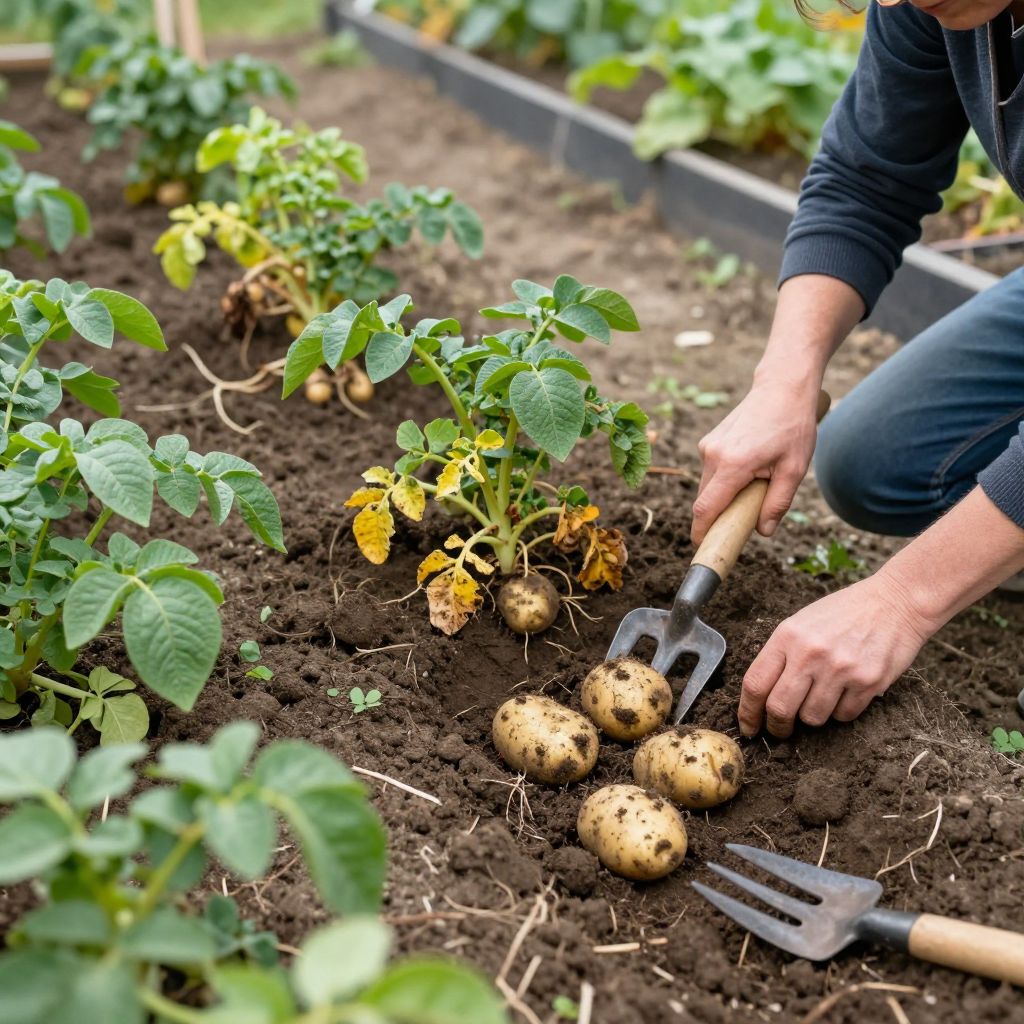
Wondering when are potatoes ready to harvest? The answer depends on whether you want “new” potatoes or fully mature storage potatoes. You can start checking a few tubers once the plants flower, but for the best flavor and storage life, wait until the foliage tells you the crop is finished.
Potatoes are one of the easiest crops to misjudge because the part you eat grows underground. The good news is that the plant gives you several clear signals, and with a little digging you can harvest at the right stage without damaging the tubers.
When are potatoes ready to harvest?
Potatoes are ready to harvest when the plants have reached the stage you want: new potatoes can be dug 2–3 weeks after flowering begins, while mature potatoes are usually ready when the tops yellow, die back, and dry down. For storage potatoes, wait about 2 weeks after the vines die to let skins set.
How to tell potato plants are ready
Potato maturity is easier to judge by the plant than by the calendar. Variety, weather, soil fertility, and growing conditions all affect timing, so use visible signs first and dates second.
Signs of new potatoes
- Plants have started flowering, or are just beginning to flower.
- Stems are still green and actively growing.
- When you gently feel around the base, you may find small tubers.
New potatoes are harvested young, so the skins are thin and delicate. They are best eaten soon after digging because they do not store as well as fully mature potatoes.
Signs of mature potatoes
- Foliage turns yellow, then brown.
- Stems collapse and dry down.
- The plant stops producing new top growth.
Once the tops die back, the tubers usually stop growing much larger. This is the signal to prepare for harvest, especially if you want potatoes that keep well in storage.
Harvest timing by potato type
Different potato types are often harvested at different stages, depending on how you plan to use them. If you are unsure, dig one plant first and check the tuber size and skin condition.
New potatoes
These are harvested early, while the skins are tender. They are usually small, smooth, and best used quickly after digging.
Maincrop or storage potatoes
These are left in the ground until the tops die back. The extra time allows the skins to thicken, which helps reduce bruising and improves storage life.
Fingerlings and specialty potatoes
These can be dug young for tender eating or left longer for larger tubers. Because shapes and sizes vary, a test dig is often the most reliable method.
How to check if potatoes are ready without ruining the crop
If you do not want to harvest the whole plant yet, use a careful test dig. This lets you evaluate tuber size and skin maturity before committing to the full crop.
- Choose one plant at the edge of the row or container.
- Loosen the soil 6–8 inches away from the stem with a fork or hand trowel.
- Reach in gently and feel for tubers before lifting them.
- Check the size and skin. Thin skins rub off easily; thicker skins stay intact.
- Replace the soil and water lightly if you want the remaining tubers to keep growing.
Do not spear the tubers with a fork. Potato skins bruise easily, and damaged potatoes are more likely to rot in storage.
What to do before harvesting potatoes
A little preparation makes harvest cleaner and safer. Dry weather is ideal if you can choose the timing, because wet soil clings to tubers and increases the risk of damage.
- Stop watering once the foliage has died back and the skins are setting.
- Wait for a dry day if possible.
- Gather a garden fork, spade, gloves, and a bucket or crate.
- Plan to sort tubers as you dig so damaged ones are used first.
If the soil is heavy clay or very wet, be extra gentle. Potatoes pulled from sticky soil are easier to bruise, and clods can hide tubers that get cut by tools.
How to harvest potatoes safely
Use slow, careful movements. The goal is to lift the crop without nicking the tubers or leaving them in the ground.
- Cut back dead tops if they are in the way.
- Insert a fork or spade well away from the plant base.
- Loosen the soil on all sides before lifting.
- Gently pull the plant and sift through the soil for remaining potatoes.
- Collect all tubers, including small ones, because leftover potatoes can sprout later.
For container-grown potatoes, tip the container onto a tarp or into a wheelbarrow and sort through the soil by hand. This is often easier and less damaging than digging in the ground.
Can you harvest potatoes after the plant dies?
Yes, but do not wait too long. Once the tops die back, the tubers can remain in the soil for a short period, especially in dry conditions. However, prolonged wet weather, pests, or freezing temperatures can damage them.
If frost is forecast and the vines are still alive, protect the crop if possible or harvest sooner. A hard freeze can injure both the tops and the tubers near the soil surface.
How long after flowering are potatoes ready?
Flowering is a useful clue, but it is not a strict countdown. Many potato plants begin forming small tubers around flowering, which is why new potatoes are often ready a couple of weeks later. For mature potatoes, flowering alone is not enough; wait for the tops to yellow and die back.
Some potato varieties flower lightly or not at all, so do not rely on blooms alone. Plants grown in hot weather, shade, or very rich soil may also behave differently.
Common mistakes when deciding harvest time
- Harvesting too early: You get small tubers and lower yield.
- Waiting too long in wet soil: Tubers may rot or sprout again.
- Digging too close to the stem: This cuts or bruises potatoes.
- Ignoring skin set: Thin-skinned potatoes store poorly.
- Leaving damaged potatoes in storage: One rotten tuber can affect others.
What if the potato tops die early?
Sometimes the foliage dies before the tubers are fully sized. This can happen because of drought stress, disease, insect damage, or heat. If the tops collapse early, inspect the plants and decide whether the tubers are worth leaving a little longer.
If you suspect disease such as blight, harvest promptly and discard any rotting tubers. Do not compost diseased plant material unless your compost system reliably reaches high temperatures.
How to cure potatoes for storage
Freshly dug storage potatoes benefit from curing. This helps minor skin wounds heal and improves keeping quality.
- Brush off loose soil, but do not wash potatoes before storing.
- Keep them in a dark, cool, well-ventilated place for about 1–2 weeks.
- Avoid direct sun, which can green the skins.
- After curing, sort out any soft, cut, or damaged tubers.
Store cured potatoes in darkness with good airflow. Cool temperatures are best, but avoid freezing. Do not store them near onions, which can speed spoilage in some conditions.
Growing conditions that affect harvest timing
Potatoes mature faster or slower depending on how they were grown. Warm soil, long daylight, and steady moisture can speed top growth, while cool weather can slow development.
Soil and drainage
Loose, well-drained soil makes harvest easier and helps tubers develop smoothly. Compacted or waterlogged soil can distort tubers and make digging harder.
Watering
Even moisture during tuber formation supports better yields. Inconsistent watering can lead to rough skins, hollow centers, or uneven sizing. As harvest approaches, reduce watering so skins can firm up.
Sunlight
Potatoes need full sun for strong growth. Shaded plants may stay small longer, delaying harvest or reducing yield.
Quick harvest checklist
- For new potatoes: check after flowering begins.
- For mature potatoes: wait for yellowing, dying tops.
- For storage potatoes: allow about 2 weeks after tops die back.
- Harvest on a dry day if possible.
- Use a fork or spade carefully and dig wide.
- Cure storage potatoes before putting them away.
Conclusion
The best way to know when are potatoes ready to harvest is to watch the plants and dig a test potato. Harvest early for tender new potatoes, or wait for the vines to die back if you want larger tubers with better storage life. If you are unsure, check one plant first, then harvest the rest at the right stage for your needs.
If you want to plan your next crop, it can also help to read more about growing potatoes successfully and storing homegrown vegetables.