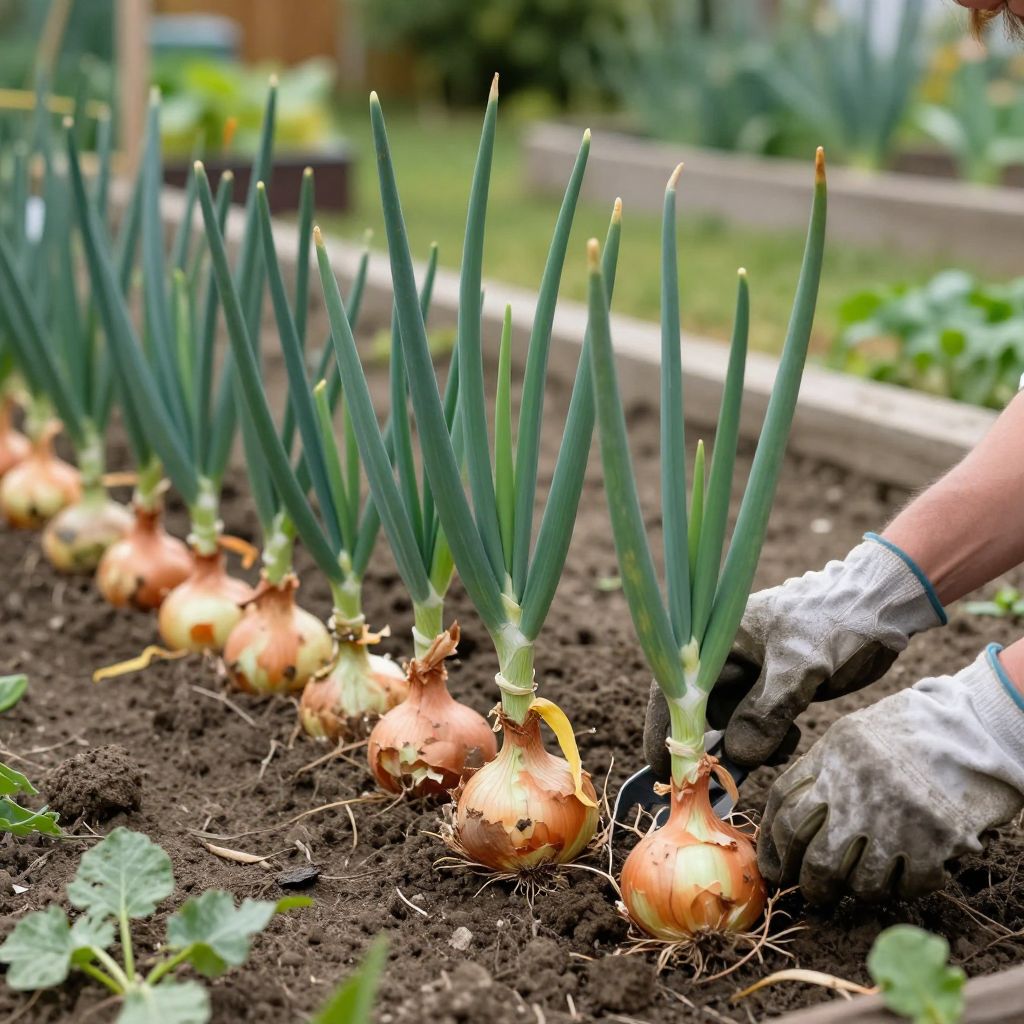
Wondering when do you harvest onions? The short answer is: harvest when the tops begin to yellow, flop over, and dry down, and when the bulbs have reached a usable size for the variety you planted. Exact timing depends on onion type, weather, and how long the crop has been growing.
Picking them at the right stage matters. Harvest too early and the bulbs may be small and watery; wait too long and they can split, rot, or start regrowing. The good news is that onions give clear visual signs when they are ready.
When do you harvest onions?
Harvest onions when about half to three-quarters of the tops have fallen over and begun to dry, and the necks feel soft rather than thick and upright. For bulb onions, this usually means the bulbs have finished sizing up. For green onions, harvest much earlier, whenever stems are pencil-thick or larger.
How to tell onions are ready to pull
Onions rarely ripen all at once, so look for a combination of signs instead of relying on the calendar alone. Weather, variety, and planting time all affect maturity.
Visual signs of maturity
- Top fallover: The necks soften and the foliage bends naturally.
- Yellowing leaves: The green color fades as the plant finishes growing.
- Dry necks: The area just above the bulb feels less firm.
- Bulb size: The onion looks full and rounded for its type.
What not to rely on
- Do not harvest just because the tops are tall.
- Do not assume every onion in the bed is ready on the same day.
- Do not wait for all leaves to completely die back in wet weather, or the bulbs may begin to rot.
Seasonal timing by onion type
Different onion crops are harvested at different stages. If you know what you planted, you can narrow the timing quickly.
Bulbing onions
Bulbing onions are harvested when the bulb has filled out and the foliage starts to collapse. In many gardens, this happens in mid to late summer, but the actual timing depends on day length, climate, and the variety.
Green onions and scallions
These are usually harvested young, before a large bulb forms. You can pull them as soon as they are thick enough to use, often while the tops are still mostly green.
Sweet onions
Sweet onions are often harvested a little earlier than storage onions because they are usually eaten fresh. Watch for soft necks and healthy-sized bulbs, then cure them carefully if you plan to store them briefly.
Overwintered onions
Onions planted in fall or very early spring may mature earlier than spring-planted crops. Check them regularly as the foliage begins to yellow in late spring or early summer.
How to harvest onions the right way
Harvesting is simple, but gentle handling makes a big difference in storage life. Damaged bulbs rot faster and are more likely to sprout or mold.
- Choose a dry day if possible.
- Loosen the soil with a garden fork if the ground is firm.
- Lift the onion by the base or gently undercut the row.
- Shake off loose soil without bruising the bulb.
- Lay onions out in a single layer to dry.
Do not yank hard on the tops if the soil is compacted. That can tear the neck or damage the bulb. If the soil grips tightly, loosen it first.
Harvesting green onions versus bulb onions
- Green onions: Pull or thin them as needed, usually before bulbing begins.
- Bulb onions: Wait for maturity signs, then lift the whole plant.
What to do after harvest: curing onions
Curing is the drying period that helps onions store well. It allows the outer skins to dry, the necks to close, and excess moisture to leave the bulb.
How to cure onions
- Spread onions in a single layer in a warm, dry, airy place.
- Keep them out of direct rain and heavy dew.
- Leave tops and roots attached while curing.
- Allow several days to a few weeks, depending on humidity and airflow.
The onions are cured when the necks are dry and tight, the outer skins are papery, and the roots are brittle. If the weather is humid, use a covered porch, shed, garage, or well-ventilated indoor space instead of leaving them outside.
Trimming after curing
Once cured, trim the roots and cut the tops back if you want to store them. Leave enough dry neck to avoid exposing the bulb. Handle them carefully so you do not bruise the skins.
Growing conditions that affect harvest timing
Healthy onions mature more predictably. Poor growing conditions can delay harvest, reduce bulb size, or cause weak necks and storage problems.
Sunlight
Onions need full sun for strong bulb development. If they are shaded by taller crops or nearby structures, they may stay thin and take longer to mature.
Soil and drainage
Loose, well-drained soil helps bulbs expand evenly and makes harvesting easier. Heavy, waterlogged soil can slow growth and increase the risk of rot near harvest time.
Watering
Onions need steady moisture while bulbs are forming, but they should not sit in soggy soil. As harvest approaches, reduce watering if the weather is already dry enough to let the tops die back naturally.
Compost and fertility
Moderate fertility supports good bulb growth, but too much nitrogen can produce lush tops and smaller bulbs. If your onions are still making lots of green growth late in the season, they may not be ready yet.
Common problems that affect harvest
Sometimes onions do not give a clean signal that they are ready. A few common issues can make timing less obvious.
Bulbs stay small
If the bulbs remain small while the tops are still green, the crop may be stressed by crowding, poor soil, insufficient sun, or a short growing season. Small bulbs can still be harvested and used as fresh onions.
Necks stay thick and upright
Thick necks often mean the plant is still actively growing. Give it more time if the foliage is healthy and green. If the weather turns very wet, you may need to harvest slightly early and cure carefully.
Split or rotting bulbs
Overripe onions, overly wet soil, or damage during harvest can lead to splitting and decay. Pull mature bulbs promptly once the tops are down and drying.
Pests and disease
Thrips, onion maggots, and fungal diseases can weaken tops and shorten storage life. If foliage collapses early from disease, harvest any usable bulbs right away and discard damaged ones.
Storing harvested onions
Proper storage starts with proper harvest and curing. Only store bulbs that are dry, firm, and free of cuts or soft spots.
- Store in a cool, dry, airy place.
- Keep them off the floor if moisture is a problem.
- Use mesh bags, crates, or braided tops for airflow.
- Check stored onions regularly and remove any that soften or sprout.
Storage life varies by variety and curing quality. Sweet onions usually store for a shorter time than long-keeping types, so use them sooner.
Best tools and simple harvest checklist
You do not need much equipment, but a few basics make onion harvest easier and cleaner.
Helpful tools
- Garden fork or hand fork
- Small trowel for loosening soil
- Crate, tray, or mesh bag for curing
- Clean pruners or scissors for trimming after curing
Quick harvest checklist
- Most tops have yellowed or fallen over.
- Bulbs look full-sized for the variety.
- Soil is dry enough to lift cleanly.
- Weather is suitable for curing.
- Bulbs are handled gently to avoid bruising.
Conclusion
When do you harvest onions? Harvest them when the tops naturally yellow and flop over, the necks soften, and the bulbs have reached usable size. Pull them on a dry day, cure them in a breezy spot, and store only sound, fully dried bulbs for the best results.
If you want to improve next season’s crop, it helps to review how to grow onions successfully and other vegetable harvest timing tips so you can match harvest time to your local conditions.
Leave a Reply