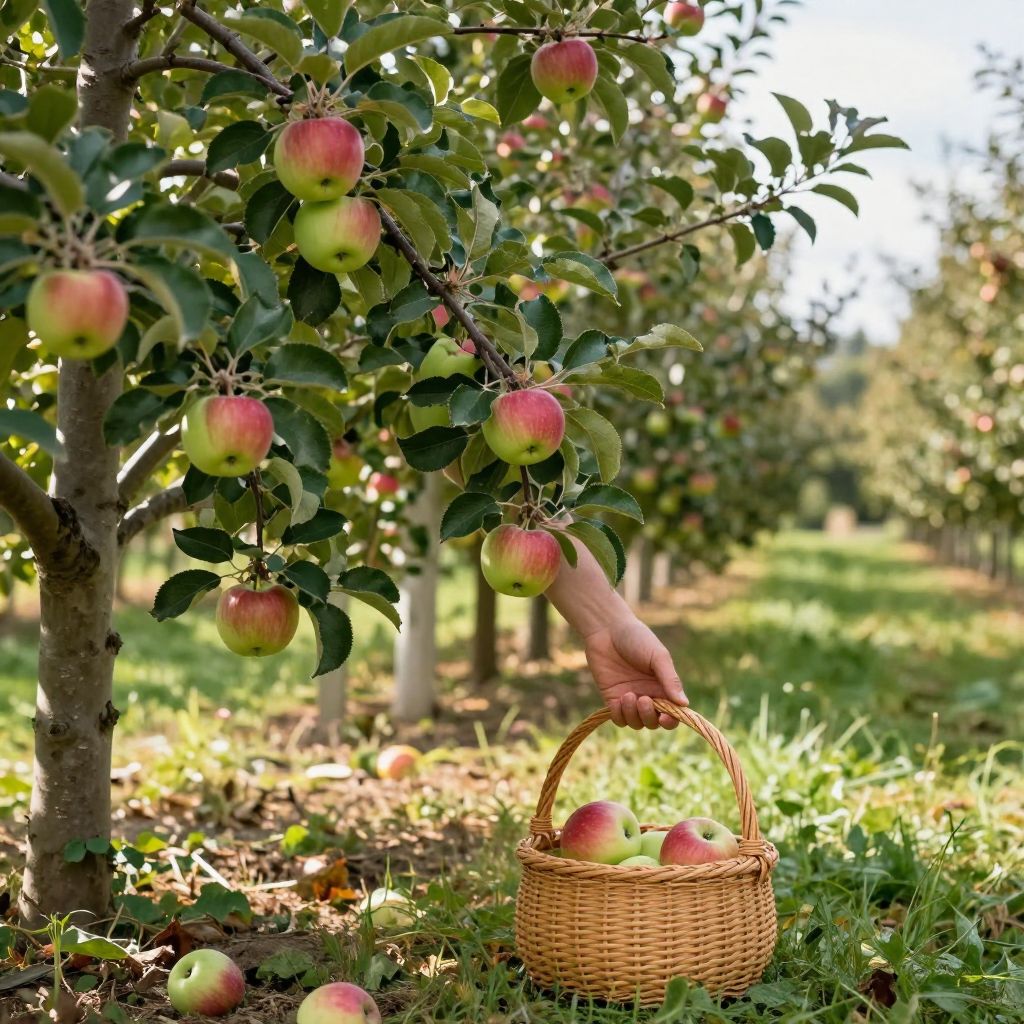
When is apple picking season? The short answer is that it usually runs from late summer through fall, but the exact timing depends on your climate, the apple variety, and how warm or cool the season has been. Some early apples are ready in midsummer, while storage apples may hang until late autumn.
If you want the best flavor and texture, the right harvest window matters more than the calendar. Apples picked too early can be tart and starchy; picked too late, they may become mealy or drop from the tree before you get to them.
When is apple picking season?
Apple picking season typically starts in late July or August for early varieties and continues through September and October for most main-season apples. In warmer regions, harvest often begins earlier; in cooler climates or at higher elevations, it may run later. The best time to pick is when the fruit is fully colored, firm, and comes off the branch with a gentle lift-and-twist.
How to tell when apples are ready to pick
Do not rely on color alone. Many apples turn red or yellow before they are fully ripe, and some stay green even when ready.
Simple ripeness checks
- Lift-and-twist test: A ripe apple should separate easily when you lift it upward and twist gently.
- Seed color: Mature seeds are usually brown, not white or pale.
- Flavor: The apple should taste balanced and aromatic, not overly starchy or sour.
- Background color: The green base often shifts toward yellow or cream as fruit matures.
- Flesh texture: The flesh should feel crisp, not woody or soft.
If you are unsure, pick one fruit and cut it open. A ripe apple will usually have developed flavor, darker seeds, and a clean bite. If it still tastes sharply starchy, wait a few more days and test again.
Why harvest timing varies so much
Apple harvest dates change with variety, rootstock, sun exposure, crop load, and local weather. Trees in full sun often ripen sooner than shaded trees. A heavy crop can also slow ripening because the tree has more fruit to mature.
Apple picking season by region and climate
Because climate changes harvest timing, use your local conditions as the main guide. A variety that ripens in September in one area may be ready weeks earlier or later somewhere else.
- Warm climates: Early apples may begin ripening in midsummer, with many varieties ready by late summer.
- Temperate climates: Peak picking often falls in September.
- Cooler climates: Harvest may stretch into October or even early November for late varieties.
- High-elevation sites: Expect a later season and watch for early frost.
Local orchards, extension services, and nearby gardeners are often the best source for timing. If apples are grown commercially in your area, their harvest window is a useful reference, though your own tree may ripen a little earlier or later.
Growing apples for a better harvest
If you are growing apples at home, good harvest timing starts months earlier with healthy trees. Apples need sunlight, airflow, and consistent care to ripen well and produce quality fruit.
Sunlight and site selection
Plant apples in full sun, ideally with at least 6 to 8 hours of direct light daily. More sun helps fruit color, sugar development, and overall ripening. Avoid low spots where cold air settles, since spring frost can damage blossoms and reduce the crop.
Soil and drainage
Apples grow best in well-drained soil that holds moisture without staying soggy. Heavy clay can work if improved with organic matter and drainage management, but standing water around the roots can weaken the tree and increase disease risk.
- Work compost into the planting area to improve soil structure.
- Mulch to conserve moisture, but keep mulch a few inches away from the trunk.
- Avoid planting where water pools after rain.
Watering during fruit development
Young trees and fruiting trees both need steady moisture, especially during dry spells. Irregular watering can lead to smaller fruit, poor sizing, and premature drop. Water deeply rather than frequently sprinkling the surface, and adjust based on rainfall and soil type.
Pruning for fruit quality
Pruning helps light reach the canopy, which improves fruit color and ripening. It also reduces disease pressure by improving airflow.
- Remove dead, damaged, or crossing branches.
- Thin crowded growth so sunlight can reach interior fruiting wood.
- Keep the tree at a manageable height for harvesting.
- Prune during the dormant season in most climates, unless local guidance suggests otherwise.
Overgrown trees often produce fruit that is harder to reach and less evenly ripened. A well-shaped tree is easier to pick and easier to keep healthy.
Common problems that affect apple picking season
Several issues can make apples look ready before they truly are, or cause them to ripen unevenly. Knowing the signs helps you avoid harvesting too early or losing fruit before it matures.
Premature fruit drop
Apples may fall early because of drought stress, pest damage, disease, or natural crop thinning. If fruit is dropping while still hard and green, check soil moisture first, then inspect for insect damage or disease spots.
Sunscald and poor color
Fruit on the outer canopy may color well, while shaded fruit stays pale and less flavorful. Good pruning and balanced canopy structure help improve ripening. In very hot climates, fruit can also scorch, so some leaf cover is beneficial.
Insect and disease pressure
Codling moth, apple maggot, aphids, scab, and powdery mildew can all reduce fruit quality. Damaged apples may rot early or become misshapen, making harvest timing less reliable.
- Remove fallen fruit promptly to reduce pest cycles.
- Inspect leaves and fruit regularly during the growing season.
- Use sanitation and pruning as your first line of defense.
- Choose resistant varieties when planting new trees, if available in your area.
How to harvest apples without damaging the tree
Pick apples carefully so you do not break fruiting spurs or bruise the fruit. Handle each apple gently, especially if you plan to store it.
Best picking method
- Hold the apple in your palm.
- Lift it slightly upward.
- Twist gently until it releases.
- Place it in a picking basket or padded container, not a deep pile.
Do not yank apples downward. That can tear the spur, which is where future flowers and fruit form. If an apple resists, it is probably not ready yet.
Harvesting for storage vs. immediate eating
Some apples are best eaten soon after picking, while others improve after a short storage period. Storage apples are usually picked when mature but still firm, then kept in cool conditions. For short-term storage, use only sound fruit with no bruises, cuts, or pest damage.
- Eat soon: Use bruised or softer fruit first.
- Store longer: Choose firm, unblemished apples and keep them cool and dry.
- Check often: Remove any fruit that starts to soften or rot.
What to do if your apples are not ripening on time
If harvest seems late, do not rush to pick just because the calendar says so. Instead, check whether the fruit has had enough sun, whether the tree is overloaded, and whether the weather has turned unusually cool or cloudy.
Troubleshooting checklist
- Is the tree in full sun, or is it shaded by buildings or larger trees?
- Has the tree had consistent watering during dry periods?
- Is the canopy too dense for light to reach the fruit?
- Are you growing a late-season variety that naturally ripens later?
- Has frost arrived early in your area?
If frost is approaching and fruit is still firm, you may need to harvest a little early and let it finish indoors only if the variety is suitable for that use. Otherwise, prioritize picking any fruit that is close to ready and protect the rest if possible.
Planning for next year’s apple season
The best way to improve apple picking season is to keep notes. Record the variety, bloom time, first harvest date, and flavor quality. Over time, you will learn how your trees perform in your own yard.
When planting new trees, choose varieties suited to your climate and available pollination partners. A well-matched tree in the right site will usually ripen more reliably and produce better fruit than one struggling in poor conditions.
So, when is apple picking season? Start watching in late summer, then use fruit maturity—not the calendar alone—to decide. If you grow apples, give your trees full sun, good drainage, regular moisture, and sensible pruning, and you will have a much better harvest window to work with. For more seasonal fruit care, you may also find it helpful to read about pruning fruit trees and using compost in the garden.