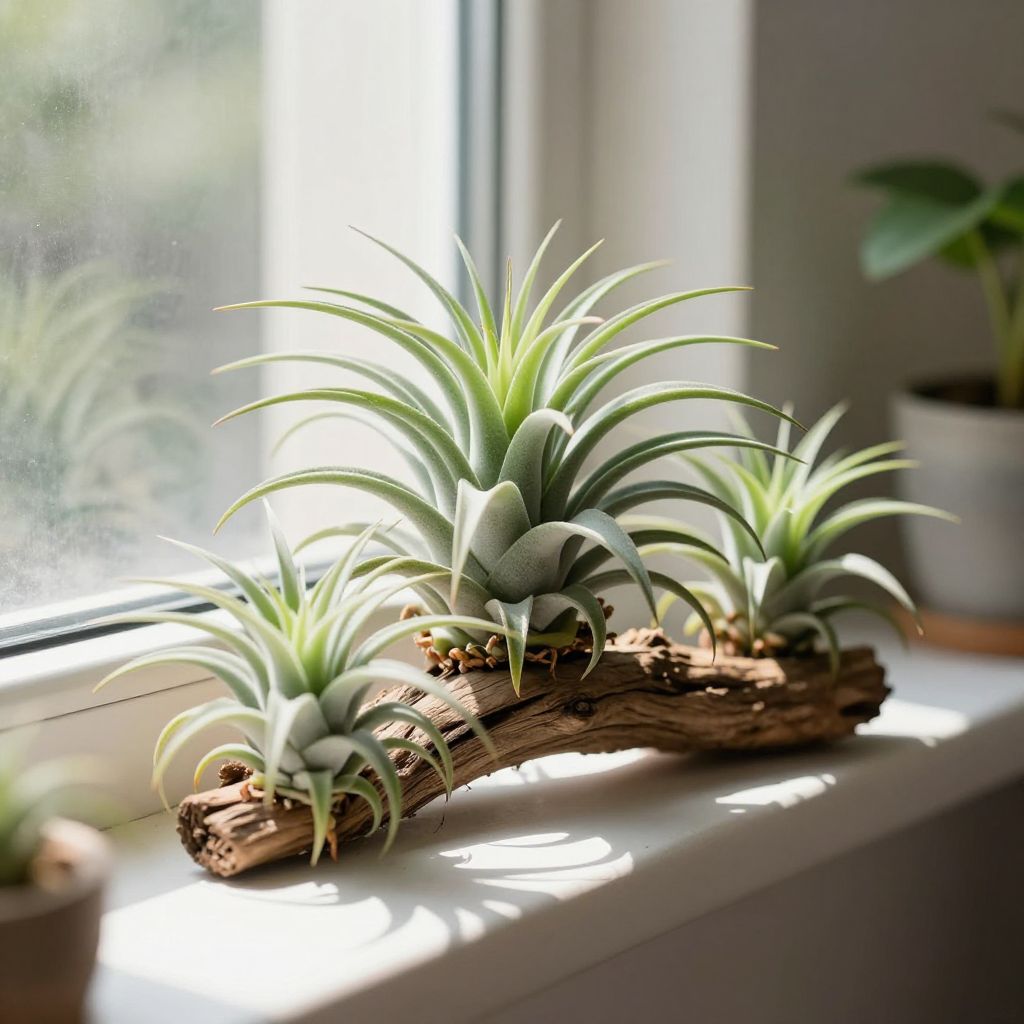
Do air plants need sun? Yes—but not direct, scorching sun. Air plants, or Tillandsia, grow best in bright, filtered light that mimics the dappled light they receive in nature. Too little light weakens growth, while too much direct sun can dry and burn the leaves.
The good news is that air plants are flexible if you place them correctly and adjust care to your home or climate. With the right light, airflow, and watering routine, they can stay healthy and colorful without soil.
Do Air Plants Need Sun?
Air plants need bright, indirect light to grow well. They can tolerate some gentle morning sun, but harsh afternoon sun often scorches the leaves. Indoors, a bright east- or west-facing window is usually ideal; outdoors, they do best in filtered shade or under light tree cover.
How Much Light Air Plants Really Need
Air plants are epiphytes, which means they naturally grow on trees, rocks, or other surfaces rather than in soil. In their native habitats, many species receive strong light that is softened by branches, clouds, or canopy shade.
That is why the answer to “do air plants need sun” is really about light quality, not just sunlight hours. They need enough brightness to photosynthesize, but not so much direct exposure that their leaves dry too quickly.
Best light conditions indoors
- Bright, indirect light for most of the day
- Near an east-facing window for gentler morning sun
- A few feet back from a south- or west-facing window if the light is intense
- Supplemental grow light if your home is dim
Best light conditions outdoors
- Filtered shade under a porch, pergola, or tree canopy
- Protection from hot midday and afternoon sun
- Good airflow so leaves dry after rain or watering
- Cover or bring indoors if temperatures drop too low for your species
Signs Your Air Plant Is Getting the Right Amount of Sun
Healthy air plants usually look firm, evenly colored, and slightly open or upright depending on the species. Growth is often slow, but you should still see stable leaf color and occasional new leaves from the center.
Because different Tillandsia species vary, use the plant’s appearance as your guide rather than relying only on a schedule.
Good light often looks like this
- Leaves stay plump rather than limp or wrinkled
- Color remains consistent, with normal silver, green, or blush tones
- The plant dries within a reasonable time after watering
- New growth appears from the center over time
Too little light may cause
- Slow or stalled growth
- Dark green, stretched, or floppy leaves
- Weak color in species that should blush or brighten
- Longer drying times after watering, which can increase rot risk
Too much sun may cause
- Bleached, pale, or crispy leaf tips
- Drying too quickly after watering
- Brown patches on the most exposed side
- Leaves curling or feeling papery
Where to Place Air Plants for the Best Light
Placement matters as much as the window direction. A plant set directly in a hot windowsill may get more sun than it can handle, while one tucked in a dark corner may slowly decline.
Indoor placement tips
- Start with bright indirect light near a window.
- Watch the plant for one to two weeks.
- If leaves bleach or dry too fast, move it farther from the glass.
- If growth stalls and color deepens too much, move it closer to brighter light.
Glass can intensify heat, especially in summer. A sheer curtain can make a huge difference for air plants sitting near sunny windows.
Outdoor placement tips
Outdoors, air plants usually do best where they get morning light and afternoon shade. In hot, dry climates, even filtered sun can be intense, so check plants more often for dehydration.
In humid coastal or tropical climates, air plants may tolerate brighter conditions as long as they are not in direct burning sun for long periods.
Watering and Sunlight Work Together
Light and watering are closely linked. A plant in brighter light usually dries faster and may need more frequent watering than one in lower light. But if light is too low, the plant dries slowly and becomes more vulnerable to rot.
That is why “do air plants need sun” is not a simple yes-or-no question. They need enough light to support healthy drying and growth, but not so much that they scorch.
Practical watering guidance
- Water thoroughly when the plant looks dry and the leaves feel less flexible.
- Shake off excess water after soaking or rinsing.
- Let the plant dry completely in a spot with good air movement.
- Avoid leaving water trapped in the base or between tightly folded leaves.
Never let an air plant stay wet for long in low light. That combination is one of the most common causes of rot.
How to Tell If Your Air Plant Needs More or Less Sun
The best way to adjust light is to make small changes and observe the plant. Air plants can recover from many light mistakes if you catch them early.
If it needs more light
- Move it closer to a bright window, but not into harsh direct sun
- Use a grow light if your home is consistently dim
- Rotate the plant every week or two so all sides receive light
If it needs less light
- Move it farther from the window
- Filter the light with a sheer curtain
- Shift it away from hot glass or metal containers that trap heat
If a plant is already stressed, avoid making dramatic changes all at once. Gradual adjustments reduce shock and give you a clearer sense of what is helping.
Common Mistakes to Avoid
- Placing air plants in full afternoon sun, especially behind glass
- Keeping them in a dark room and expecting strong growth
- Leaving them wet in a closed terrarium or container with poor airflow
- Assuming all air plants need the same light; species vary
- Ignoring seasonal changes in sun angle and indoor heat
Seasonal shifts matter. A window that is perfect in winter may become too hot in summer, and a plant that was happy outdoors in spring may need more shade by midsummer.
Do Air Plants Need Direct Sun?
Most air plants do not need direct sun, and many do better without it. A little gentle morning sun can be helpful, but strong direct sun is usually too intense unless the species is adapted to brighter exposure and the plant is carefully acclimated.
If you want to test direct sun, do it gradually. Start with brief exposure in the early morning and watch for bleaching, crisping, or rapid drying. If those signs appear, move the plant back to filtered light.
Special Care for Different Growing Situations
In dry climates
Air plants may handle brighter light better if humidity is low, but they can dry out quickly. Watch for shriveling and be ready to water more often, while still allowing full drying afterward.
In humid climates
Humidity can help plants tolerate slightly brighter conditions, but poor airflow becomes a bigger problem. Keep them where air can move freely and avoid cramped displays.
Under grow lights
If you use artificial light, place the plant at a distance that provides brightness without heat stress. Follow the light manufacturer’s guidance, then adjust based on how the plant responds over time.
Simple Care Routine for Healthy Air Plants
- Give bright, indirect light.
- Water based on dryness, not a rigid calendar.
- Let the plant dry fully after watering.
- Provide airflow around the leaves.
- Check regularly for sunburn, rot, or shriveling.
That routine is usually enough to keep most air plants looking good indoors or in a sheltered outdoor display.
Conclusion: The Best Answer Is Bright, Filtered Sun
Air plants do need sun, but the safest and most useful form is bright, indirect light rather than hot direct rays. If you can give them a bright window, a shaded porch, or filtered outdoor light, you are already meeting one of their most important needs.
For more practical plant care guidance, you may also want to read about indoor plant light levels and how to water houseplants without overwatering.