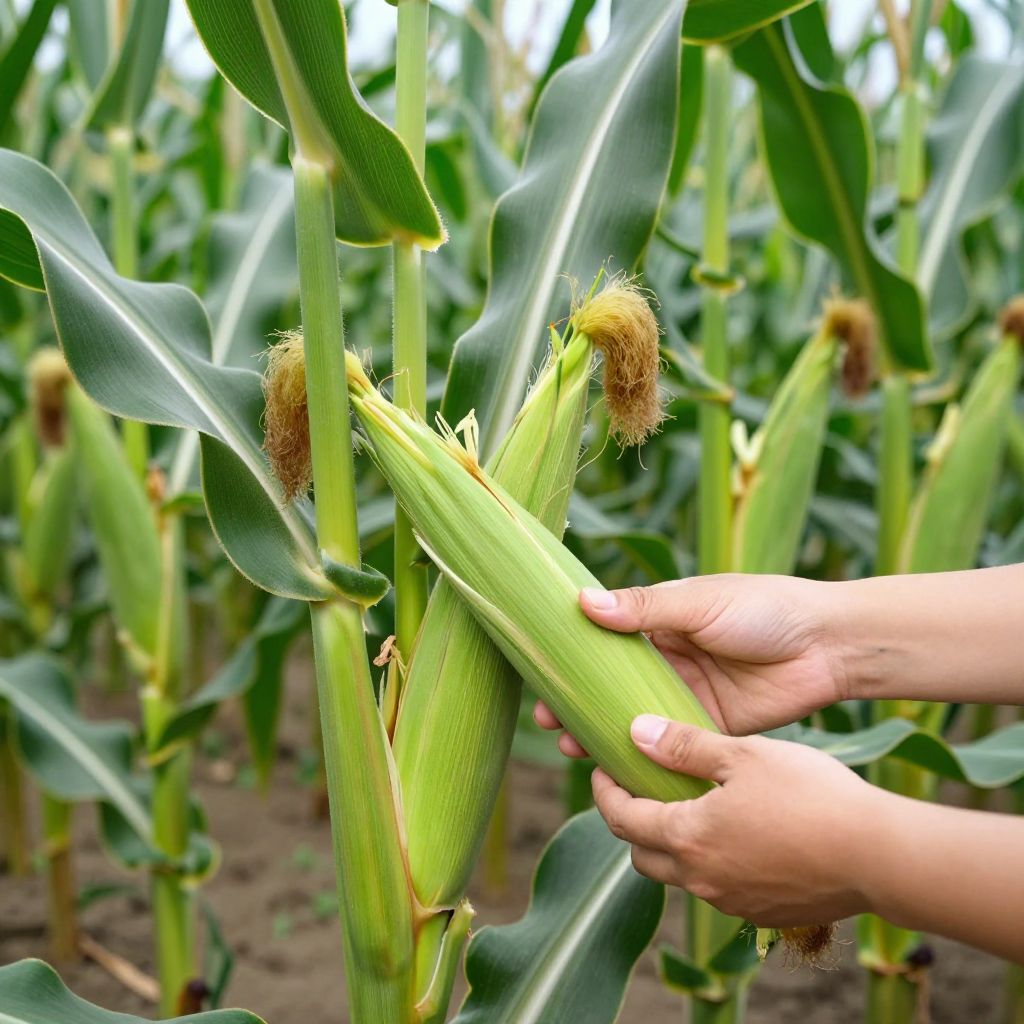
Wondering when is corn ready to harvest? Sweet corn can go from perfect to starchy surprisingly fast, so timing matters. The good news is that there are a few reliable signs you can use in the garden, even if you don’t know the exact variety or planting date.
With a little practice, you can pick corn at peak sweetness instead of guessing. The key is to check the ears, the silks, and the kernels together, then harvest at the right stage for the type of corn you’re growing.
When is corn ready to harvest?
Corn is ready to harvest when the ears are full-sized, the silks have turned brown and dry, and the kernels are plump and release a milky juice when punctured with a fingernail. Sweet corn is usually picked in the “milk stage,” before kernels become firm and starchy.
How to tell if corn is ripe
Don’t rely on one sign alone. The most reliable harvest check is a combination of ear development, silk color, and kernel texture.
1. Check the silks
The silks at the tip of the ear should be brown, dry, and starting to shrivel. Fresh green silks usually mean the ear is still developing.
As the ear matures, the silks dry from the tip downward. If the silks are still mostly moist and pale, wait a few more days and check again.
2. Feel the ear size
Mature ears should feel full and well-filled all the way to the tip. If the tip feels narrow or underdeveloped, the kernels may not be finished yet.
Many gardeners gently peel back a small section of husk to inspect the top of the ear. If the kernels extend nearly to the tip and look plump, that’s a good sign.
3. Test the kernels
Press a kernel with your thumbnail. If a milky liquid comes out, sweet corn is usually ready. If the juice is watery, it is too early. If it is thick and doughy, the corn is past peak sweetness.
For sweet corn, this milk-stage test is often the best indicator. It works especially well when you’re unsure how many days have passed since pollination.
4. Look at the husk and ear position
The husks should still be green and snug, though they may start to lose their bright color. The ear often feels firm and well anchored on the stalk when it is mature.
Some varieties show a slight downward tilt when ripe, but do not use ear position alone. Weather, wind, and variety can all affect how the ear hangs.
Seasonal timing for harvesting corn
Harvest timing depends on corn type, weather, and local growing conditions. Warm weather speeds maturity, while cool temperatures slow it down.
Sweet corn
Sweet corn is usually ready about 18 to 24 days after the silks first appear, though this varies by variety and temperature. In cooler weather, it may take longer.
Because sweetness declines after harvest, pick sweet corn as soon as it reaches the milk stage. If you wait too long, kernels become chewy and less flavorful.
Field corn and ornamental corn
Field corn, flour corn, and ornamental corn are harvested much later, after the kernels have dried significantly on the stalk. These types are not picked for peak sweetness.
If you are growing corn for drying, the ears should be mature and the kernels hard. The husks and silks will be dry, and the kernels should not release milky juice.
How to harvest corn without damaging the plant
Harvesting corn is simple, but a careful technique helps protect the stalk and nearby ears.
- Hold the ear firmly with one hand.
- Use the other hand to support the stalk if needed.
- Twist the ear downward and pull until it snaps free.
- Harvest in the cool part of the day if possible.
If the ears resist, they may not be fully mature, or the stalk may be very sturdy. Avoid yanking hard enough to bend or break the plant unnecessarily.
For the best flavor, harvest sweet corn and cook or chill it right away. Sugar in sweet corn begins converting to starch after picking, especially in warm weather.
What happens if you harvest corn too early or too late?
Picking too early leaves you with small ears and underdeveloped kernels. The flavor may be thin, and the texture can be watery.
Picking too late is a more common problem with sweet corn. Kernels become tough, less juicy, and more starchy as they mature past the milk stage.
Signs you picked too early
- Kernels are small and not fully filled out
- Silks are still mostly green or moist
- Milk test shows watery juice
- Ear tip feels narrow or unfinished
Signs you picked too late
- Kernels are firm and chewy
- Milk test shows thick or doughy juice
- Silks are completely dry and brittle
- Sweetness is noticeably reduced
How growing conditions affect harvest time
Weather, soil quality, and water supply all influence how quickly corn matures. Healthy, unstressed plants are more likely to produce well-filled ears on schedule.
Sunlight
Corn is a full-sun crop and performs best with at least 6 to 8 hours of direct sunlight daily. Shaded plants often grow tall and weak, with poorer ear development.
Soil and compost
Corn grows best in fertile, well-drained soil rich in organic matter. Mixing in compost before planting helps improve moisture retention and soil structure while supporting steady growth.
Avoid waterlogged soil, which can slow root growth and reduce yield. Good drainage is especially important in heavy clay soils.
Watering
Consistent moisture is important from tasseling through ear fill. Drought stress during this stage can lead to poorly filled ears and uneven kernel development.
Water deeply when needed so moisture reaches the root zone. Try to avoid frequent shallow watering, which encourages shallow roots and stress during hot weather.
Pollination and ear fill
Corn depends on wind pollination. Poor pollination can cause missing kernels, especially near the tip of the ear.
If kernels are missing in patches, the plant may have been stressed by heat, drought, spacing issues, or poor pollination. That does not always mean the ear is unripe, but it may affect quality.
Common problems when deciding harvest time
Many gardeners hesitate because corn ripens quickly and not every ear on the same plant matures at exactly the same time.
Not all ears mature together
If your planting is large, check ears individually. One ear may be ready while another on the same patch still needs a few days.
Weather can speed things up
Hot spells can push sweet corn to maturity faster than expected. Check ears daily once silks turn brown, especially in midsummer.
Birds and pests may beat you to it
Raccoons, birds, and other pests can damage ripening ears. If wildlife pressure is high, monitor closely as harvest time approaches.
Common garden pests such as corn earworm can also affect the tip of the ear. If the ear looks damaged, inspect it before deciding whether it is ready or simply compromised.
Should you leave corn on the stalk longer?
For sweet corn, usually no. Once it reaches peak ripeness, flavor declines quickly. Leaving it longer is only useful if you are growing corn for drying or seed saving.
If you are unsure, harvest one ear and test it. That is often better than waiting and losing the best eating quality.
Quick harvest checklist
- Silks are brown and dry
- Ears feel full to the tip
- Kernels are plump
- Fingernail test gives milky juice
- Husks are still green but starting to age
After harvest: what to do next
Handle sweet corn gently and keep it cool. If you are not eating it right away, refrigerate it as soon as possible to preserve sweetness.
After the season, remove spent stalks if needed and add healthy plant material to the compost pile only if it is free of serious disease or pest problems. If the plants were heavily infested, dispose of them according to your local garden guidance.
Conclusion
The simplest answer to when is corn ready to harvest is: when the silks are dry, the ears are full, and the kernels give a milky juice when tested. Check your plants daily once the silks begin browning, and harvest sweet corn at peak ripeness for the best flavor.
If you want to improve your next crop, compare your harvest timing with a guide to growing sweet corn in the home garden and review how to tell when vegetables are ready to pick for more seasonal harvesting tips.