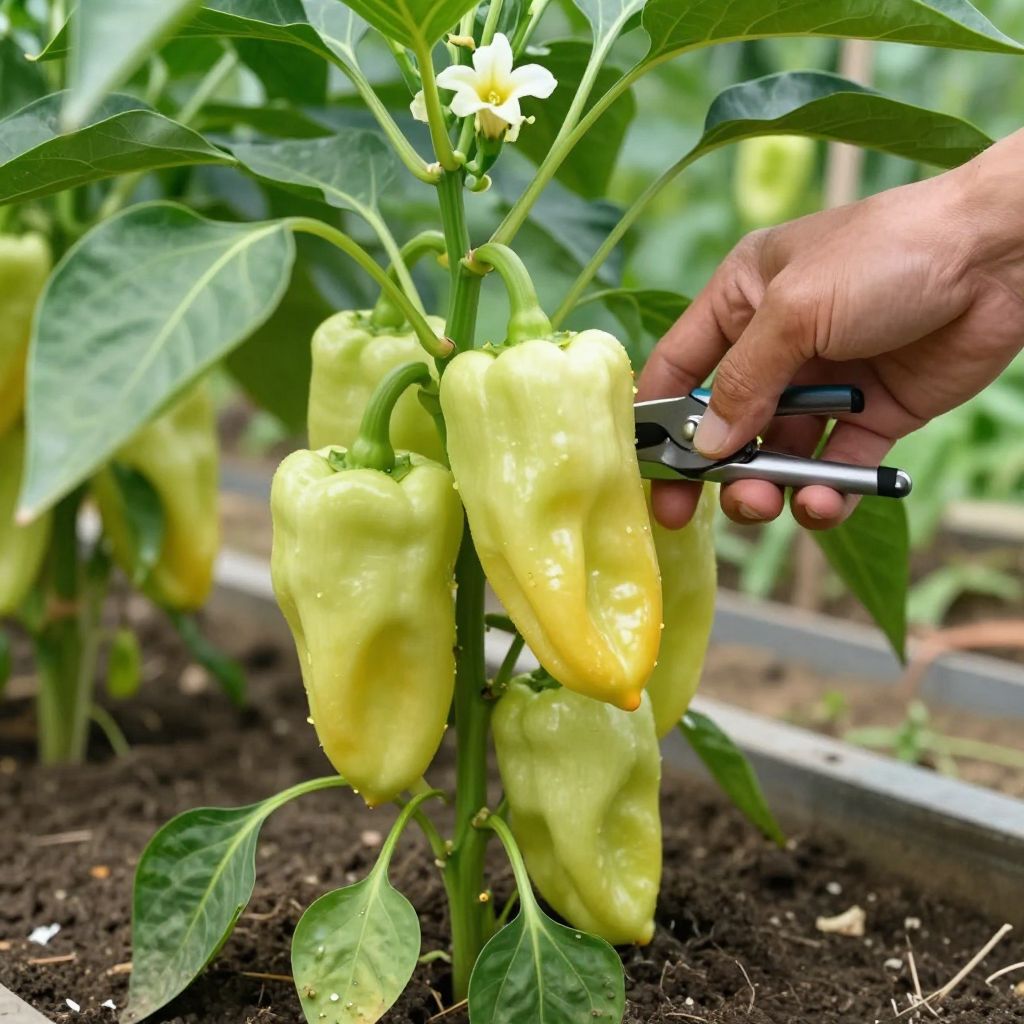
Wondering when to pick banana peppers so they’re crisp, flavorful, and not too hot? The best harvest time depends on the size, color, and stage you want, not just the calendar. Banana peppers can be picked green, pale yellow, or fully ripe, and each stage gives a slightly different taste and texture.
If you harvest at the right time, you’ll get better flavor and encourage the plant to keep producing. Pick too early and the peppers may be underdeveloped; wait too long and they can become softer, sweeter, or more likely to split or rot.
When to pick banana peppers?
Pick banana peppers when they reach full size, feel firm, and have a smooth, glossy skin. Most are ready at 4 to 6 inches long, though size can vary by variety. Harvest green for a milder, crisper pepper, or wait until they turn yellow or red if you want a sweeter, fully ripe pepper.
How to tell banana peppers are ready
Banana peppers are easy to judge by eye and touch once you know what to look for. The plant’s age matters too, but fruit maturity is the most reliable sign.
Signs of harvest readiness
- Length: Many banana peppers are ready around 4 to 6 inches long.
- Color: Green peppers are usually immature; pale yellow is a common harvest stage; fully ripe fruit may deepen to orange or red depending on the variety.
- Texture: The skin should look smooth and glossy, not dull or wrinkled.
- Firmness: A ready pepper feels firm and full when gently squeezed.
- Stem attachment: The pepper should separate cleanly with a snip, without needing to tug hard.
What flavor changes as they ripen?
Green banana peppers are usually firmer and more tangy. As they mature, they become sweeter and a little softer. If you prefer a brighter, milder pepper for fresh use, harvest earlier. If you want a sweeter pepper and don’t mind a softer texture, let it ripen longer on the plant.
Harvesting banana peppers by stage
You do not have to wait for full color to harvest banana peppers. In fact, many gardeners pick them before full ripeness to keep the plant productive and to avoid losing fruit to weather or pests.
Green stage
Harvest green banana peppers when they are full-sized and firm. This is often the stage for the crispest texture and the most classic banana pepper flavor.
Yellow stage
Many banana peppers are harvested at a pale yellow stage. At this point they are still firm, but often a little sweeter and less sharp than green fruit.
Fully ripe stage
If you leave peppers on the plant longer, they may turn orange or red, depending on the cultivar. Fully ripe peppers are usually sweeter and can be excellent for seed saving, but they may be less crisp and can slow new fruit production if left too long.
Seasonal timing: when in the year to harvest
Banana peppers are warm-season crops, so harvest timing depends on when you planted them and how warm your climate is. In many gardens, the first pickings come in mid- to late summer and continue until cool weather slows the plant down.
Warm climates
In long, warm seasons, plants may produce for many weeks or even months. Check fruit every few days once the plant starts setting peppers, because they can size up quickly in heat.
Cooler climates
In shorter seasons, peppers may ripen later and more slowly. If frost is approaching, harvest any peppers that have reached usable size, even if they are still green, because cold weather can damage the plant and fruit.
Container plants
Potted banana peppers often mature a little faster if they receive strong sun and consistent moisture, but container plants can also dry out quickly. Check fruit frequently, especially during hot spells.
How to harvest banana peppers correctly
Use clean pruners, scissors, or a small knife rather than pulling peppers by hand. The stems can be tougher than they look, and tugging may break branches or disturb nearby fruit.
- Inspect the plant and choose peppers that are full-sized and firm.
- Hold the pepper gently with one hand.
- Cut the stem just above the fruit, leaving a short stub attached.
- Place harvested peppers in a shaded basket or container.
- Check the plant again in a few days for more ready fruit.
Harvesting regularly helps the plant keep producing. If peppers stay on the plant too long, the plant may slow down and focus less on new flowers and fruit.
What happens if you pick banana peppers too early or too late?
Timing affects both flavor and plant performance. Picking at the wrong stage is not a disaster, but it can change your harvest quality.
If you pick too early
- The peppers may taste grassy or underdeveloped.
- The flesh may be thinner and less juicy.
- Seeds may not be fully mature if you want to save them.
If you pick too late
- The peppers may become softer and less crisp.
- Overripe fruit can split, especially after rain or uneven watering.
- Pests and diseases have more time to damage the fruit.
- The plant may slow down new production if fruit is left hanging too long.
Growing conditions that affect harvest timing
Healthy plants ripen fruit more predictably. If your banana peppers are slow to size up, the issue is often growing conditions rather than the calendar.
Sunlight
Banana peppers need full sun for best production. Aim for at least 6 to 8 hours of direct light daily. In partial shade, the plant may still grow, but fruiting can be slower and harvests may be smaller.
Soil and drainage
Well-drained soil is important. Heavy, waterlogged soil can stress roots and delay fruit development. If your garden soil is dense, mix in compost to improve structure and drainage before planting.
Watering
Keep soil evenly moist, especially while fruit is forming. Irregular watering can lead to blossom drop, slow growth, or split fruit. Water deeply when the top layer of soil starts to dry, and avoid soaking the leaves if possible.
Nutrition
Too much nitrogen can produce lush leaves but fewer peppers. If the plant is large but not fruiting well, check whether it is getting balanced fertility rather than excessive leafy growth.
Common problems that delay harvest
If your banana peppers are taking longer than expected, a few common issues may be involved. Most are fixable with small adjustments.
Flowers drop before fruit forms
This can happen during hot weather, cool nights, or inconsistent watering. Try to keep the plant steadily watered and protected from extreme stress where possible.
Fruit stays small
Small fruit can result from poor pollination, low light, nutrient imbalance, or a young plant still establishing itself. Make sure the plant is getting enough sun and that soil drains well.
Fruit develops slowly
Cool temperatures, shade, or overcrowding can slow ripening. If plants are crowded, improve airflow and light by pruning lightly or spacing them better next season.
Pests and disease
Aphids, spider mites, and pepper-loving beetles can weaken plants and reduce harvest quality. Watch for leaf damage, sticky residue, or distorted growth. Fungal diseases are more likely when foliage stays wet or air circulation is poor.
Can you pick banana peppers before they change color?
Yes. Many gardeners prefer banana peppers before they fully ripen. Green or pale yellow peppers are perfectly usable and often have the texture people want for fresh eating, slicing, or preserving. Color change is a ripeness cue, not a requirement for harvest.
If you want to save seed, let a few peppers fully ripen on the plant. For the main crop, though, regular picking at the firm, full-sized stage usually gives the best balance of flavor and continued production.
How often to check plants for ripe peppers
Once your banana pepper plant starts producing, inspect it every 2 to 4 days during warm weather. Peppers can go from nearly ready to overripe faster than many gardeners expect, especially in hot sun or after rain.
Frequent checking also helps you spot pests, disease, or branch breakage early. A quick harvest routine is one of the simplest ways to keep the plant productive.
Storing banana peppers after harvest
After picking, keep peppers cool and dry. Store them in the refrigerator if you plan to use them soon. Handle them gently, because bruising shortens storage life and can lead to soft spots.
- Do not wash until you are ready to use them.
- Remove damaged peppers from the batch.
- Keep them in a breathable bag or container in the crisper drawer.
Quick harvest checklist
- Fruit is 4 to 6 inches long, or close to the size typical for your variety.
- Skin is smooth, glossy, and firm.
- Color is green, yellow, or fully ripe depending on your taste preference.
- Stem is cut cleanly with pruners or scissors.
- Plant is checked again in a few days for more ready peppers.
Conclusion
The best time to pick banana peppers is when they are full-sized, firm, and glossy, whether you want them green, yellow, or fully ripe. Check plants often, harvest with clean snips, and keep conditions steady so the plant keeps producing. If you want more peppers, start by picking the ripest fruit on the plant today.
For more help with pepper care, you may also want to read about growing peppers in the home garden and how to harvest peppers properly.