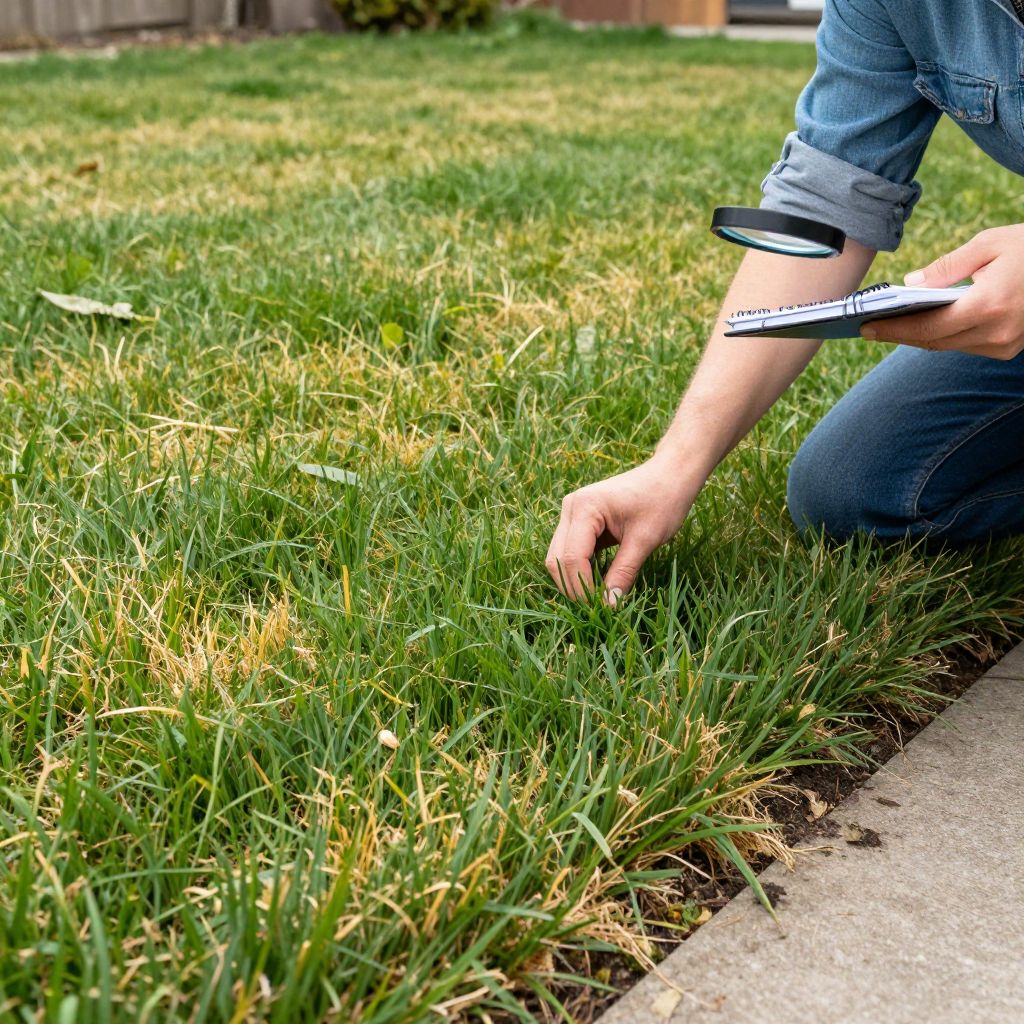
If you’re staring at your lawn and wondering, “What type of grass do I have?” you’re not alone. Many lawns contain a single grass species, but some are mixed, patchy, or partly weeds, which makes identification tricky at first glance.
The good news is that you can usually identify your grass by looking closely at the blade shape, growth habit, color, texture, and how it behaves in sun, shade, heat, and cold. Once you know what you have, you can mow, water, fertilize, overseed, and repair it much more effectively.
What type of grass do I have?
You can identify most lawn grasses by combining a few clues: blade width, leaf tip shape, growth pattern, color, texture, and whether the grass spreads by stolons, rhizomes, or bunches. Warm-season grasses usually thrive in heat and go dormant in cold, while cool-season grasses stay greener in cooler weather and struggle in summer heat.
Start with the easiest identification clues
Grass ID is much easier if you look at the plant closely instead of judging the whole lawn from a distance. Pull up a small sample, note the roots and stems, and compare the leaf blades under good light.
1. Look at blade width and texture
- Fine blades feel soft and narrow, often less than about 1/8 inch wide.
- Medium blades are broader and more flexible.
- Coarse blades feel thick, stiff, or rough.
Fine-textured lawns are often bentgrass, fine fescue, bermudagrass, or zoysiagrass. Coarser lawns may be tall fescue, St. Augustinegrass, or some bahiagrass types.
2. Check the leaf tip and collar area
The point where the blade meets the stem can help narrow things down. Some grasses have a boat-shaped tip, while others end in a more pointed or rounded shape.
Also look for the collar, ligule, and any small hairs at the leaf base. These details are useful, especially when comparing grasses that otherwise look similar.
3. Notice how the grass grows
- Bunch-type grasses grow in clumps and spread slowly.
- Stolon-forming grasses spread above ground by runners.
- Rhizome-forming grasses spread below ground by underground stems.
This matters because a lawn that spreads aggressively may recover from damage faster, while a bunch-type lawn may need overseeding or patch repair.
4. Observe color and seasonal behavior
Grass color is not a perfect ID tool, but it helps. Some grasses are blue-green, some bright green, and some dull or gray-green. Also note whether your lawn stays active in cool weather or turns brown during heat or frost.
Seasonal behavior is one of the best clues. If the lawn greens up in spring and struggles in summer heat, it may be a cool-season grass. If it loves summer heat and browns after frost, it may be a warm-season grass.
Common lawn grasses and how to tell them apart
Here are the most common lawn grasses home gardeners encounter. Use these descriptions as a practical starting point, then compare several features together rather than relying on just one.
Cool-season grasses
- Tall fescue: Medium to coarse blades, deep green, bunch-forming with some spreading in newer types. Often used in sun and partial shade.
- Perennial ryegrass: Fine to medium blades, shiny underside, fast germination, often used in mixes and overseeding.
- Kentucky bluegrass: Medium texture, boat-shaped leaf tips, spreads by rhizomes, often forms a dense sod.
- Fine fescue: Very fine, narrow blades, soft texture, often better in shade and lower-input areas.
Warm-season grasses
- Bermudagrass: Fine to medium blades, dense growth, spreads aggressively by runners, thrives in full sun and heat.
- Zoysiagrass: Fine to medium blades, stiff texture, slow to establish, forms a dense, carpet-like lawn.
- St. Augustinegrass: Broad, coarse blades with thick stolons, tolerates heat and some shade, common in warmer climates.
- Centipedegrass: Light green, medium texture, slow-growing, low maintenance in suitable climates.
- Bahiagrass: Coarse, open growth, often seen in sandy soils and low-input lawns.
How to identify your grass step by step
If you want a reliable answer, use a simple field method. You do not need special equipment, just a sharp knife or scissors, a ruler, and a phone camera.
- Take a close-up photo of the lawn in daylight.
- Cut a small sample with roots, stems, and several blades attached.
- Measure blade width and note whether the lawn feels fine, medium, or coarse.
- Look for runners above the soil or underground spreading stems.
- Check whether the grass grows in clumps or forms a dense mat.
- Observe the lawn in different seasons if possible.
- Compare your sample with local extension photos or a trusted plant ID guide.
If you still are not sure, bring a sample to a local garden center, extension office, or turf professional. Regional climate matters a lot, because the same grass can look different in shade, drought, or poor soil.
What growing conditions can help confirm the grass type?
Grass species often reveal themselves through the conditions they prefer. Your lawn’s performance in sun, shade, drought, and foot traffic can point you in the right direction.
Sun exposure
- Full sun lovers: Bermudagrass, zoysiagrass, and many bluegrass lawns perform best in bright, open areas.
- Better shade tolerance: Fine fescue and St. Augustinegrass usually handle shade better than sun-loving turf types.
If one part of your lawn is thriving while another thins out, the difference may be light, not just grass type. Trees, buildings, and reflected heat can change turf performance dramatically.
Soil and drainage
Some grasses tolerate poor drainage better than others. St. Augustinegrass and certain warm-season lawns may handle moist soils better than fine-textured grasses that prefer faster drainage.
On the other hand, compacted clay can weaken many turf types by limiting oxygen at the roots. If your lawn puddles after rain, the problem may be soil structure as much as grass identity.
Mowing response
How the grass reacts to mowing can also help. Dense spreading grasses often tolerate lower mowing, while bunch-forming grasses usually look better when kept a bit taller.
Never remove more than one-third of the blade at a time. Cutting too short stresses the lawn and can make identification harder by changing its appearance.
Common mistakes when identifying grass
It is easy to misidentify lawn grass if you focus on only one feature. A few common errors can lead to the wrong care plan.
- Confusing weeds with turf grass, especially in thin lawns.
- Judging by color alone, which changes with water, fertilizer, and weather.
- Ignoring the root and stem structure.
- Assuming all patchy lawns are the same species.
- Using a grass ID from another region without checking local climate.
For example, a lawn with coarse blades could be tall fescue in one area, but St. Augustinegrass in another. The local climate and growth habit matter just as much as the blade itself.
What to do once you know your grass type
Once you identify your lawn, you can match your care to the grass instead of guessing. That usually means better color, fewer weeds, and less wasted effort.
Mowing
Set mowing height based on the grass type and your local conditions. In general, taller mowing helps shade the soil, reduce weed pressure, and protect roots during heat or drought.
- Use a sharp mower blade for clean cuts.
- Adjust height seasonally if your grass type and climate call for it.
- Do not scalp the lawn, especially during hot or dry weather.
Watering
Water deeply enough to moisten the root zone, then let the surface dry slightly before watering again. Shallow, frequent watering encourages weak roots and can favor disease.
New lawns and newly overseeded areas need more careful moisture management than established turf. Always adapt watering to rainfall, soil type, and current weather.
Fertilizing and soil care
Different grasses have different nutrient needs, but most lawns benefit from soil testing before you add fertilizer. A soil test helps you avoid overfeeding and can reveal pH or nutrient issues that limit growth.
Topdressing with compost can help improve soil structure in thin, tired lawns if applied lightly and evenly. It is especially useful where soil is compacted or low in organic matter.
Repairing thin or damaged areas
- Spreading grasses may fill in with better mowing, watering, and light feeding.
- Bunch grasses often need overseeding or patching.
- Severe bare spots may need soil loosening before reseeding or sod repair.
If you overseed, use seed that matches your existing grass as closely as possible. Mixing very different grass types can create uneven texture and color.
Pests, diseases, and stress signs to watch for
Some lawn problems look like a grass ID issue when they are actually caused by pests, disease, or environmental stress. Check for patterns before making changes.
Signs of pest or disease damage
- Irregular brown patches
- Chewed or ragged blades
- Thinning that spreads outward
- Fungal growth, spots, or rings
- Areas that wilt despite watering
Stress from drought, shade, compacted soil, dog urine, or poor drainage can mimic disease. If the lawn is patchy in one area but healthy nearby, look closely at site conditions before assuming the grass type is wrong.
When your lawn may be a mix of grasses
Many lawns are not a single grass species. Over time, seed mixes, repairs, and natural spread can create a blend of turf types, especially in older yards.
A mixed lawn is not always a problem, but it can be harder to manage because different grasses may want different mowing heights, watering habits, and sun exposure. In that case, choose care practices that suit the dominant grass and the site conditions.
Quick grass identification checklist
- Blade width: fine, medium, or coarse
- Growth habit: clump, runner, or dense mat
- Color: bright green, blue-green, or dull green
- Seasonal behavior: cool-season or warm-season pattern
- Sun tolerance: full sun, partial shade, or shade-friendly
- Root and stem structure: stolons, rhizomes, or bunching
Conclusion: identify first, then care for the lawn
If you are asking, “What type of grass do I have?” the best next step is to inspect a close-up sample and compare several traits, not just one. Once you know whether your lawn is a cool-season or warm-season grass, you can mow, water, feed, and repair it with much better results.
For more practical lawn help, you may also want to read about how to overseed a lawn and how to improve compacted soil in your yard.