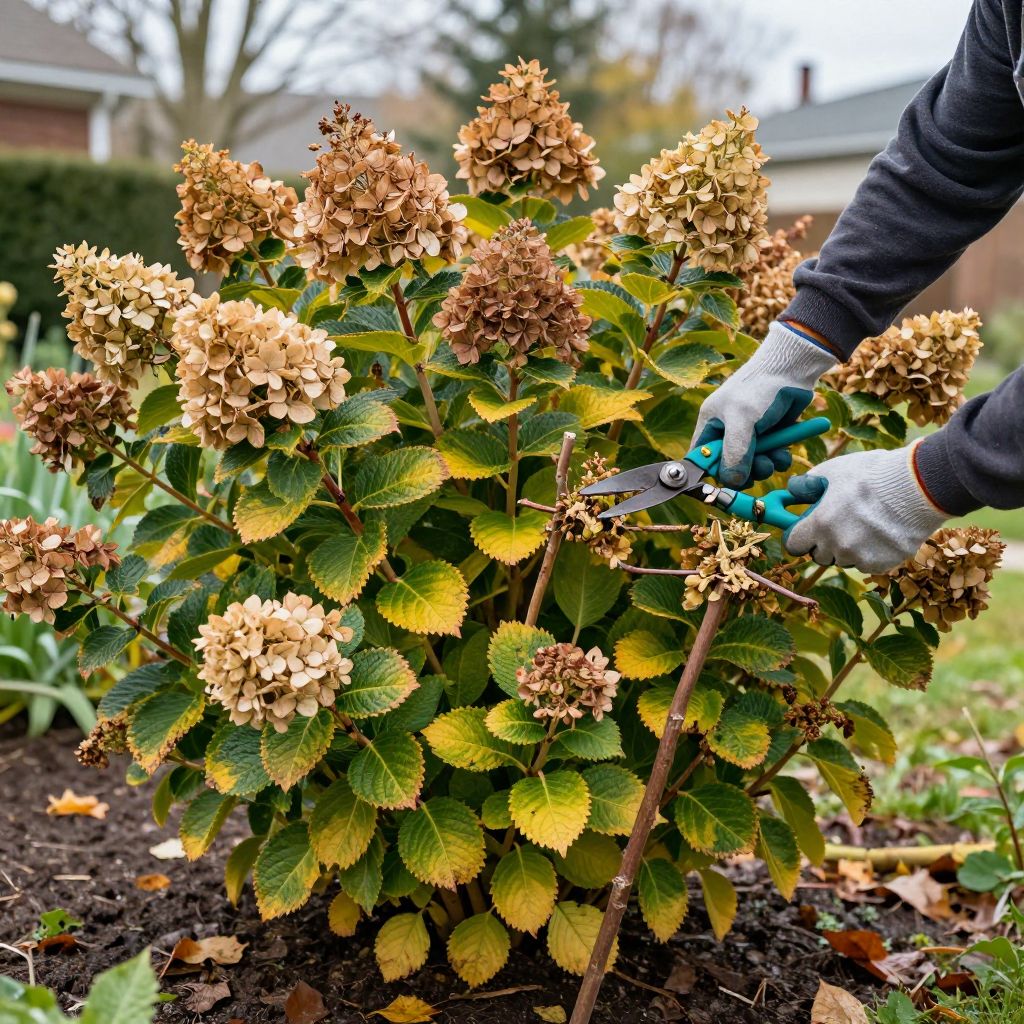
When should you cut back hydrangeas for winter? The short answer is: it depends on the type of hydrangea you grow. Some bloom on old wood and should be pruned lightly, while others bloom on new wood and can be cut back more in late winter or early spring. Timing matters because the wrong cut can remove next year’s flower buds.
If you want healthy plants and more reliable blooms, the safest approach is to identify your hydrangea first, then prune with the season in mind. A little selective cleanup in autumn is fine, but major pruning is usually best left until you know whether your shrub flowers on old or new growth.
When To Cut Back Hydrangeas For Winter?
For most hydrangeas, do not do a hard cutback in fall. Remove only dead, damaged, or diseased stems before winter, then wait until late winter or early spring for major pruning. Hydrangeas that bloom on old wood should be pruned sparingly; types that bloom on new wood can be cut back more confidently after the coldest weather has passed.
First, Identify What Kind of Hydrangea You Have
Pruning timing depends on bloom habit, not just the season. If you do not know the variety, use the flower and stem structure as a guide before you cut.
Common hydrangea groups and pruning timing
- Bigleaf hydrangea (Hydrangea macrophylla) often blooms on old wood, so heavy fall pruning can remove next year’s flower buds.
- Oakleaf hydrangea (Hydrangea quercifolia) also usually blooms on old wood and is best pruned lightly.
- Peegee hydrangea (Hydrangea paniculata) blooms on new wood and can be pruned in late winter or early spring.
- Smooth hydrangea (Hydrangea arborescens) also blooms on new wood and tolerates more substantial pruning.
If your plant is a newer reblooming bigleaf hydrangea, it may flower on both old and new wood, but it is still wise to avoid heavy fall pruning unless stems are clearly dead or broken.
What to Do in Fall Before Winter Arrives
Fall is the time for cleanup, not a full haircut. Your goal is to reduce winter damage while protecting the buds that will form flowers next season.
- Remove dead, broken, or diseased stems at the base or back to healthy wood.
- Snip off spent flower heads if they are floppy and likely to catch snow or ice.
- Leave healthy stems in place on old-wood bloomers to protect buds from cold.
- Rake away fallen leaves and debris around the base to reduce disease pressure.
- Add a light mulch layer after the ground begins to cool, but keep it off the stems.
Avoid fertilizing late in the season, because tender new growth is more likely to be damaged by frost. In colder climates, late-season growth can be especially vulnerable.
When Major Pruning Is Best Done
For hydrangeas that need shaping, the safest time is usually late winter to early spring, once the worst cold has passed but before active growth starts. This is especially helpful for new-wood bloomers such as panicle and smooth hydrangeas.
Why waiting helps
- You can see which stems survived winter.
- You reduce the risk of pruning away healthy buds on old wood types.
- Plants recover quickly as growth resumes in spring.
In very cold regions, wait until you can clearly see swelling buds or new green growth beginning. In mild climates, you may prune a little earlier, but still avoid cutting hard during warm spells that could encourage premature growth.
How Much to Cut Back by Hydrangea Type
Use the plant’s bloom habit to decide how much to remove. When in doubt, prune less rather than more.
Old-wood bloomers: prune lightly
Bigleaf and oakleaf hydrangeas usually need only cleanup pruning. Remove dead tips, weak stems, and spent blooms, but keep the main framework of the shrub intact.
- Cut out dead stems at the base.
- Remove crossing or crowded branches.
- Trim just above a healthy pair of buds if you need to shorten a stem.
New-wood bloomers: prune more freely
Panicle and smooth hydrangeas can be cut back harder because they flower on current-season growth. You can shorten stems to shape the shrub and encourage sturdy new shoots.
- Reduce stems by about one-third to one-half, if needed.
- Remove weak, thin growth near the base.
- Keep a balanced shape so the plant does not flop open later in the season.
Even on new-wood types, do not prune so hard that you leave only a few stubs unless you are rejuvenating an overgrown plant and understand the temporary loss of size and flowering structure.
Winter Protection Matters as Much as Pruning
In cold or windy sites, winter injury can be more damaging than pruning itself. A well-timed cutback should be paired with simple protection.
Helpful winter care steps
- Mulch the root zone with 2 to 4 inches of shredded bark, leaf mold, or composted leaves.
- Keep mulch a few inches away from the main stems to prevent rot.
- Water deeply before the ground freezes if autumn has been dry.
- Use burlap or a windbreak only in exposed locations where drying winds are severe.
For potted hydrangeas, winter care is different. Containers freeze faster than garden soil, so move pots to a sheltered location or insulate them well. Do not rely on pruning alone to protect container-grown plants.
Tools and Technique for Clean Cuts
Clean pruning makes a big difference. Ragged cuts heal more slowly and can invite disease.
Use the right tools
- Hand pruners for stems up to about pencil thickness
- Loppers for thicker canes
- Rubbing alcohol or disinfectant for cleaning blades between plants if disease is present
Make each cut correctly
- Find a healthy bud or branching point.
- Cut just above it at a slight angle.
- Remove stems that are brown, brittle, or hollow.
- Step back and check the plant’s shape before making more cuts.
If you are unsure whether a stem is alive, scratch the bark lightly with a fingernail. Green tissue underneath usually means the stem is still viable; brown and dry tissue usually means it is dead.
Common Mistakes to Avoid
Most hydrangea pruning problems happen because the plant was cut at the wrong time or too severely.
- Cutting all stems to the ground in fall on old-wood bloomers can remove next year’s flowers.
- Pruning during warm autumn weather can stimulate tender growth that winter will damage.
- Leaving diseased stems in place can let problems overwinter.
- Ignoring plant type can lead to either too much wood left behind or too many buds removed.
If your hydrangea did not bloom this year, the cause is often winter bud damage, improper pruning, too much shade, or a late frost. The answer is not always to prune harder; sometimes the plant simply needs a more protected site and a better pruning schedule.
How Site and Growing Conditions Affect Winter Pruning
Hydrangeas in colder climates often need more winter protection and less fall pruning than those in mild regions. Plants in full sun may dry out faster in winter wind, while shrubs in too much shade may produce fewer flowers and weaker stems.
Give hydrangeas the right basics
- Plant in well-drained soil that stays evenly moist but not soggy.
- Choose a location with morning sun and afternoon shade for many bigleaf types.
- Allow more sun for panicle hydrangeas if your climate is not extremely hot.
- Improve heavy clay with organic matter so roots do not sit in water.
Healthy, well-established plants handle winter pruning stress better than newly planted shrubs. If your hydrangea was planted this season, keep pruning minimal and focus on root establishment.
Quick Seasonal Guide
- Late summer to fall: deadhead lightly if needed; remove dead or damaged stems only.
- Late fall: stop major pruning; mulch after temperatures cool.
- Late winter to early spring: prune new-wood bloomers and shape the shrub.
- After new growth starts: avoid major pruning, especially on old-wood bloomers.
Conclusion: The Safest Winter Pruning Plan
If you are wondering when to cut back hydrangeas for winter, start with a simple rule: clean up in fall, prune hard in late winter only if the type allows it. Identify your hydrangea, remove only damaged growth before winter, and save major shaping for the right season. That one habit will protect blooms and keep your shrubs healthier year after year.
For more help with seasonal shrub care, you may also want to read about how to mulch garden beds for winter protection and how to prune flowering shrubs without losing blooms.