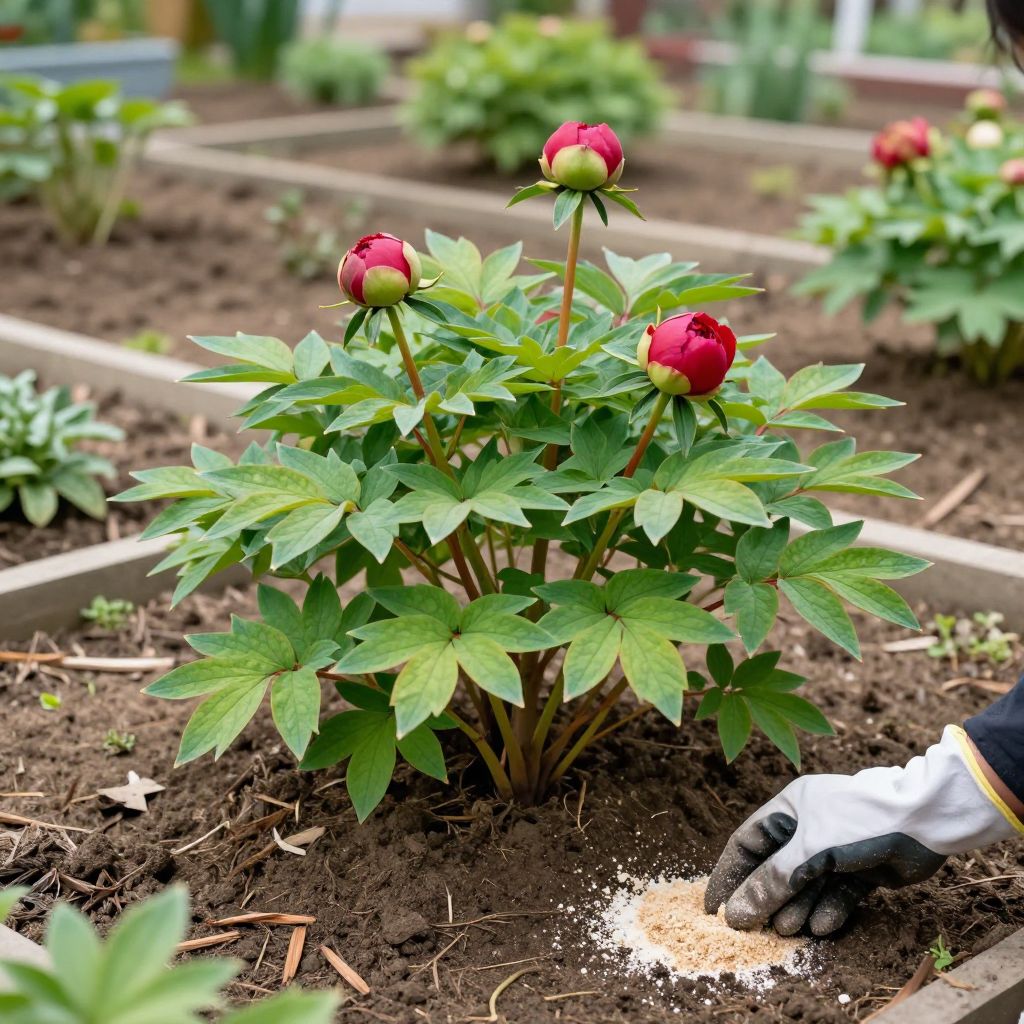
Wondering when to fertilize peonies so you help them bloom without making them flop or stop flowering? Timing matters more than feeding often does. Peonies usually do best with light, well-timed nutrition rather than heavy fertilizer, especially once they are established.
The short answer: fertilize peonies in early spring as new shoots emerge, and again lightly right after flowering if your soil is poor. Avoid late-season feeding, which can push soft growth before winter and may reduce next year’s blooms.
When To Fertilize Peonies?
Fertilize peonies in early spring when red or pink shoots are just 2 to 3 inches tall, before rapid growth begins. A second, lighter feeding after flowering can help in poor soil, but stop fertilizing by mid- to late summer so the plants can harden off for winter.
Why timing matters for peonies
Peonies are long-lived perennials that store energy in thick roots. They do not need frequent feeding, and too much fertilizer can create leafy growth at the expense of flowers.
Good timing supports strong stems, healthy foliage, and reliable buds. Poor timing can lead to weak growth, fewer blooms, or plants that are more prone to disease and lodging.
The best feeding windows
- Early spring: The most important time to fertilize peonies.
- After bloom: Optional, and only if the soil is lean or the plant looks weak.
- Fall: Usually skip fertilizer, especially nitrogen-rich products.
How to fertilize peonies in spring
When shoots first appear, apply a balanced, slow-release fertilizer or a thin layer of compost around the plant. Keep the material a few inches away from the crown so you do not burn new growth.
- Wait until shoots are clearly visible in spring.
- Clear away winter mulch if it is still packed around the crown.
- Scatter compost or a light dose of balanced fertilizer around the drip line.
- Gently work it into the top layer of soil if needed.
- Water lightly to help nutrients move into the root zone.
If your soil is already rich, you may only need compost. Peonies often respond better to steady soil improvement than to strong fertilizer applications.
What kind of fertilizer works best?
For most home gardens, a balanced fertilizer or compost is enough. If you use a commercial product, choose one that is not overly high in nitrogen. Too much nitrogen can produce lush leaves and fewer flowers.
- Compost: Excellent for improving soil structure and feeding slowly.
- Balanced granular fertilizer: Useful in average garden soil.
- Bone meal: Sometimes used for phosphorus, but it is not a magic fix and works best when soil tests show a need.
Should you fertilize peonies after they bloom?
Yes, but only lightly and only when the plant needs a boost. A post-bloom feeding can help replenish energy after flowering, especially in sandy or depleted soil. Keep it modest, because peonies do not benefit from heavy summer feeding.
After bloom, the plant is still building roots and storing carbohydrates for next year. That makes it a reasonable time for a small top-dressing of compost or a light application of fertilizer, but not a time for aggressive feeding.
When to skip the second feeding
- The plant is already growing vigorously.
- The soil was amended well at planting.
- You use a rich mulch or compost layer each year.
- Your peonies are in a cool climate with a short growing season.
When not to fertilize peonies
Do not fertilize peonies late in summer or in fall. Late feeding can encourage soft new growth that is vulnerable to cold damage and may interfere with the plant’s natural dormancy cycle.
Also avoid fertilizing a drought-stressed plant unless you water first. Dry roots can be more easily damaged by fertilizer salts.
Common timing mistakes
- Fertilizing too early: Before shoots emerge, nutrients may be wasted or washed away.
- Fertilizing too late: Late-season growth can be weak and frost-tender.
- Using too much nitrogen: Leads to tall, floppy stems and fewer flowers.
- Putting fertilizer against the crown: Can burn emerging shoots.
Soil, sun, and drainage: the bigger picture
Fertilizer helps most when the growing conditions are already right. Peonies prefer full sun in most climates, fertile soil, and excellent drainage. In very hot regions, a little afternoon shade can help flowers last longer.
Heavy clay soil or constantly wet ground can cause root problems no matter how well you fertilize. If your peonies struggle, improve drainage first by adding compost, raising the planting area, or relocating the plant if needed.
Ideal growing conditions for stronger bloom
- Sunlight: At least 6 hours of direct sun is usually best.
- Soil: Rich, well-drained soil with organic matter.
- Spacing: Good air circulation helps reduce disease.
- Planting depth: Eyes should not be planted too deep, or blooming may be poor.
How to tell if your peony needs fertilizer
Many peonies do fine with little to no extra feeding once established. If blooms are sparse, stems are weak, or foliage looks pale despite good watering and sunlight, the soil may need a boost.
Before adding fertilizer, consider whether the real issue is planting depth, shade, root competition, or poor drainage. Those problems often matter more than nutrition.
Signs the plant may need help
- Weak stems that bend easily
- Small flowers or fewer buds than usual
- Pale foliage not caused by drought or pests
- Slow growth in otherwise healthy weather
Practical feeding tips for established peonies
Established peonies usually need less fertilizer than young plants. A yearly spring top-dressing of compost is often enough, especially in average garden soil.
If you do use fertilizer, keep it light. The goal is steady, healthy growth, not a fast burst of leafy growth.
- Apply fertilizer around, not on, the crown.
- Water after feeding if the soil is dry.
- Mulch lightly, but do not bury the crown.
- Stop feeding once the plant has finished its main growth period.
What about newly planted peonies?
Newly planted peonies usually need less fertilizer than you might expect. If the planting hole was amended with compost, wait until the following spring before feeding heavily.
Young plants are focused on root establishment. Too much fertilizer can push top growth before the root system is ready to support it.
First-year care priorities
- Keep soil evenly moist, not soggy.
- Provide full sun or as much sun as your climate allows.
- Use compost sparingly if the soil is poor.
- Avoid forcing blooms with heavy feeding.
Do peonies need special care after fertilizing?
Not much. Water the soil if it is dry, and keep an eye on drainage. Peonies dislike sitting in wet ground, especially after feeding.
If you mulch, use a thin layer and keep it away from the crown. This helps conserve moisture without trapping too much dampness around the shoots.
Common peony problems that fertilizer will not fix
Sometimes gardeners fertilize because peonies are not blooming, but the cause is elsewhere. If your plant is healthy but flowerless, check these common issues first.
- Too much shade: Peonies need strong light to bloom well.
- Planting too deep: A common reason for poor flowering.
- Recent transplanting: Peonies may take time to settle in.
- Overcrowding: Nearby plants can compete for light and nutrients.
- Fungal disease: Poor air circulation can lead to botrytis and other issues.
Simple seasonal peony care calendar
This basic schedule helps you decide when to fertilize peonies without overdoing it. Adjust it to your local climate and the age of your plants.
- Early spring: Remove winter debris, then fertilize lightly as shoots emerge.
- Late spring to early summer: Enjoy bloom; water during dry spells.
- After bloom: Optional light feeding only if soil is poor.
- Late summer: Stop fertilizing and let growth slow naturally.
- Fall: Cut back diseased foliage if needed and clean up fallen leaves.
Conclusion
The best time to fertilize peonies is in early spring when shoots first emerge, with an optional light feeding after bloom if your soil is poor. Keep fertilizer modest, focus on drainage and sunlight, and avoid late-season feeding. If you want stronger blooms next year, start by top-dressing your peonies with compost this spring.
If you want to improve your peony care routine further, look for more guidance on how to plant peonies correctly and how to deadhead and prune peonies after flowering.