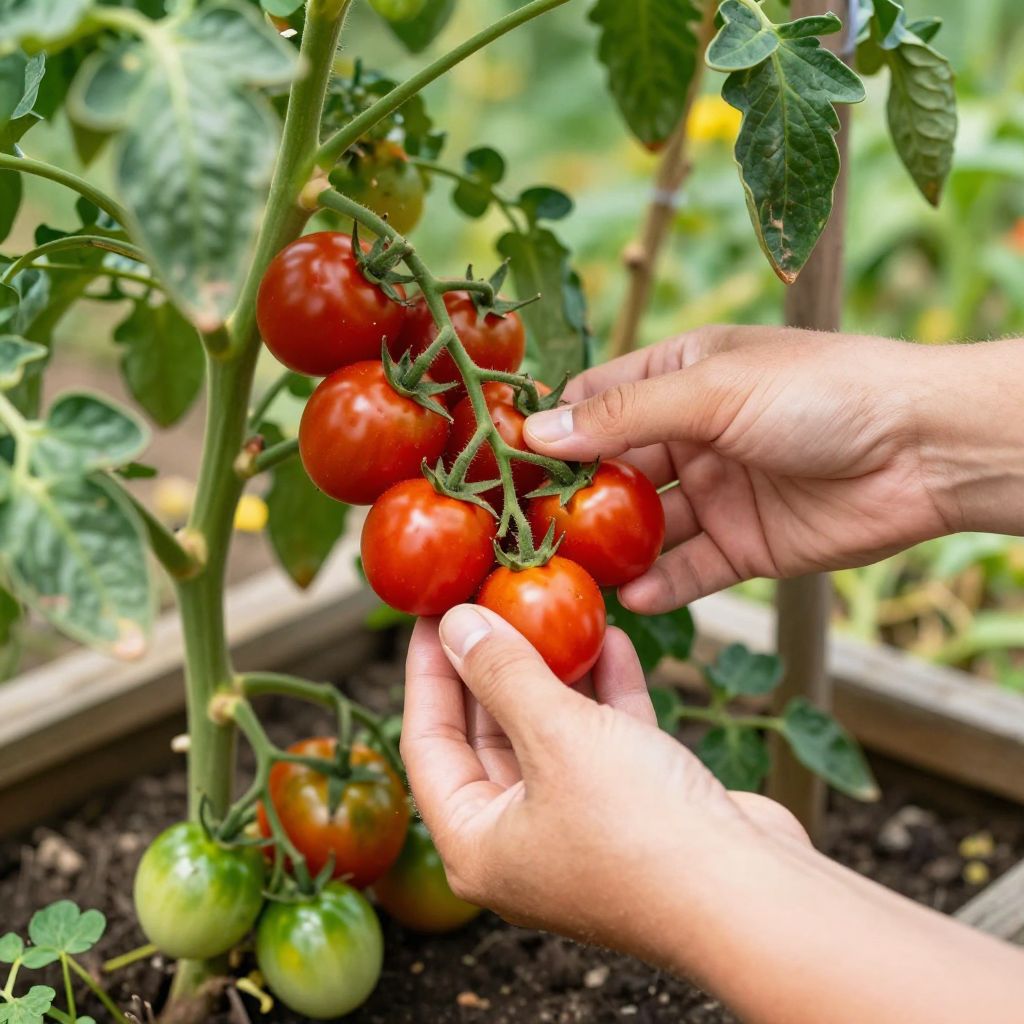
Wondering when to pick cherry tomatoes so they taste sweet and juicy instead of bland or split? The best time is usually when the fruits are fully colored, slightly soft to the touch, and come away from the stem with a gentle twist. Exact timing depends on variety, weather, and how much sun your plants get.
Pick too early and the flavor may be flat; wait too long and birds, cracking, or overripening can ruin the crop. Here’s how to judge ripeness, harvest at the right stage, and keep your cherry tomato plants producing well through the season.
When to pick cherry tomatoes?
Pick cherry tomatoes when they have reached their full color for the variety, feel slightly yielding, and taste sweet rather than starchy. Most are best harvested at the “fully colored” stage, but you can also pick them just before peak ripeness if rain, pests, or splitting are a concern.
How to tell cherry tomatoes are ripe
Cherry tomatoes are usually ready when they look vibrant and feel just a little soft. Ripe fruit should detach easily with a light twist or snip, without pulling hard on the stem.
Visual signs of ripeness
- Color is complete for the variety: red, yellow, orange, purple, or nearly black tomatoes should all look even and rich.
- The skin looks smooth and glossy, not dull or green-shouldered.
- The fruit has filled out fully and looks plump, not shrunken.
Touch and taste signs
- Ripe cherry tomatoes give slightly when gently squeezed.
- The fruit twists off easily or cuts cleanly with scissors.
- Flavor is sweet, balanced, and aromatic.
If you are unsure, taste one. Cherry tomatoes can look colorful before they fully develop flavor, so a quick taste test is often the most reliable check.
Seasonal timing: what affects harvest time
Cherry tomatoes ripen faster in warm, sunny weather and more slowly during cool spells. In many gardens, the first harvest begins in mid- to late summer, but container plants, greenhouse plants, and early-started transplants can produce earlier.
Weather and light
Tomatoes ripen best with plenty of direct sun and warm days. When nights stay cool, ripening slows down even if the fruit is already sized up.
Heavy cloud cover, shade from nearby plants, or a short growing season can also delay ripening. If your plants are slow, patience is often better than picking under-ripe fruit too soon.
Plant maturity matters
Cherry tomatoes do not ripen all at once. The first fruits on a plant often mature before later clusters, especially if the plant has been pruned, fed well, and kept evenly watered.
Fruit usually ripens in waves, so check plants every couple of days once the first tomatoes start changing color.
How to harvest cherry tomatoes the right way
Harvest gently to avoid damaging the fruiting trusses and to keep the plant productive. A careful pick also reduces bruising, which shortens storage life.
- Check fruit in good light, ideally in the morning after dew has dried.
- Choose tomatoes that are fully colored and slightly soft.
- Hold the cluster or stem with one hand.
- Twist the fruit gently until it releases, or use clean snips to cut the stem just above the tomato.
- Place harvested fruit in a shallow container to avoid crushing.
Tip: If the stem resists, leave the fruit for another day or two. Forcing it can tear the plant and reduce future harvests.
Should you pick cherry tomatoes before they are fully ripe?
Yes, sometimes. If frost, heavy rain, cracking, birds, slugs, or splitting are likely, you can harvest tomatoes at the “breaker” stage, when they just begin to change color. They will continue ripening indoors.
When early picking makes sense
- Cold weather is coming and fruit is still on the vine.
- Rain is causing splitting in nearly ripe fruit.
- Birds, squirrels, or insects are taking ripe tomatoes.
- You need to reduce stress on a heavily loaded plant.
How to ripen picked tomatoes indoors
Place breaker-stage tomatoes in a single layer at room temperature, out of direct sun. A paper bag or shallow bowl works well, but avoid sealing them in airtight plastic.
Keep them away from cold spots, because refrigeration can reduce flavor and slow ripening. Check daily and remove any fruit that starts to soften too much or show rot.
What happens if you wait too long?
Overripe cherry tomatoes can become soft, split, or fall from the vine. They may still be edible, but texture and flavor decline quickly, especially in hot weather.
Leaving ripe fruit on the plant can also attract pests and slow the plant’s next flush of flowers and fruit. Regular picking encourages more production.
Signs you waited too long
- Fruit feels very soft or mushy.
- Skin cracks near the stem or around the sides.
- Tomatoes drop with the slightest touch.
- Bird damage or insect feeding appears on ripe clusters.
Growing conditions that improve ripening
Healthy plants ripen fruit more evenly. If your tomatoes are slow to color, the issue is often more about growing conditions than harvest timing.
Sunlight
Cherry tomatoes need full sun for best production, generally at least 6 to 8 hours of direct light. In partial shade, plants may still grow, but fruit often ripens later and tastes less sweet.
Soil and drainage
Use well-drained soil enriched with compost. Waterlogged roots can slow growth, reduce flowering, and make fruiting uneven.
If you garden in heavy clay, raised beds or containers can help improve drainage and warm the soil faster in spring.
Watering
Water consistently so the soil stays evenly moist, not soggy. Irregular watering can lead to cracking, blossom-end rot, and uneven ripening.
Mulch helps hold moisture steady and reduces stress during hot spells. Keep mulch a little away from the stem to prevent rot.
Feeding
Too much nitrogen can produce lots of leafy growth and fewer ripe tomatoes. A balanced approach, with compost and modest feeding, usually works better than pushing the plant hard.
If your plant is lush but slow to fruit, review sunlight, watering, and feeding before adding more fertilizer.
Common problems that affect harvest timing
Several issues can make you wonder whether it is time to pick cherry tomatoes. Often, the fruit is fine but the plant needs a small correction in care.
Cracking
Cracking usually happens after a dry spell followed by heavy watering or rain. Pick cracked fruit as soon as possible and adjust watering to stay more even.
Blossom-end rot
This shows up as a dark, leathery patch on the bottom of the fruit. Affected tomatoes are not suitable for harvest, and the problem is usually linked to inconsistent moisture or calcium uptake, not simply a lack of calcium in the soil.
Pests and disease
Birds, hornworms, aphids, and fungal diseases can damage ripening fruit. Inspect plants regularly, remove damaged tomatoes, and keep foliage open enough for air movement.
If disease is spreading, harvest usable fruit promptly and remove badly affected plant material from the garden to limit further problems.
Best tools for picking cherry tomatoes
You do not need special equipment, but a few simple tools make harvesting easier and safer for the plant.
- Small scissors or snips for clean cuts on tight clusters.
- A shallow basket or bowl to prevent bruising.
- Clean hands for gentle twisting and sorting.
- Optional gloves if foliage is sticky or prickly.
Keep tools clean, especially if you are moving between plants. This helps reduce the spread of disease.
How often should you harvest?
Once cherry tomatoes begin ripening, check plants every 1 to 3 days. In hot weather, fruit can go from nearly ripe to overripe very quickly.
Frequent picking keeps plants producing and helps you catch fruit before splitting or pest damage occurs. If you miss a day or two, do a thorough check of every cluster.
Quick harvest checklist
- Fruit has full color for the variety.
- Tomato feels slightly soft, not hard.
- It releases easily with a gentle twist or snip.
- Skin is smooth and uncracked.
- Flavor is sweet and fully developed.
Conclusion: the simplest way to know when to pick
The safest rule is to harvest cherry tomatoes when they are fully colored, slightly soft, and easy to detach. If weather, pests, or cracking are a risk, pick them at the first sign of color change and let them finish ripening indoors.
For more help with healthy tomato crops, you may also want to read about tomato plant care and how to grow tomatoes.