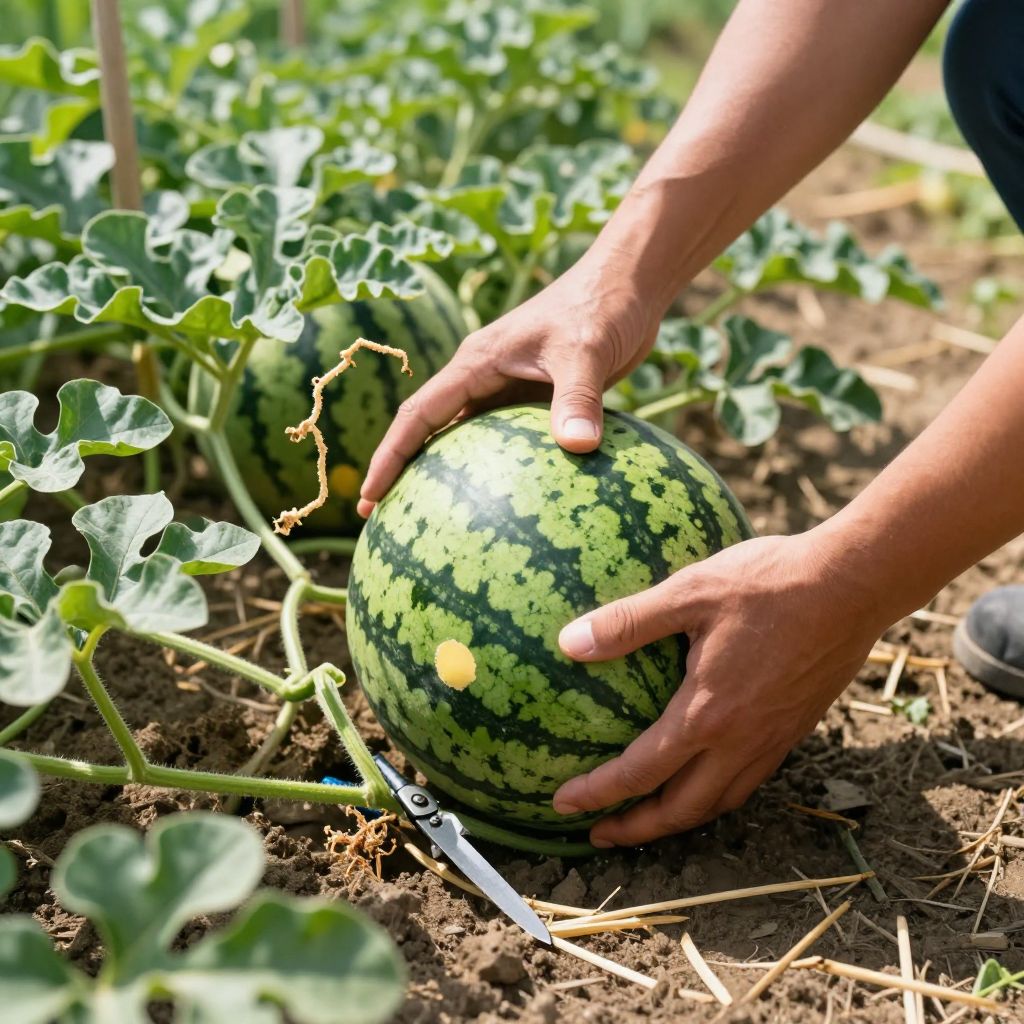
Wondering when to harvest watermelon so it’s sweet, crisp, and fully ripe? Picking too early gives you pale, bland flesh, while waiting too long can lead to mealy texture or splitting, especially after heavy rain.
The good news is that watermelons give several reliable ripeness clues. You do not need to guess if you check the vine, the rind, and the tendril near the fruit together.
When to harvest watermelon?
Harvest watermelon when the fruit shows multiple ripeness signs at once: the nearest tendril has dried, the underside has turned creamy yellow, the rind looks dull rather than shiny, and the melon sounds deep and hollow when tapped. Days from planting help, but visual cues are more reliable than the calendar alone.
How to tell a watermelon is ripe
Watermelons do not ripen much after harvest, so timing matters. Use several signs together rather than relying on just one.
1. Check the curly tendril
Look at the small curly tendril on the vine closest to the melon stem. When it turns brown and dry, the fruit is often close to ready.
Best practice: if that tendril is still green and flexible, wait a few more days and check again.
2. Inspect the ground spot
The spot where the melon rests on the soil should change from white or pale green to a creamy yellow or buttery color. This is one of the most dependable signs of ripeness.
3. Look at the rind surface
Immature watermelons often have a glossy skin. As they mature, the rind usually becomes duller and less shiny. The stripes may also look more defined, depending on the variety.
4. Tap for a hollow sound
Gently thump the melon with your knuckles. A ripe watermelon often sounds deep and hollow, while an immature one tends to sound more high-pitched or tight.
This method is helpful, but it works best when paired with the other signs above.
5. Watch the stem and vine
The stem near the fruit may begin to dry and brown as the melon matures. Do not rely on a completely dried vine alone, though, because plant stress can also cause vines to decline before the fruit is truly ready.
How many days after planting should you harvest?
Most watermelons are ready roughly 70 to 100 days after planting, but the exact timing depends on the variety, weather, and growing conditions. Cool summers, poor pollination, drought stress, or nutrient imbalance can delay maturity.
If you know the variety, use the seed packet or plant tag as a starting point, then begin checking ripeness signs as the expected harvest window approaches.
Why days alone are not enough
Two melon plants started on the same date can mature at different speeds if one gets more heat, sunlight, or consistent moisture. That is why experienced gardeners use a combination of calendar timing and fruit cues.
Step-by-step: how to harvest watermelon
- Check the melon for several ripeness signs: brown tendril, yellow ground spot, dull rind, and hollow sound.
- Choose a dry day if possible. Wet fruit is more likely to pick up soil and storage problems.
- Use clean, sharp pruners or a knife to cut the stem.
- Leave a short stem stub attached to the fruit if you can.
- Handle the melon carefully to avoid bruising or cracking.
- Move it out of direct sun after harvest.
Do not twist or yank the fruit off the vine. Pulling can damage the melon or tear the vine, which may affect nearby fruit still developing.
What happens if you harvest too early?
An underripe watermelon will usually have pale flesh, weak flavor, and a less juicy texture. Once picked, it will not become sweeter on the counter the way some fruits do.
If you suspect a melon is slightly early, you can still eat it, but do not expect it to improve much after harvest.
What happens if you wait too long?
Overripe watermelons can become mealy, soft, or less crisp. In the garden, very mature fruit may also split after heavy watering or rain, especially if the soil has been dry and then suddenly becomes saturated.
Wildlife and insects may also find ripe fruit faster than you do, so check the patch regularly once the harvest window begins.
Common mistakes when deciding when to harvest watermelon
- Using only size — large fruit can still be immature, depending on the variety.
- Relying only on the calendar — weather and growing conditions can shift maturity by days or even weeks.
- Picking at the first yellow spot — some melons color early before they are fully ripe.
- Ignoring the tendril — this is one of the easiest clues to check.
- Harvesting after heavy rain without checking — sudden moisture changes can affect quality and increase splitting risk.
Growing conditions that affect harvest timing
Watermelons ripen best in full sun, warm weather, and well-drained soil. If the plants are stressed by poor drainage, inconsistent watering, or low light, fruit development can slow or become uneven.
Sunlight
Watermelons need strong sun to build sugars and size. In partial shade, vines may grow but fruit often matures slowly and tastes less sweet.
Watering
Consistent moisture during fruit development helps the plant size and fill the melon. Irregular watering can cause cracking, poor flavor, or uneven ripening.
As harvest approaches, avoid sudden overwatering after a dry spell. That is when splitting is most likely.
Soil and drainage
Well-drained soil is important because watermelons dislike soggy roots. Heavy clay or compacted ground can delay maturity and increase disease pressure.
If your soil holds water, consider raised beds, mounded rows, or added organic matter to improve drainage over time.
How to store harvested watermelon
Freshly picked watermelon can be kept at room temperature for a short time if you plan to eat it soon. For longer storage, move it to a cool place or refrigerate after it has been cut.
Whole melons generally store better when handled gently and kept dry. Once cut, wrap or cover the pieces and refrigerate them promptly.
Troubleshooting: if your watermelon still seems unripe
If the fruit looks close but not quite ready, leave it on the vine and recheck in a few days. Mark the melon with a tag or tie so you can find it easily later.
If cold weather is approaching, you may need to harvest a little early. In that case, choose the fruit with the most ripeness signs and accept that flavor may be slightly less developed.
Signs the melon is not ready yet
- Green, flexible tendril near the fruit
- White or pale ground spot
- Shiny rind
- Sharp, high-pitched tap sound
- Fruit still growing rapidly in size
Signs the melon is ready now
- Brown, dry tendril near the stem
- Creamy yellow ground spot
- Dull rind finish
- Deep, hollow sound when tapped
- Fruit stops sizing up and looks fully filled out
Final tip for harvesting at the right time
When in doubt, check the same melon every day or two once it nears maturity. Watermelon ripeness can change quickly in warm weather, and a short waiting period often makes the difference between good and excellent flavor.
If you want to improve your next harvest, read more about watermelon care, pollination, and fruit development so you can match your watering and growing conditions to your local climate.