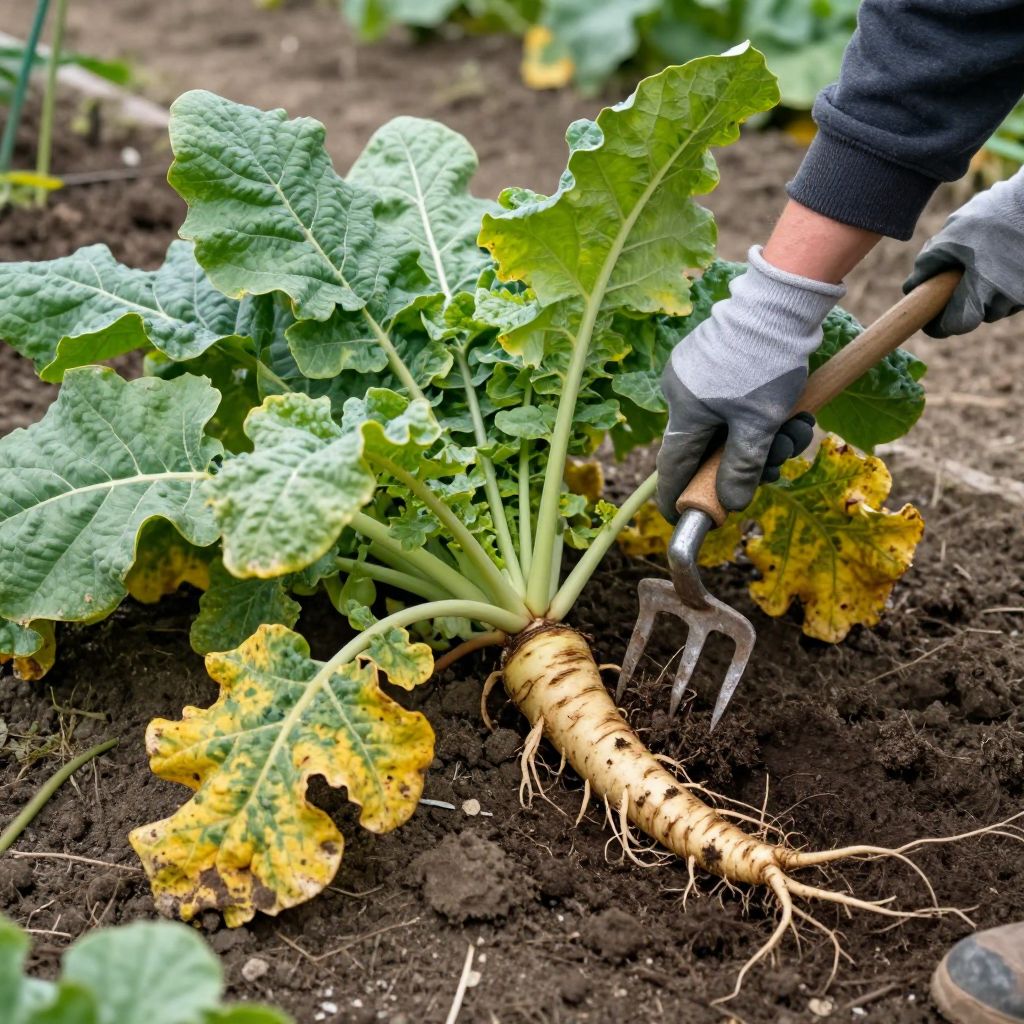
Wondering when to harvest horseradish so it has the strongest flavor without wasting the roots? Timing matters because horseradish develops best after a period of cool weather, and roots can become woody or overly tough if left too long in poor conditions.
The good news is that horseradish is forgiving. If you know what to look for, you can harvest at the right stage for fresh use, storage, or replanting, and you can keep a patch productive for years with very little fuss.
When to harvest horseradish?
Harvest horseradish in late fall after the first frost, or in early spring before new growth starts. That’s when the roots usually have the best balance of size and pungency. You can also dig a few roots anytime the plant is dormant, but flavor is often strongest after cool weather has passed.
How to tell horseradish is ready
Horseradish (Armoracia rusticana) is usually ready when the plant has had one full growing season, though many gardeners wait 2 seasons for larger roots. The top growth may look modest, but the underground roots can be substantial. Size, season, and your intended use matter more than the appearance of the leaves alone.
Signs the roots are harvestable
- The plant has grown for at least one season.
- Leaves begin to yellow or die back in fall.
- The soil has cooled after frost, which often improves flavor.
- You want roots for storage, processing, or dividing for replanting.
If you are growing horseradish in a warm climate, the harvest window may shift later into the cool season. In colder regions, the easiest time is often after the first hard frost, once the top growth has slowed or stopped.
Best time of year to dig horseradish
For most home gardeners, late fall is the classic harvest time. Early spring is the second-best option, especially if the ground is workable before the plant sends up new shoots. Both windows are practical because the roots are easier to dig when the plant is dormant or nearly dormant.
Fall harvest
Fall harvest usually gives the best flavor. Cool temperatures tend to sharpen the pungency, and the roots are often easier to clean after the plant has slowed down.
Spring harvest
Spring digging works well if you missed the fall window. Just harvest before vigorous new growth starts, or the root may put energy into leaves instead of storage.
Summer harvest
Summer harvesting is possible, but it is usually less ideal. The roots may be usable, but they can be less pungent and more fibrous, especially if the plant is actively growing in heat.
How to harvest horseradish roots
Horseradish roots grow deep and can break easily, so dig carefully. A fork, spade, or garden fork is usually better than trying to pull the plant by hand. Plan to harvest on a day when the soil is slightly moist, not bone dry and hard.
- Cut back the top growth to make the crown easier to see.
- Loosen soil in a wide circle around the plant.
- Dig deep enough to lift the main root without snapping it.
- Remove side roots if you want to replant them or keep them from spreading.
- Brush off excess soil and sort the roots for use or storage.
Important: horseradish can regrow from small root pieces left in the ground. If you want to keep it contained, remove as much root as possible during harvest.
What to do after harvest
After digging, decide whether you want to use the roots right away, store them, or replant a portion. Freshly harvested horseradish is at its best when handled promptly, but it can also keep well if you give it the right conditions.
Cleaning and trimming
- Rinse or brush off soil gently.
- Trim away damaged, soft, or very thin roots.
- Keep firm, healthy roots for kitchen use or replanting.
- Handle roots carefully to avoid drying and shriveling.
Storing horseradish roots
Store unwashed or lightly cleaned roots in a cool, humid place such as a refrigerator crisper drawer, root cellar, or similar storage area. A slightly damp paper towel or breathable bag can help prevent shriveling. Check stored roots regularly and remove any that soften or mold.
Replanting for next year
If you want a continuing patch, replant healthy root sections in prepared soil. Horseradish spreads aggressively, so choose a spot where you can contain it, such as a raised bed, root barrier, or dedicated corner of the garden.
Growing conditions that affect harvest timing
Horseradish grows best in full sun to partial shade and in loose, fertile soil that drains well. Heavy clay, rock, or compacted soil can make roots misshapen and harder to dig. Better soil structure often means cleaner, straighter roots at harvest time.
Soil and drainage
Deep, loose soil helps roots lengthen and makes harvest easier. Add compost before planting if your soil is poor, but avoid overly rich, freshly manured ground that can encourage excessive top growth at the expense of root quality.
Watering
Even moisture supports steady root growth, especially during dry spells. Irregular watering can lead to tough, stringy roots. At harvest time, slightly moist soil is easier to work than dry, baked ground.
Sunlight
More sun generally supports stronger growth, but horseradish can tolerate some light shade. If your plant is spindly and underperforming, it may need more light before the next harvest cycle.
Common mistakes when harvesting horseradish
Most harvest problems come from digging too early, digging too roughly, or leaving too many root pieces behind. A little planning makes the job much easier and helps you get better roots.
- Harvesting too soon: young roots may be small and less pungent.
- Waiting too long in poor soil: roots can become coarse and woody.
- Breaking roots during digging: this can leave pieces that regrow.
- Ignoring containment: horseradish can spread where you don’t want it.
- Storing roots warm or dry: they shrivel and lose quality quickly.
Pests and diseases to watch for before harvest
Horseradish is generally tough, but it can still be affected by root rot, fungal issues, and chewing pests. If the plant looks weak before harvest, inspect the roots carefully when you dig.
What to look for
- Soft, dark, or rotten sections on the root
- Stunted growth or yellowing leaves not tied to seasonal dieback
- Chewed roots or tunnels from soil pests
- Bad smell from damaged roots
If you find rot or serious damage, discard affected roots and improve drainage before replanting. Avoid replanting in the same wet, compacted spot if disease has been a problem.
Harvesting horseradish for the strongest flavor
If flavor is your main goal, timing and handling both matter. Cooler weather tends to improve pungency, and freshly dug roots usually taste sharper than roots that have sat around too long. Grate or process them soon after harvest if you want the strongest kick.
For milder flavor, use roots that are slightly older or store them for a short time before use. For the hottest flavor, work with fresh roots soon after digging and keep them cold until you’re ready.
How often can you harvest horseradish?
You can harvest horseradish annually, but many gardeners do not dig the entire patch every year. Instead, they harvest some roots and leave others to regrow. This approach keeps the planting productive and reduces the need to start over.
If you want larger roots, give the plant at least one full season to establish. If you want a steady supply, harvest selectively and replant healthy side roots in a controlled area.
Quick harvest checklist
- Wait until late fall after frost, or early spring before new growth.
- Choose a plant that has had at least one season to mature.
- Dig carefully with a fork or spade to avoid breaking roots.
- Keep only firm, healthy roots for storage or replanting.
- Store roots cool and humid, or use them soon after harvest.
Conclusion
When to harvest horseradish comes down to cool-season timing, root maturity, and your local climate. For most gardeners, the best harvest is late fall after frost, with early spring as a reliable backup. Dig carefully, keep the roots cool, and remove every piece you don’t want to regrow.
If you’d like to keep improving your root-crop timing and care, you may also enjoy reading about growing root crops successfully and how to tell when vegetables are ready to harvest.