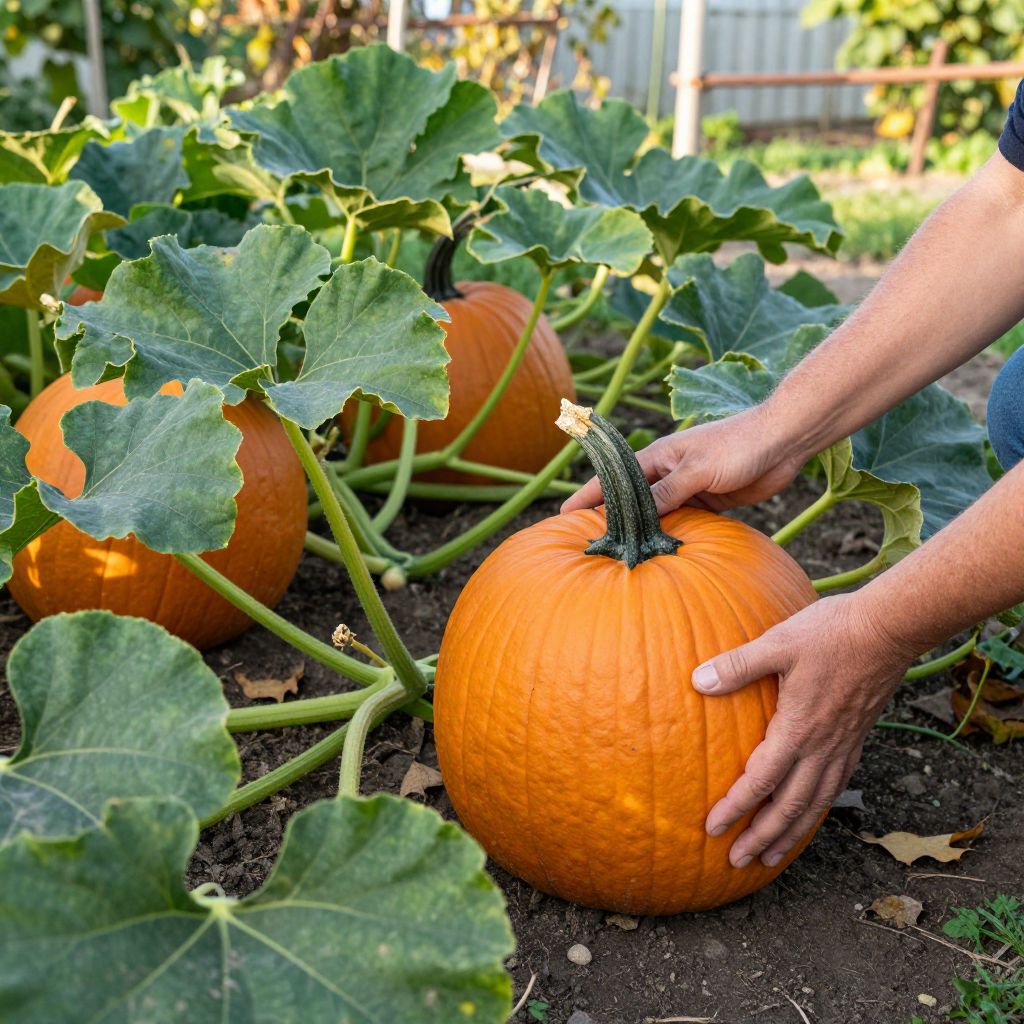
Wondering when to pick pumpkins so they’re ripe, colorful, and store well? The best time is usually when the skin has fully hardened, the pumpkin has reached its mature color, and the vine is starting to die back. Harvesting too early can lead to soft skin and poor storage, while waiting too long can invite rot or frost damage.
The right timing depends on your variety and local weather, but a few simple checks can tell you when a pumpkin is ready. With the right harvest method, you can cut it cleanly, cure it properly, and keep it looking good for weeks or even months.
When to pick pumpkins?
Pick pumpkins when they are fully colored, the rind is hard enough that you cannot easily dent it with a fingernail, and the stem has started to dry and cork over. Most pumpkins are ready in late summer to fall, but the exact timing depends on variety, planting date, and your first expected frost.
How to tell a pumpkin is ripe
Do not rely on color alone. Some pumpkins turn orange early, while others keep deepening in color after they are mature.
Look for these ripeness signs
- Hard rind: Press a fingernail into the skin. If it resists and does not puncture easily, the pumpkin is likely mature.
- Deep, even color: The fruit should have reached its final shade, whether orange, white, tan, or another mature color for the variety.
- Drying stem: The stem often turns brown, corky, and woody as the pumpkin finishes ripening.
- Dull skin: Immature pumpkins often look shiny; mature ones usually have a more matte finish.
- Vine decline: The vine near the fruit may begin to yellow and die back naturally.
If you are growing a larger carving pumpkin, the rind should feel firm all over, not just on one side. For smaller ornamental types, maturity can come sooner, so check the seed packet or variety description if you still have it.
What not to use as the only sign
- Size alone: A big pumpkin is not always ripe.
- Orange color alone: Many pumpkins color up before they are fully mature.
- One sunny side: A pumpkin can look ready on top but still be underdeveloped underneath.
How weather affects harvest timing
Weather matters as much as ripeness. Pumpkins tolerate cool nights, but they do not handle hard frost well, and repeated wet weather can shorten storage life.
Before the first frost
If frost is forecast, harvest any pumpkins that are close to ready. A light frost may only damage leaves, but a hard frost can injure the fruit itself and reduce storage quality.
If the vine is still green but frost is coming, you can sometimes protect the fruit briefly with row cover, blankets, or even a tarp at night. Remove coverings during the day so the fruit and foliage can dry.
After rain or damp weather
Wet pumpkins are more likely to rot if they are stored immediately. Let the surface dry thoroughly before moving them to a curing area.
How to harvest pumpkins correctly
Use a clean, sharp tool and handle the fruit gently. Pumpkins last longer when the stem stays attached and the skin is not bruised.
- Choose a dry day if possible.
- Use pruning shears, loppers, or a sharp knife to cut the stem.
- Leave 2 to 4 inches of stem attached whenever possible.
- Lift the pumpkin by supporting the bottom, not by the stem.
- Set it down carefully to avoid bruising or cracking.
Never carry a pumpkin by the stem. A broken stem shortens storage life and gives rot an easy entry point.
If the vine is still alive
Even if the vine is still producing new growth, you can harvest mature fruit one by one. The rest of the vine may continue to ripen additional pumpkins if the weather stays warm enough.
Should you cure pumpkins after picking?
Yes, curing helps harden the skin and heal small surface scratches. This step is especially useful if you want the pumpkins to store well.
Simple curing steps
- Place pumpkins in a warm, dry, well-ventilated spot.
- Keep them out of direct, harsh sun that can overheat the skin.
- Allow good airflow around each fruit.
- Leave them there for about 7 to 14 days, if conditions are suitable.
Curing works best in warm weather. If nights are cool or humidity is high, curing may take longer and storage life may be shorter.
Growing conditions that affect harvest timing
Healthy pumpkin plants usually produce better-ripened fruit. If your plants were stressed, the pumpkins may mature unevenly or stop developing early.
Sunlight and warmth
Pumpkins need full sun for strong growth and fruit ripening. In cooler climates, a warm, sheltered site helps the fruit mature before fall weather turns cold.
Soil and drainage
Well-drained soil is important. Pumpkins dislike soggy ground, which can weaken roots and increase disease pressure. Adding compost before planting helps improve soil structure and moisture retention without waterlogging the bed.
Watering during fruit development
Consistent moisture supports steady fruit sizing, especially while pumpkins are actively growing. Irregular watering can lead to poor fruit development, cracking, or stress that slows ripening.
Water at the base of the plant rather than overhead when possible. Wet foliage can encourage powdery mildew and other leaf diseases that reduce the plant’s ability to finish the crop.
Common problems that affect harvest quality
Some pumpkins look nearly ready but still have issues that make them poor keepers. Catching these problems early can help you decide whether to harvest now or leave the fruit a little longer.
Soft spots or bruising
Soft areas usually mean damage or decay has started. Harvest affected fruit promptly and use it first.
Cracked rinds
Cracks can happen after heavy rain or uneven watering. These pumpkins are usually best used soon rather than stored long term.
Powdery mildew and leaf decline
When foliage is heavily affected, the plant may stop feeding the fruit well. If the pumpkin is already mature, harvest it. If it is still immature, you may need to accept a smaller or less storable crop.
Fruit rotting on the ground
Place developing pumpkins on dry boards, straw, or mulch if your soil stays damp. This helps reduce direct contact with wet ground and lowers rot risk.
How to store picked pumpkins
Storage success starts at harvest. A pumpkin with a healthy stem, unbroken skin, and no soft spots will usually keep longer than one that was damaged while picking.
- Store in a cool, dry place with good airflow.
- Avoid stacking pumpkins directly on top of each other.
- Check them regularly for soft spots or mold.
- Keep them away from freezing temperatures.
For long storage, choose the best-looking fruit first. Any pumpkin with a cut stem, bruise, or crack should be used sooner.
Quick harvest checklist
- The pumpkin has reached its mature color.
- The rind is hard and resists fingernail pressure.
- The stem is dry and corky, not green and tender.
- The vine is beginning to fade or die back.
- No hard frost is imminent.
- You can cut it cleanly with a few inches of stem attached.
Final tips for picking pumpkins at the right time
If you are unsure, wait a few more days and test again, unless frost is close. The best pumpkins are usually those harvested fully mature, handled gently, and cured in dry conditions. A little patience now can mean better color, firmer skin, and longer storage later.
If you want to keep improving your harvest, it can also help to read more about pumpkin plant care, pest control, and how to grow squash in well-drained soil for stronger fruit development.