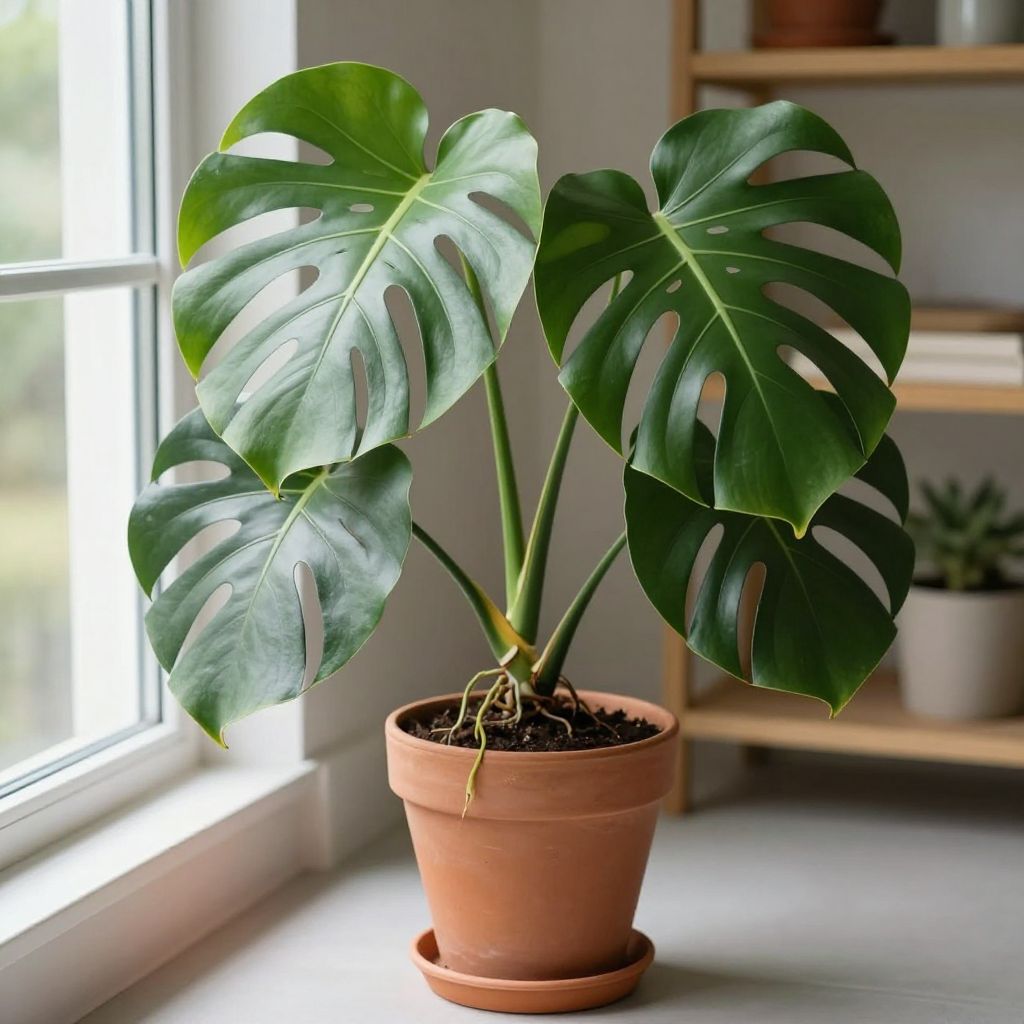
Why is my Monstera droopy? In most cases, a drooping Monstera is reacting to a watering problem, poor drainage, low light, root stress, or a sudden change in temperature or humidity. The good news is that most causes are fixable once you check the soil, roots, and growing conditions.
Monstera deliciosa and related Monstera plants usually recover well if you catch the problem early. The key is to diagnose the cause before you water again, repot, or start trimming leaves.
Why is my Monstera droopy?
A droopy Monstera is usually telling you something is off with water, roots, or light. The most common causes are underwatering, overwatering, compacted or soggy soil, root rot, low humidity, insufficient light, or stress from repotting, pests, or cold drafts.
Check the soil first
Before changing anything else, feel the potting mix. Your Monstera’s leaves can droop when the plant is too dry, but they can also droop when roots are sitting in wet soil and cannot breathe.
If the soil is dry
If the top 2 to 3 inches of soil feel dry and the pot is light, underwatering is likely. Water thoroughly until excess drains from the bottom, then empty the saucer so the roots do not sit in runoff.
If the soil is wet
If the soil feels damp or soggy several inches down, hold off on watering. Wet, oxygen-starved roots often cause limp leaves, yellowing, and a generally tired-looking plant.
- Dry soil plus drooping leaves usually points to thirst.
- Wet soil plus drooping leaves often points to overwatering or root problems.
- If the pot smells sour or musty, check for root rot.
How to tell whether your Monstera is underwatered or overwatered
Look at the whole plant, not just the leaves. Underwatered Monsteras often have droopy but still firm leaves, dry potting mix, and a pot that feels very light. Overwatered plants may have soft yellow leaves, brown patches, or a heavy pot that stays damp for days.
Quick comparison
- Underwatered: dry soil, droopy leaves, curled edges, pot feels light.
- Overwatered: wet soil, droopy leaves, yellowing, soft stems, possible root rot.
- Root-bound: water runs through quickly, roots circle the pot, growth slows, leaves droop.
Watering mistakes that make Monstera droop
Many droopy Monsteras are simply being watered on a schedule that does not match the plant’s needs. Indoors, light, temperature, pot size, and season all affect how fast the soil dries.
Common watering errors
- Watering again before the top layer of soil has dried.
- Giving only a small splash instead of a deep watering.
- Leaving the pot in standing water.
- Using a pot without drainage holes.
- Assuming the same schedule works year-round.
A better approach is to check the plant each time. Water when the top few inches of mix are dry and the pot feels noticeably lighter, then water deeply and let it drain completely.
Is your Monstera getting enough light?
Low light can make a Monstera weak, slow-growing, and more likely to droop. While these plants tolerate indoor conditions, they do best in bright, indirect light. Too little light means the soil stays wet longer, which can also lead to root trouble.
What good Monstera light looks like
- Near an east-facing window or a few feet back from a bright south or west window.
- Bright room light without harsh direct sun for long periods.
- Leaves that are not stretched, pale, or leaning hard toward the window.
If your Monstera is droopy and the room is dim, move it gradually to a brighter spot over several days. Sudden exposure to intense sun can scorch leaves, especially if the plant is already stressed.
Root problems: the hidden cause of drooping
If watering and light seem reasonable but the plant still droops, inspect the roots. A Monstera with damaged or crowded roots cannot take up water properly, even when the soil is moist.
Signs of root rot
- Persistent drooping even after watering
- Yellowing leaves
- Soft, brown, or mushy roots
- Musty or rotten smell from the pot
- Soil that stays wet too long
Signs the plant is root-bound
- Roots circling the inside of the pot or pushing out drainage holes
- Water running straight through without soaking in
- Frequent drooping even though you water regularly
- Stalled growth during the active season
If the plant is root-bound, move it up one pot size only, usually 1 to 2 inches wider than the current container. Too large a pot can hold excess moisture and make the drooping worse.
How to fix a droopy Monstera step by step
Once you know the likely cause, use a simple recovery plan. Do not try every fix at once unless the plant is severely stressed. Small, careful corrections are usually best.
- Check the soil moisture. Feel 2 to 3 inches below the surface.
- Inspect the pot. Make sure it has drainage holes and is not sitting in water.
- Look at the leaves and stems. Note yellowing, softness, or crisp edges.
- Check the roots if needed. Slide the plant out gently if rot or root-bound growth is suspected.
- Adjust one factor at a time. Water, light, or repot only as needed.
- Give the plant time. Recovery may take several days to a couple of weeks.
Soil, drainage, and pot choice matter
Monstera plants prefer an airy, well-draining mix. Dense, heavy soil holds too much water and can suffocate roots, which often leads to drooping.
What a good potting mix should do
- Drain quickly but still hold some moisture
- Contain chunky ingredients that keep air around the roots
- Not compact into a hard mass after watering
If your mix stays wet for too long, consider repotting into a more open blend suited to aroids. A pot with drainage holes is essential. Decorative cachepots are fine, but never let water collect in the bottom.
Humidity, temperature, and drafts
Monsteras can droop when indoor air is too dry or when they are exposed to cold drafts, heating vents, or abrupt temperature swings. These plants prefer warm, stable conditions.
Environmental stress to watch for
- Cold windows in winter
- Air conditioning blowing directly on the plant
- Heat vents drying the foliage
- Very low indoor humidity for long periods
If the plant is near a drafty door or window, move it to a more stable spot. A pebble tray or humidifier can help in dry homes, but good watering and drainage still matter more than humidity alone.
Pests and disease can also cause drooping
Insects and disease are less common than watering issues, but they are worth checking if the plant looks weak, spotted, or sticky. Spider mites, thrips, and scale can drain the plant’s energy and make leaves sag.
What to look for
- Fine webbing or speckled leaves from spider mites
- Silvery streaks or tiny black specks from thrips
- Sticky residue or bumps on stems from scale
- Soft, collapsing tissue from severe rot or infection
Wipe leaves, inspect stems and undersides, and isolate the plant if pests are present. Treat early with a suitable houseplant pest control method, and remove badly damaged tissue only if necessary.
Should you prune droopy Monstera leaves?
Not always. A droopy leaf is not automatically a dead leaf. If the leaf is still green and the plant is otherwise healthy, it may perk up after you correct the problem.
When pruning makes sense
- The leaf is yellow, brown, or badly damaged
- The stem is soft or rotting
- You are removing diseased tissue to protect the plant
Use clean, sharp pruners or scissors. Remove only the leaves that are clearly failing, because healthy foliage helps the plant recover.
How long does it take for a Monstera to recover?
Recovery depends on the cause and how quickly you corrected it. A thirsty plant may improve within hours after a thorough watering. A plant recovering from root rot, repotting stress, or pest damage may need several weeks before it looks normal again.
Watch for signs of improvement such as firmer stems, leaves that hold themselves up better, and new growth. If the plant continues to decline after you have fixed the basics, inspect the roots again and reconsider the potting mix, drainage, and light level.
How to prevent a droopy Monstera in the future
Prevention is mostly about consistency and observation. You do not need a rigid schedule, but you do need to check the plant regularly and respond to changing conditions.
- Water only when the soil has partly dried.
- Use a pot with drainage holes.
- Keep the plant in bright, indirect light.
- Repot when roots outgrow the container.
- Protect it from drafts and extreme temperature changes.
- Inspect for pests every few weeks.
If you are growing Monstera outdoors in a warm climate, protect it from harsh direct sun, heavy rain, and cold snaps. Outdoor plants can dry faster in wind and heat, so soil checks matter even more.
Conclusion
If you are wondering why is my Monstera droopy, start with the soil, then check light, roots, drainage, and temperature. Most drooping comes down to one fixable stress. Make one careful adjustment, give the plant time to respond, and you should see it perk up as conditions improve.
If you want to keep improving your houseplant care, look for more practical guides on watering indoor tropical plants and repotting houseplants safely.