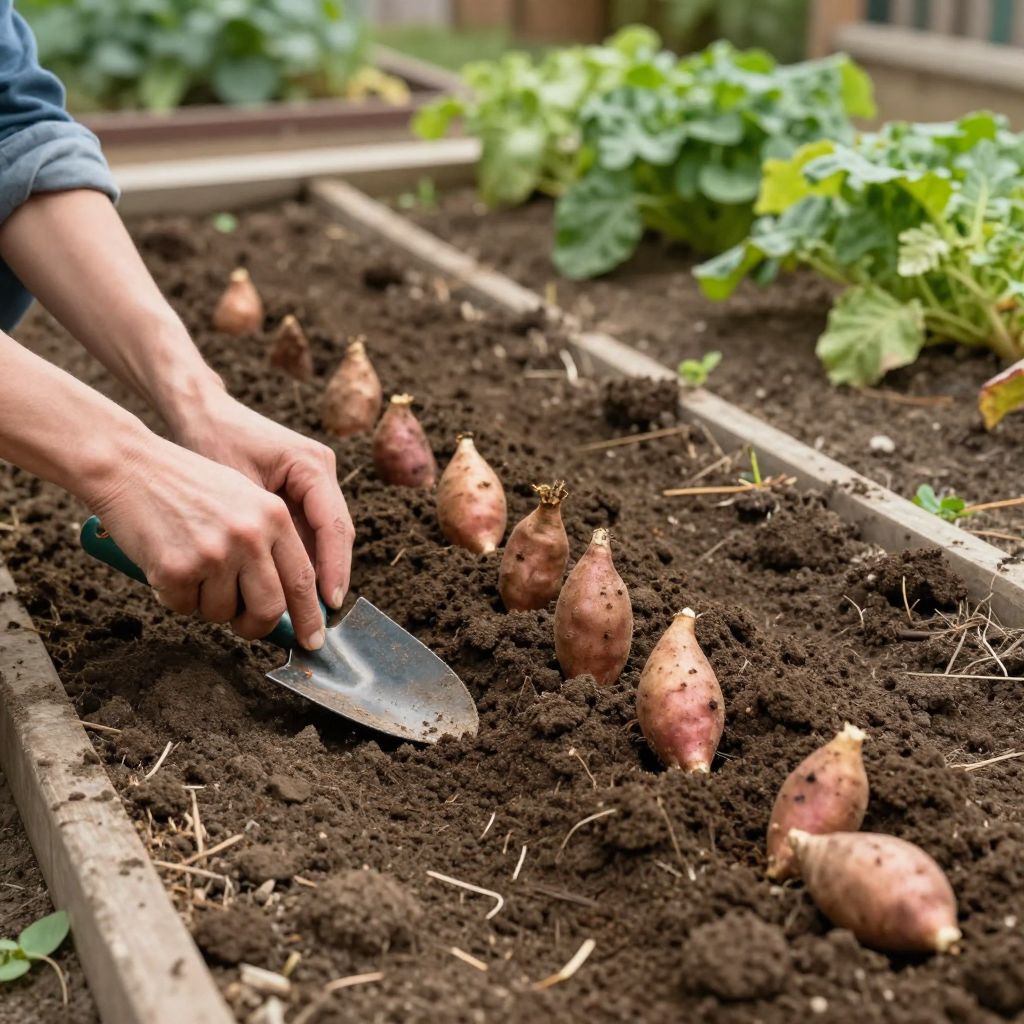
Wondering when to plant sweet potatoes so they grow into healthy, productive vines? Timing matters because sweet potatoes need warm soil, warm nights, and a long frost-free season to establish well.
Plant too early and the slips can stall or rot in cold soil. Plant too late and the roots may not have enough time to size up before autumn weather arrives.
When To Plant Sweet Potatoes?
Plant sweet potatoes after all danger of frost has passed and when soil temperatures are consistently at least 60°F, with 65°F to 75°F being even better. In most gardens, that means late spring to early summer, but your local climate and first fall frost date should guide the exact timing.
How to time planting in your climate
Sweet potatoes are warm-season crops, so the calendar matters less than the conditions in your garden. If your soil is still cool, the slips may sit without growing or become stressed.
Use soil temperature, not just air temperature
Air can feel warm while the soil remains chilly. A simple soil thermometer helps you avoid planting too early.
- Minimum soil temperature: 60°F
- Better soil temperature: 65°F to 75°F
- Frost risk: should be gone before planting outdoors
Count backward from your fall frost date
Sweet potatoes usually need a long growing window, often around 90 to 120 days or more depending on variety and conditions. If your season is short, choose the warmest site you have and plant as soon as the soil is ready in spring.
In cooler regions, gardeners often use black plastic mulch, raised beds, or row covers to warm the soil faster. These tools can make a meaningful difference in spring planting success.
What sweet potatoes need before planting
Sweet potatoes grow from slips, which are rooted sprouts grown from mature sweet potatoes. They do not grow like seed potatoes, and they do best when planted into loose, warm, well-drained soil.
Best site conditions
- Sunlight: full sun, ideally 6 to 8 hours or more
- Soil: loose, sandy, or loamy soil that drains well
- pH: slightly acidic to neutral is generally suitable
- Spacing: enough room for vines to spread
Heavy clay soil can produce misshapen roots and slow growth unless it is improved. If your soil stays wet after rain, consider raised beds or mounded rows.
Improve soil without overfeeding
Sweet potatoes prefer soil that is not overly rich in nitrogen. Too much nitrogen can encourage lush vines and fewer storage roots.
- Work in compost to improve structure and drainage.
- Avoid fresh manure right before planting.
- Skip high-nitrogen lawn fertilizers near the bed.
How to plant sweet potato slips
Once the soil is warm enough, plant slips on a calm, mild day. Handle them gently, because tender stems can break easily.
- Prepare a loose bed or raised row with good drainage.
- Water the soil lightly before planting so it is moist, not soggy.
- Set slips so the roots and lower stem are buried, leaving a few leaves above soil level.
- Space plants about 12 to 18 inches apart in rows or mounds, depending on your growing method.
- Water in well to settle the soil around the roots.
If the slips are long and leggy, you can plant part of the stem horizontally or at a slight angle, as long as the leaves stay above the soil surface.
Should you use black plastic mulch?
In cooler climates, black plastic mulch can warm the soil and reduce weeds. It is most useful when spring temperatures are slow to rise. Make sure the soil beneath it has enough moisture before laying it down, and water through drip irrigation or carefully at the base of each plant.
Growing tips after planting
Sweet potatoes are fairly low-maintenance once established, but the first few weeks matter a lot. Good early care helps the plants build roots and spread quickly.
Watering
Keep the soil evenly moist for the first couple of weeks after planting. After that, water deeply when the top few inches of soil dry out, especially during hot, dry spells.
Avoid soggy soil. Constant wetness can lead to rot and poor root development. Mature plants tolerate some dryness better than waterlogged conditions.
Weeding and vine management
Weeds compete with young sweet potatoes for light, water, and nutrients. Weed carefully early on, before the vines begin to cover the bed.
- Use shallow cultivation so you do not disturb developing roots.
- Mulch lightly if your soil drains well.
- Let vines trail naturally unless they are crowding paths or neighboring beds.
You do not need to prune sweet potato vines for the plant to grow, but you can trim them lightly if they become unruly. Avoid heavy pruning, which can reduce photosynthesis and slow root development.
Common mistakes to avoid
Many sweet potato problems start at planting time. A few simple mistakes can make a big difference in yield and quality.
Planting too early
Cold soil slows growth and can cause slips to fail. If nights are still chilly, wait.
Using compacted or wet soil
Sweet potatoes need room to expand underground. Dense soil often leads to small, misshapen roots.
Overfertilizing
Too much nitrogen produces vines at the expense of roots. Compost is usually enough for many home gardens.
Letting weeds get established
Weeds are hardest to control early in the season. Start clean and stay ahead of them.
Pests and diseases to watch for
Sweet potatoes are not trouble-free, but many issues can be reduced by planting at the right time and keeping the bed healthy.
Common pests
- Wireworms and other soil-dwelling pests can damage roots.
- Flea beetles may chew leaves on young plants.
- Sweet potato weevils are a serious pest in some regions.
Healthy, vigorous plants are less vulnerable than stressed ones. Crop rotation also helps reduce pest buildup in the soil.
Common diseases
- Root rot is more likely in wet, poorly drained soil.
- Fungal leaf spots can appear in humid conditions.
- Virus problems may show as stunted growth or distorted leaves in infected planting stock.
Use clean, disease-free slips whenever possible. If a plant looks weak from the start, remove it rather than letting it struggle and spread problems.
How to know when sweet potatoes are ready to harvest
Harvest timing is just as important as planting time. Most sweet potatoes are ready when the vines begin to yellow slightly and the roots have had enough warm weather to size up.
Dig carefully with a garden fork or spade, keeping tools away from the tubers so you do not bruise them. Bruised roots do not store as well.
Curing after harvest
Freshly dug sweet potatoes need curing to improve flavor and storage life. Keep them warm and humid for about 1 to 2 weeks in a protected place, if conditions allow. After curing, store them in a cool, dry, well-ventilated location, but not in the refrigerator.
Quick planting checklist
- Wait until frost danger has passed.
- Check that soil is at least 60°F.
- Choose a full-sun site with loose, well-drained soil.
- Plant slips in warm, moist soil.
- Water consistently while plants establish.
- Avoid excess nitrogen and soggy conditions.
Conclusion
The best time to plant sweet potatoes is when your soil is warm, your nights are frost-free, and your garden has enough time left in the season for roots to mature. If you are unsure, wait for soil temperatures to rise and use your local frost dates as a guide. For more seasonal growing advice, look for related guides on warm-season vegetables and raised-bed gardening.