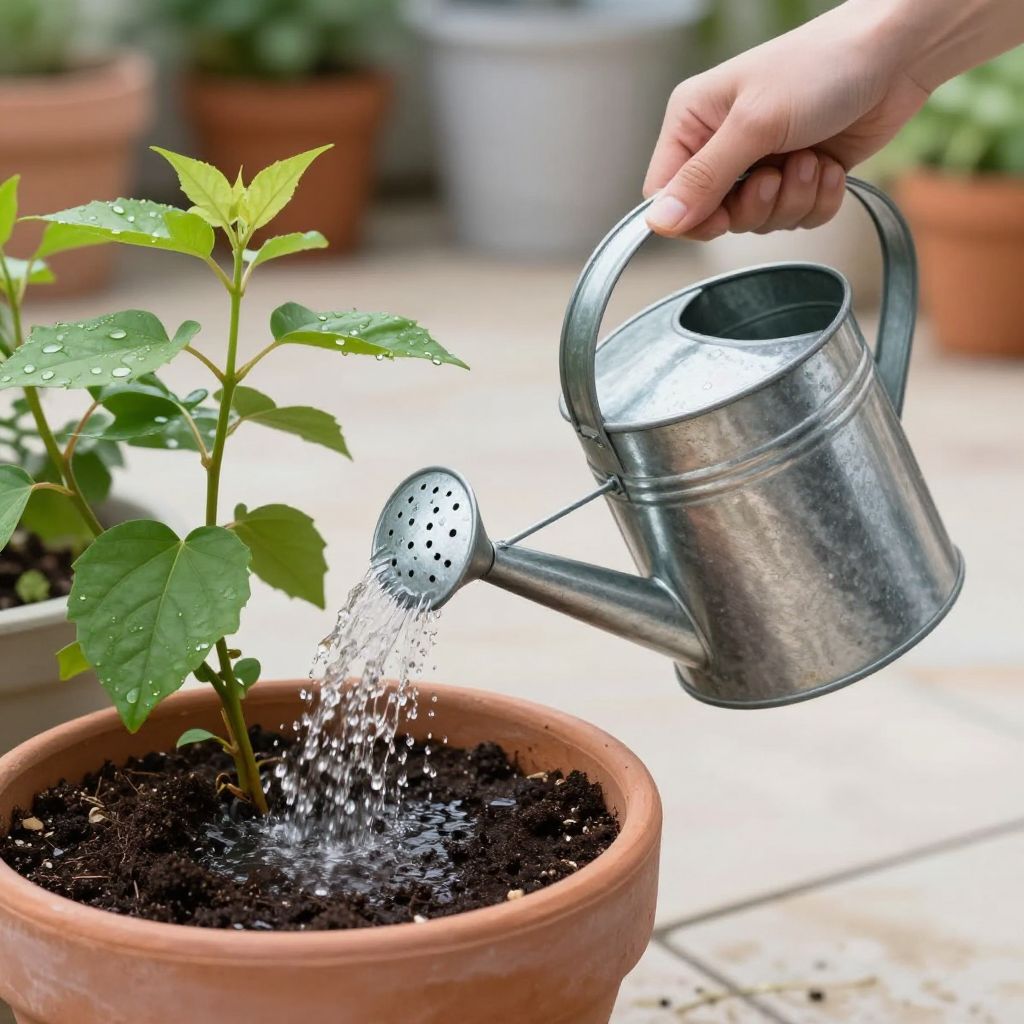
Trying to choose the right plant watering can for your garden, houseplants, or seedlings? The best can is the one that lets you water gently, accurately, and without soaking the foliage or compacting the soil.
Whether you grow indoors or outside, a good watering can helps you deliver water where roots can use it. The key is matching the can’s size, spout style, and rose attachment to the plants you’re caring for and the way you water them.
What is a plant watering can?
A plant watering can is a handheld container with a spout, used to apply water directly to soil or potting mix in a controlled stream. For most gardeners, the best watering can balances capacity, comfort, and a gentle pour that avoids splashing seedlings, washing away soil, or overwatering sensitive plants.
How do you choose the right plant watering can?
Choose a watering can based on what you grow, where you water, and how far you need to carry it. A smaller can is easier for indoor plants and seedlings, while a larger one saves trips in the garden. The best can feels balanced when full and pours smoothly without dribbling.
Size and capacity
- Small cans are practical for windowsills, shelves, and hanging baskets.
- Medium cans suit mixed indoor collections and patio containers.
- Large cans work well for outdoor beds, but only if you can lift them comfortably when full.
If you struggle with wrist, shoulder, or back strain, choose a smaller can and refill more often. A lighter can is often more useful than a large one you avoid using.
Spout shape and rose attachment
A long, narrow spout helps you reach under foliage and water the base of plants. A removable rose attachment breaks the stream into fine droplets, which is ideal for seedlings, newly potted plants, and delicate foliage.
- Use a rose for seed trays, cuttings, and tender transplants.
- Use an open spout for established pots, shrubs, and garden beds.
- Choose a can with a steady pour, not one that gushes unpredictably.
Material and durability
Plastic cans are lightweight and affordable, while metal cans often feel sturdier and last longer if protected from rust. For indoor use, lightweight plastic is often easiest. For outdoor use, durability and comfort matter more, especially if you water frequently.
How do you use a plant watering can correctly?
Water slowly at the soil line until moisture reaches the root zone. Avoid blasting the plant with a hard stream, and stop when water begins to drain from the bottom of a pot or soak the soil evenly in a bed. The goal is thorough watering, not just wetting the surface.
Step-by-step watering method
- Check the soil first by feeling 2 to 3 cm below the surface in pots, or a little deeper in beds.
- Fill the can with clean water at a comfortable temperature, preferably not ice-cold for indoor plants.
- Attach the rose if you need a gentler spray.
- Pour at the base of the plant, moving slowly around the root zone.
- Pause if water runs off the surface; let it soak in before adding more.
- Empty any excess water from saucers after a short time if the plant does not like sitting wet.
How much water should you give?
There is no universal amount, because pot size, soil type, temperature, wind, humidity, and plant size all matter. Instead of following a fixed schedule, water when the plant actually needs it. A dry top layer does not always mean the root ball is dry, especially in larger pots.
What plants benefit most from a watering can?
Almost any plant can be watered with a can, but some benefit more from the control it provides. It is especially useful for seedlings, houseplants, container gardens, newly planted shrubs, and vegetables that need water at the base rather than overhead.
Indoor plants
Houseplants often do best with measured watering because indoor conditions dry soil at different rates depending on light, pot size, and heating. A watering can with a narrow spout helps you avoid overwatering the crown and keeps water off furniture and floors.
Seedlings and cuttings
Young plants are easily damaged by strong water pressure. Use a fine rose or a very gentle pour so you do not flatten seedlings, uncover seeds, or disturb fragile roots.
Vegetable beds and containers
Tomatoes, peppers, lettuce, herbs, and other container-grown crops often need consistent moisture. A can helps you water the soil evenly without wetting leaves excessively, which can reduce disease pressure in crowded plantings.
How do you water different soil and potting mixes?
Soil texture changes how water moves. Sandy soil drains quickly and may need more frequent watering, while clay soil holds water longer but can become waterlogged if you pour too fast. Potting mix in containers usually dries faster than garden soil and often needs closer attention.
For containers
- Water until you see a little drainage from the bottom.
- Make sure the pot has drainage holes.
- Do not let pots sit in standing water unless the plant specifically tolerates it.
For garden beds
Water slowly so the moisture can sink in rather than run off. In compacted or very dry soil, you may need to water in two or three passes, allowing each pass to soak in before adding more.
For raised beds
Raised beds often dry faster than in-ground beds because they warm up and drain more quickly. A watering can is useful for targeted watering, especially for young plants and newly transplanted crops.
What are the most common watering can mistakes?
The most common mistakes are watering too fast, watering only the surface, and using the wrong attachment for the plant. Another frequent problem is watering on a fixed schedule without checking the soil first. Plants need different amounts of water as weather and growth change.
- Pouring too hard can expose roots and compact soil.
- Watering leaves instead of roots wastes water and can encourage disease on some plants.
- Using a large can that is too heavy makes watering awkward and inconsistent.
- Ignoring drainage can lead to root rot in pots.
How do you know if a plant needs water?
Use your fingers, not just the appearance of the surface. Many plants show stress only after the root zone has dried too much. In containers, lift the pot if possible; a dry pot often feels much lighter than a properly watered one.
Signs a plant may be too dry
- Wilting or drooping leaves
- Dry, pulling-away soil in pots
- Leaves curling, crisping, or dropping early
- Very light pot weight
Signs a plant may be too wet
- Soil that stays soggy for days
- Yellowing leaves, especially lower ones
- Musty smell from the potting mix
- Soft stems or root decline
How should you care for the watering can itself?
A clean watering can works better and lasts longer. Rinse it regularly, especially if you use it for fertilizer solutions or if algae and mineral deposits build up inside. Store it empty when possible so trapped water does not create odor, rust, or cracking in cold weather.
Simple maintenance tips
- Rinse after use, especially around the spout and rose.
- Remove debris from the rose holes so the flow stays even.
- Keep metal cans dry and sheltered from rain when not in use.
- Check handles and seams for leaks before the busy season.
Can a watering can help with seasonal plant care?
Yes. In spring, it is useful for gentle watering of transplants and seedlings. In summer, it helps you target thirsty containers and newly planted shrubs. In cooler months, indoor plants and overwintering pots often need less water, so a watering can gives you better control than a hose or automatic system.
Adapting to your climate
Hot, windy, and dry conditions increase water loss, while cool, humid weather slows it down. If you garden in a rainy climate, check the soil more often before watering. If you garden in a dry climate, you may need to water more deeply and more frequently, but still only when the plant actually needs it.
When is a watering can better than a hose or sprinkler?
A watering can is better when precision matters. It is especially useful for pots, seedlings, newly planted specimens, and small garden spaces where overhead watering would waste water or wet the wrong areas. It also helps you notice each plant individually, which is valuable for early problem detection.
If you want to improve your watering routine, start by checking soil moisture before every watering and choosing a plant watering can that matches your pot size and plant type. For more practical garden care, you may also enjoy reading about houseplant care basics and container gardening tips.