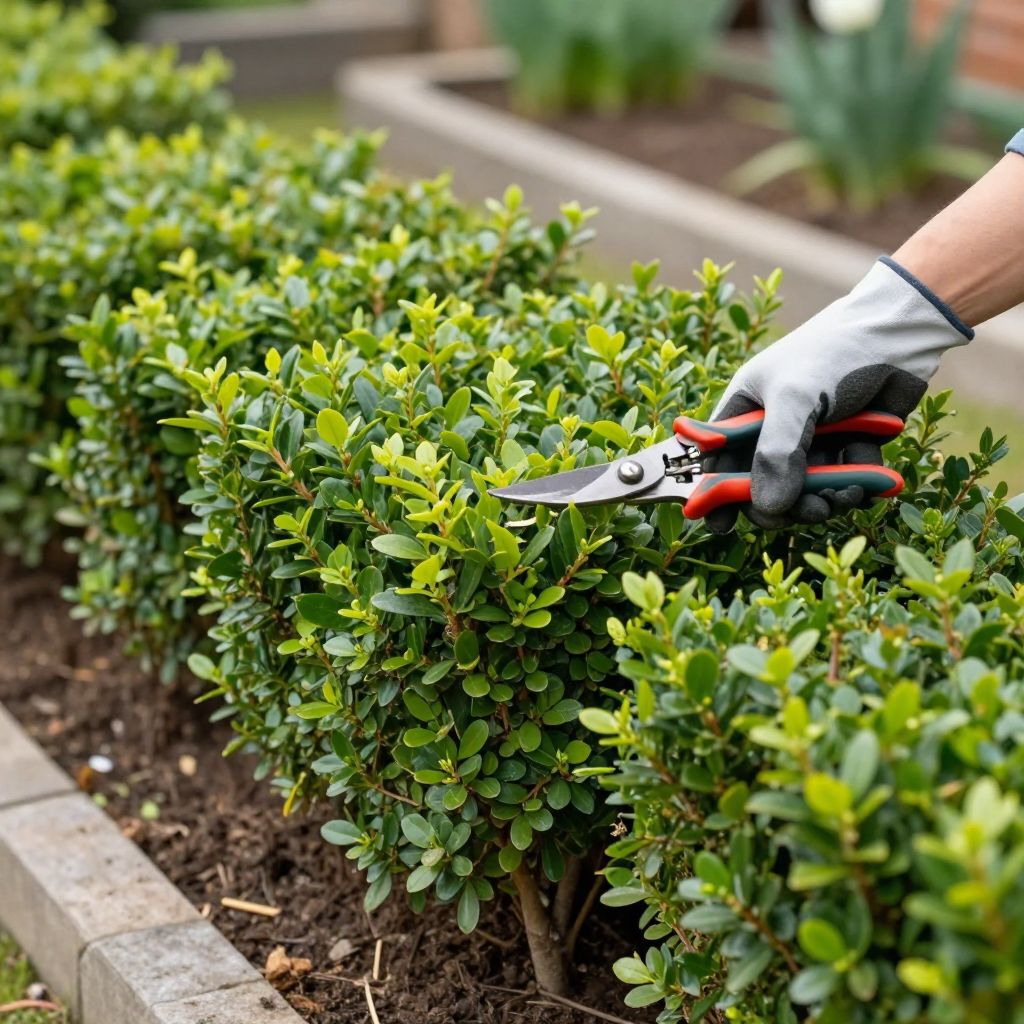
Wondering when to prune boxwood without ruining its shape or stressing the plant? The short answer is to prune boxwood when it is actively growing enough to recover, but not so late in the season that fresh growth is damaged by heat, cold, or frost.
For most home gardens, that means light pruning in late spring or early summer, with a second light trim only if needed before midsummer. The best timing depends on your climate, the plant’s age, and whether you are shaping a hedge, topiary, or a naturally rounded shrub.
When to prune boxwood?
The best time to prune boxwood is usually after the first flush of new growth in late spring or early summer, once the plant has finished pushing tender shoots. Avoid heavy pruning in late summer or fall, because new growth may not harden off before cold weather. In mild climates, a light touch-up can be done again in mid-summer if needed.
Why timing matters for boxwood pruning
Boxwood (Buxus spp.) responds best to pruning when it can quickly replace removed growth. Pruning at the wrong time can leave the shrub looking thin, trigger stressed growth, or expose tender shoots to weather damage.
Good timing also helps preserve the plant’s natural density. Boxwood buds back from older wood better than many shrubs, but repeated hard pruning at the wrong season can still weaken the outer canopy.
What happens if you prune too late?
- Fresh shoots may be damaged by frost or early cold snaps.
- Late growth can stay soft and more vulnerable to sun scorch or winter burn.
- The shrub may look ragged for longer because it has less time to fill in.
What happens if you prune too early?
- New growth may be cut off before the plant has fully started its seasonal flush.
- You may reduce flowering on boxwood types that bloom, though flowers are usually not the main feature.
- In cold areas, early pruning can expose tender tissue to late frosts.
Best season-by-season pruning window
Use the plant’s growth cycle, not the calendar alone, to decide when to prune boxwood. Local weather matters more than a fixed date.
Late spring to early summer
This is the main pruning window for most boxwood. Wait until the first flush of new growth has extended and begun to firm up, then trim lightly to shape.
This timing works well because the shrub still has plenty of time to recover before winter.
Midsummer
A second light trim can be done in midsummer if the hedge looks uneven or has outgrown its shape. Keep the cut shallow and avoid removing too much foliage at once.
Do not shear boxwood heavily during hot, dry weather. Exposed inner leaves can scorch, especially on sunny sides of the shrub.
Late summer and fall
In most climates, avoid major pruning after late summer. New growth produced too late may not harden properly before frost, which can lead to dieback.
If the plant is only slightly untidy, it is better to wait until the following spring than to force a late-season reshaping.
Winter
Winter pruning is generally not recommended for boxwood. The plant is dormant, recovery is slow, and cuts may be more susceptible to cold injury.
In snowy or windy regions, winter damage is better handled by waiting until spring to assess what truly needs removal.
How much should you prune?
For routine maintenance, prune boxwood lightly and often rather than cutting back hard all at once. A small amount of shaping keeps the plant dense and attractive.
- Light maintenance trim: remove only the soft new growth to keep the outline neat.
- Moderate correction: shorten overlong shoots and even out the shape.
- Hard renovation pruning: only for overgrown shrubs, and usually best spread over more than one season.
As a general rule, avoid removing more than about one-third of the shrub in a single pruning session unless you are intentionally renovating an old plant and understand the recovery time involved.
How to prune boxwood correctly
Boxwood pruning is usually straightforward, but the method matters. Clean cuts and a slightly wider top than base help the shrub stay healthy and evenly lit.
- Start with clean, sharp hand pruners or hedge shears.
- Remove dead, broken, or diseased twigs first.
- Trim back the longest shoots to match the overall shape.
- Keep the top a little narrower than the bottom so sunlight reaches lower leaves.
- Step back often and check symmetry from several angles.
For formal hedges, a straight edge or string line can help keep the face even. For informal shrubs, follow the plant’s natural rounded form instead of forcing a boxy outline.
Hand pruning vs. shearing
Hand pruning is slower but usually gives a cleaner, more natural result. It is especially useful for older shrubs, topiary, or any plant with thin or uneven growth.
Shearing is faster and works well for dense hedges, but repeated shearing can leave a thick outer shell and sparse interior growth if you never thin the plant.
Pruning boxwood by plant type
Different boxwood uses call for slightly different timing and technique. The goal is always the same: maintain shape without over-stressing the shrub.
Boxwood hedges
Hedges are usually pruned once or twice during the growing season. Trim lightly after the spring flush, then do a small touch-up only if the hedge starts to lose its outline.
Keep the base slightly wider than the top so the lower branches do not thin out over time.
Specimen shrubs
Individual boxwood shrubs are best pruned selectively. Remove only the shoots that break the shape, and avoid turning a graceful shrub into a rigid ball unless that is your design goal.
Topiary
Topiary needs more frequent light trimming during active growth. Small, regular cuts are better than waiting and then removing a large amount at once.
Check the plant weekly during peak growth so you can keep the form tight without cutting into old, leafless wood.
Signs your boxwood is ready to prune
Instead of relying on a fixed date, look for these signs that the shrub is ready for trimming:
- New shoots have extended beyond the desired outline.
- The plant has finished its main spring flush.
- Leaves are firm rather than soft and tender.
- There is no forecast of extreme heat, drought, or frost right after pruning.
If the shrub is stressed by drought, transplanting, or disease, delay pruning until it is actively recovering.
Common boxwood pruning mistakes
Most boxwood problems after pruning come from cutting too much, cutting at the wrong time, or using poor technique.
- Pruning too late in the season: can lead to frost damage on new growth.
- Shearing into old bare wood: may leave permanent gaps if the plant does not resprout well.
- Making the top wider than the base: shades lower branches and causes thinning.
- Using dull tools: creates ragged cuts that heal more slowly.
- Removing too much at once: can stress the shrub and reduce its fullness.
Aftercare following pruning
Boxwood usually recovers well from light pruning, but a little follow-up care helps it stay dense and healthy.
- Water deeply if the weather is dry, especially after a warm-season trim.
- Mulch around the root zone, but keep mulch a few inches away from the stems.
- Watch for sun scorch on newly exposed inner foliage during hot spells.
- Inspect the plant for pests or disease symptoms while you are trimming.
If the shrub is in a windy, exposed site, extra watering during dry periods can reduce stress after pruning. Avoid overwatering, especially in heavy soil where drainage is poor.
Pests and diseases to watch for
Pruning is a good time to inspect boxwood for problems. Catching issues early is often easier than fixing them later.
Common concerns
- Boxwood blight: watch for leaf spots, rapid defoliation, and black stem lesions.
- Leafminer: may cause blisters or distorted leaves.
- Spider mites: often show up in hot, dry conditions and can cause stippling or bronzing.
- Winter burn: browning from cold wind and sun, especially on exposed shrubs.
If you suspect a disease, disinfect tools between cuts and remove badly affected debris from the garden. Do not compost diseased material unless you are sure your compost system reaches temperatures that destroy pathogens.
Can you rejuvenate an overgrown boxwood?
Yes, but go slowly. Older boxwood can sometimes be renewed, yet hard renovation pruning should be approached carefully and usually over more than one season.
Instead of cutting the whole shrub back severely in one day, reduce size gradually. This preserves more foliage for photosynthesis and lowers the risk of shock.
If the plant is very woody, sparse, or declining, consider whether replacement may be a better long-term option than aggressive pruning.
Quick answer: the best pruning plan
If you want a simple rule, prune boxwood once the spring flush has finished, then make only light follow-up trims through early summer if needed. Stop major pruning well before fall, keep cuts shallow, and shape the shrub so the base stays slightly broader than the top.
Conclusion
When to prune boxwood comes down to timing your cuts around active growth and avoiding late-season stress. For most gardens, late spring to early summer is the safest and most effective window for shaping and maintenance.
Before you start, inspect the shrub, sharpen your tools, and make only the cuts needed to preserve its natural density. If you want more practical care advice for shrubs and hedges, look for related gardening guidance on pruning, mulching, and seasonal maintenance.