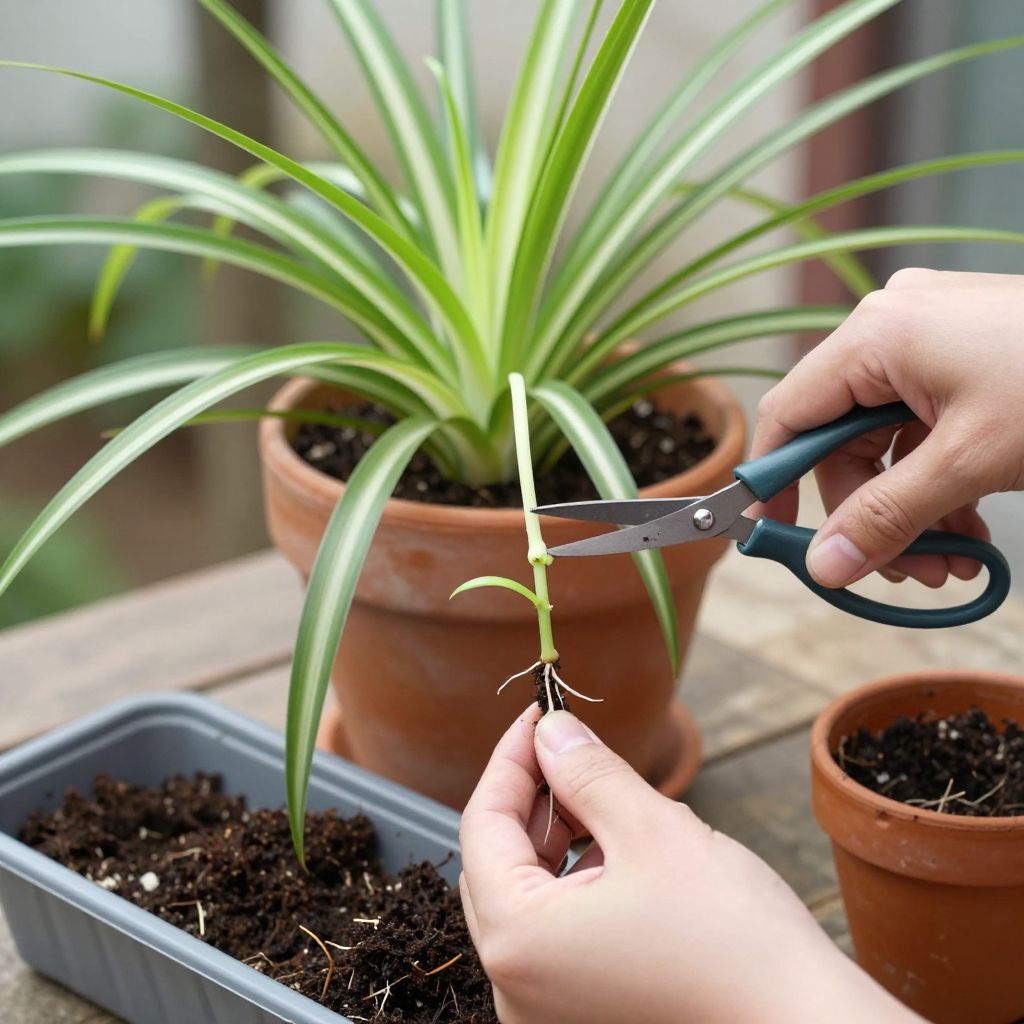
If you’re wondering where to cut a spider plant to propagate, the answer is simple: cut the runner, not the mother plant. Make your cut just below a healthy spiderette, leaving a short section of stem attached to the baby plant so it can root more easily in water or soil.
You can propagate spider plants (Chlorophytum comosum) from the small plantlets that form on long arching stems. The best cutting point depends on whether you want to root the baby first or remove it for planting straight away, but the goal is always the same: give the spiderette a clean start without stressing the parent plant.
Where To Cut A Spider Plant To Propagate?
Cut the runner 1 to 2 inches below the spiderette, ideally where the baby plant has already formed small nubs or root bumps. Use clean scissors or pruners, and avoid cutting into the crown of the mother plant. If the spiderette already has roots, you can separate it and pot it up immediately.
Understanding Spider Plant Runners And Spiderettes
Spider plants produce long stems called runners or stolons. Along these stems, they form tiny plantlets known as spiderettes or babies.
Each spiderette is a clone of the parent plant, so propagation is usually very reliable. The runner is the “bridge” connecting the baby to the mother plant until the baby can grow on its own.
What part should you actually cut?
- Cut the runner below the baby plant, not through the center of the spiderette.
- Leave a short stem attached to the baby, especially if it has no roots yet.
- If the baby has roots, you can cut closer to the base and pot it up right away.
- Do not remove healthy leaves from the spiderette unless damaged or crowded.
Best Time To Take Spider Plant Cuttings
Spider plants can be propagated any time indoors if the plant is actively growing, but spring and summer often give the fastest results because light levels are stronger and growth is quicker. In lower-light seasons, rooting may take longer.
If your spider plant is stressed from cold, drought, or pests, wait until it recovers before taking babies. A healthy parent plant produces stronger spiderettes and roots more readily.
Signs a spiderette is ready
- It is at least a few inches across and has several leaves.
- It may have small root nubs or visible roots.
- The runner is long enough to handle without tugging the mother plant.
- The baby looks firm and green, not limp or pale.
How To Cut And Propagate Spider Plant Babies Step By Step
- Choose a healthy spiderette. Pick one with good leaf color and no damage.
- Sterilize your cutting tool. Use clean scissors, snips, or a sharp knife to reduce disease risk.
- Cut the runner. Snip 1 to 2 inches below the spiderette, leaving a short stem attached.
- Decide on rooting method. Root in water, in potting mix, or directly in soil if roots are already present.
- Keep conditions gentle. Bright indirect light and warm indoor temperatures usually help the baby establish.
- Watch for new growth. New leaves or firmer roots mean the propagation is taking hold.
Should You Root Spider Plant Babies In Water Or Soil?
Both methods work well. Water rooting lets you watch root development, while soil rooting can reduce transplant shock because the baby starts in its final medium. The best choice depends on your comfort level and whether the spiderette already has roots.
Water rooting
Place the base of the spiderette in a small jar of water, making sure the leaves stay above the waterline. Change the water every few days to keep it fresh.
Once roots are about 1 to 2 inches long, pot the baby into a light, well-draining mix. Do not leave it in water too long, or the roots may become weak and less adapted to soil.
Soil rooting
Use a small pot with drainage holes and a loose potting mix. A standard indoor potting mix with extra perlite works well because spider plants dislike soggy soil.
Set the base of the spiderette just into the mix and keep it lightly moist, not wet. You can also pin the baby to the soil while it is still attached to the mother plant, then cut it free after rooting.
How To Pot Up A Spider Plant Baby
When roots are visible or the baby has settled into the mix, move it into a small pot. A pot that is only slightly larger than the root mass helps prevent excess moisture around the roots.
- Use a container with drainage holes.
- Choose a light, airy potting mix rather than heavy garden soil.
- Plant at the same depth the baby was growing before.
- Water lightly after potting, then let the top layer dry a bit before watering again.
Spider plants usually prefer to be slightly snug in their pots. If you overpot a small baby, the extra soil can stay wet too long and slow growth.
Common Mistakes To Avoid
- Cutting too close to the baby, which can damage the base and make rooting harder.
- Using dull or dirty tools, which can crush tissue or spread disease.
- Leaving the baby in water too long, which can lead to weak, water-adapted roots.
- Planting in heavy, poorly drained soil, which increases the risk of rot.
- Overwatering after potting, especially if the plant has few roots.
- Taking babies from a stressed mother plant, which can reduce the success rate.
What If Your Spiderette Has No Roots Yet?
That is normal. Many spider plant babies root easily even without visible roots, as long as the base is healthy and the runner is cut correctly. Leave a short stem attached, then root it in water or moist potting mix.
If the baby keeps drying out or collapsing, increase humidity slightly, keep it in bright indirect light, and avoid direct sun. A clear plastic dome or loose plastic bag can help briefly, but make sure there is some airflow to prevent mold.
Light, Water, And Temperature For Successful Propagation
Spider plant babies root best in bright, indirect light. Too much direct sun can scorch tender leaves, while very low light slows rooting and new growth.
Keep the medium lightly moist, not saturated. In most indoor settings, average room temperatures are suitable, but avoid cold drafts, hot radiators, and sudden temperature swings.
Good growing conditions at a glance
- Light: Bright indirect light
- Soil: Loose, well-draining potting mix
- Water: Even moisture, never soggy
- Container: Small pot with drainage holes
- Airflow: Gentle circulation, not stagnant air
Pruning The Mother Spider Plant After Propagation
Once you remove a few babies, you may want to tidy the mother plant. Trim only dead, damaged, or excessive runners if the plant looks crowded. Avoid heavy pruning unless the plant is healthy and actively growing.
If the mother plant is producing many babies, it may be a sign it is mature and ready for division or a slightly larger pot. Sometimes a crowded root system encourages more runners, so check the pot condition if growth seems limited.
Pests And Problems To Watch For
Spider plants are generally easygoing, but stressed plants can attract pests such as spider mites, aphids, or mealybugs. Check the undersides of leaves and the joints where runners form.
Brown tips on the mother plant or babies are often caused by inconsistent watering, dry indoor air, or mineral buildup from tap water rather than a propagation problem. If the baby looks weak, focus on light, moisture balance, and clean potting mix.
Troubleshooting quick fixes
- If leaves droop, check whether the medium is too dry or too wet.
- If roots turn brown and mushy, reduce watering and improve drainage.
- If growth stalls, move the plant to brighter indirect light.
- If pests appear, isolate the plant and treat promptly with a gentle, appropriate method.
Can You Leave Spider Plant Babies Attached?
Yes. If you want a fuller display, you can leave the spiderettes attached to the mother plant and let them root while hanging or resting on nearby soil. This is a useful option for beginners because the baby keeps receiving support from the parent plant.
Once the baby has rooted well, you can cut the runner later if you want separate plants. This method often gives you a stronger start than removing the baby too early.
Conclusion: The Best Cut Is Simple And Clean
When learning where to cut a spider plant to propagate, remember the main rule: snip the runner 1 to 2 inches below a healthy spiderette and keep the baby intact. From there, root it in water or a light potting mix, give it bright indirect light, and avoid overwatering.
If you want to keep improving your indoor plant care, it also helps to read more about potting mixes, drainage, and houseplant pruning so your new spider plants get off to a strong start.