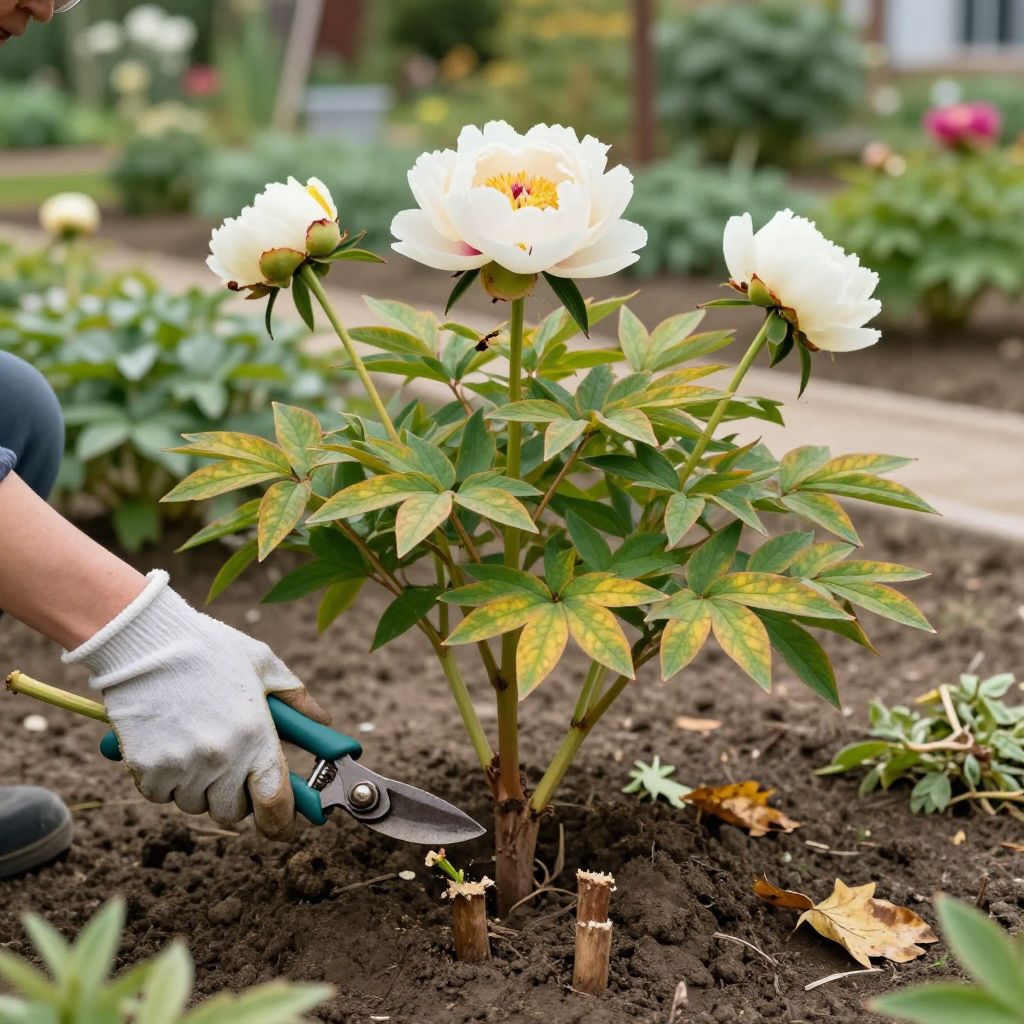
Wondering when to prune peonies without hurting next year’s blooms? The short answer is that most peonies should be cut back in late fall, after the foliage has yellowed or been killed by frost. That timing helps the plant store energy through the season and reduces disease problems.
The exact pruning method depends on whether you grow herbaceous peonies, tree peonies, or intersectional Itoh peonies. Each type needs slightly different care, but the goal is the same: remove spent growth at the right time and keep the plant healthy for the next flowering season.
When to prune peonies?
Prune herbaceous and Itoh peonies in late fall, after frost has blackened the foliage or it has naturally yellowed and collapsed. For tree peonies, do very little pruning in fall; save major shaping for just after flowering or in late winter, depending on the goal. Never cut healthy green peony foliage down in summer.
Why timing matters for peony pruning
Peonies use their leaves to recharge the roots after flowering. If you remove green foliage too early, you reduce the plant’s ability to store energy for next year’s blooms.
Late-season pruning also helps limit common diseases such as botrytis blight, which can overwinter in dead plant debris. Clean-up is especially important in damp climates or where peonies have had disease problems before.
What happens if you prune too early?
- The plant may bloom less the following year.
- Roots may be weaker and slower to establish.
- Diseased stems can still spread spores if debris is left behind.
How to prune herbaceous peonies
Herbaceous peonies die back to the ground each year. These are the classic garden peonies with soft stems, and they are the easiest to prune.
- Wait until the foliage turns yellow, brown, or is killed by frost.
- Use clean, sharp pruners or garden shears.
- Cut stems down to about 1 to 2 inches above the soil line.
- Collect and discard all cut foliage and stems, especially if you see spots, mold, or blackened tissue.
- Do not compost diseased material unless your compost system gets hot enough to destroy pathogens.
If your peony has been healthy all season, pruning is still best done after the foliage naturally declines. That timing protects the roots while keeping the bed tidy.
Should you deadhead herbaceous peonies?
Yes, but deadheading is different from end-of-season pruning. After blooms fade, you can remove spent flowers to improve appearance and prevent seed formation. Cut just below the flower head, above the nearest healthy leaf.
Deadheading does not replace the fall cleanup. Leave the foliage in place until it finishes feeding the plant.
How to prune tree peonies
Tree peonies have woody stems that remain above ground year-round. They should not be cut back to the ground like herbaceous peonies.
For tree peonies, prune only lightly and only when needed. The best time to shape them is usually right after flowering, when you can see the plant’s structure and avoid removing next year’s buds.
What to remove from tree peonies
- Dead, damaged, or diseased wood
- Crossing branches that rub against each other
- Weak shoots that crowd the center
- Spent flowers, if you want to tidy the plant
In late winter, you can remove obvious winter damage once new growth begins to show. Avoid heavy pruning unless the plant is overgrown or damaged, because tree peonies can take time to recover from severe cuts.
How to prune Itoh peonies
Itoh peonies, also called intersectional peonies, are hybrids with a growth habit between herbaceous and tree peonies. Their tops die back in fall, so they are usually cut down like herbaceous peonies.
Wait until the foliage has declined in autumn, then cut stems to a few inches above the soil. As with other peonies, remove all debris from the planting area to reduce disease carryover.
Best seasonal timing by climate
The right pruning window depends on your local weather. Use the plant’s condition, not the calendar alone, as your guide.
In cold-winter climates
Prune herbaceous and Itoh peonies after the first hard frost or once foliage has fully yellowed. This is often late fall, but timing varies by region and year.
In mild-winter climates
If frost is light or inconsistent, wait until the foliage naturally declines. Do not rush to cut peonies just because the season has changed; the leaves may still be feeding the roots well into autumn.
In wet or humid climates
Be especially careful to remove diseased foliage promptly once it dies back. Good sanitation matters more in damp conditions because fungal problems spread more easily in leftover debris.
Tools and pruning hygiene
Good tools make pruning cleaner and safer for the plant. You do not need anything fancy, but sharp, clean blades matter.
- Bypass pruners for stems and light shaping
- Garden shears for cutting herbaceous stems at the end of the season
- Gloves if stems are rough or if you are removing diseased material
Before and after pruning, wipe blades with alcohol or another suitable disinfectant, especially if you are cutting away diseased stems. This simple step helps prevent spreading problems from one plant to another.
Common pruning mistakes to avoid
- Cutting back too early while the foliage is still green and active
- Leaving debris on the ground after pruning, which can harbor disease
- Cutting tree peonies to the ground, which removes the woody framework
- Using dull tools that crush stems instead of making clean cuts
- Ignoring diseased foliage and composting it carelessly
If your peony had botrytis, leaf spots, or blackened stems, be extra thorough. Remove fallen leaves from the bed and clean up nearby mulch if it is contaminated with plant debris.
What to do after pruning peonies
Once the plant is cut back, a little follow-up care helps it return strong next season.
- Clear away all cut stems and leaves.
- Check the crown area for exposed buds and make sure the plant is not buried too deeply.
- Add a light layer of compost if your soil is poor, but keep it away from the crown.
- Refresh mulch only if needed, and keep it a little away from the plant base to reduce rot.
Peonies prefer well-drained soil and full sun in most gardens, though some afternoon shade can help in hot climates. Good drainage is especially important because crowns sitting in wet soil are more likely to rot.
Can you divide or move peonies when pruning?
Pruning is not the same as dividing. If you need to move or divide a peony, the best time is usually in early fall, after the plant has finished growing but before the soil freezes hard.
That said, established peonies dislike disturbance. If the plant is healthy and blooming well, leave it in place and focus on proper seasonal pruning instead.
Quick troubleshooting guide
If your peony is not blooming well
Pruning is rarely the only cause. Check for too much shade, planting depth that is too deep, overcrowding, or recent transplant shock. Cutting back green foliage too early can also weaken flowering the next year.
If stems flop or break
That is usually a support issue, not a pruning issue. Use peony rings, stakes, or discreet supports in spring before stems get too tall and heavy.
If you see disease
Remove affected tissue promptly, clean tools, and dispose of debris away from the garden. In recurring cases, improve air circulation and avoid overhead watering that keeps foliage wet for long periods.
Final takeaway
For most gardeners, the best answer to when to prune peonies is simple: wait until late fall for herbaceous and Itoh types, and prune tree peonies only lightly after flowering or when needed. If you want healthy plants and better blooms, start by cleaning up dead foliage at the right time and keeping the crown area tidy.
For more seasonal care ideas, you may also want to read about how to divide peonies and how to support peony blooms in the garden.