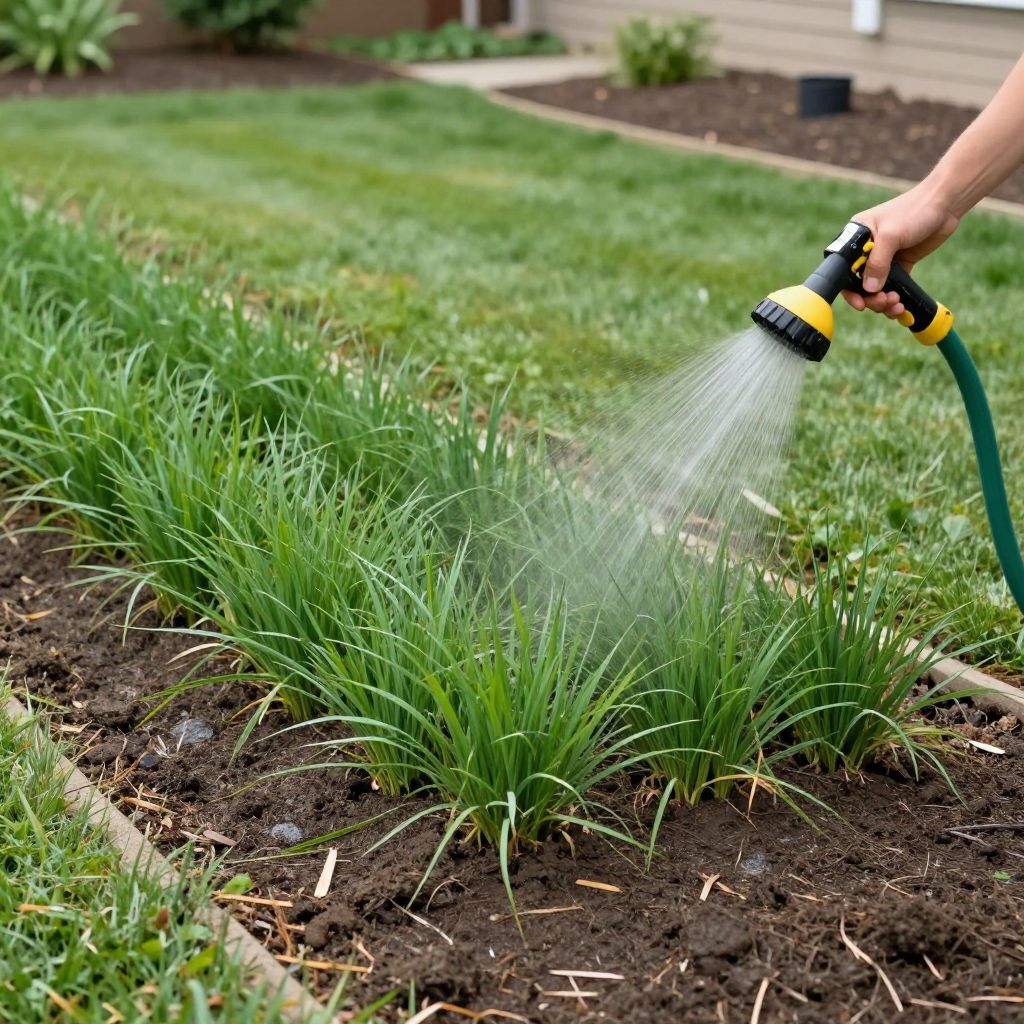
Wondering when to stop watering new grass seed? The short answer is: stop only after the seedlings have rooted well, begun to thicken, and can survive brief drying between waterings. Until then, keep the seedbed consistently moist, not soggy, because young grass dries out fast and uneven watering can ruin germination.
The right timing depends on weather, soil, grass type, and how quickly your lawn establishes. A new lawn in cool spring weather will usually need less frequent watering sooner than one started in hot, windy conditions, but the goal is always the same: shift from frequent light watering to deeper, less frequent watering as the grass matures.
When to stop watering new grass seed?
You can stop the frequent “keep it damp” watering once most seedlings are 1 to 2 inches tall, are no longer drying out within a day, and you can gently reduce watering without wilting or patchiness. In many lawns, this transition begins about 2 to 4 weeks after germination, but full establishment often takes 6 to 8 weeks or longer.
How new grass seed should be watered at each stage
New grass seed needs different watering as it moves from germination to establishment. The key is to match watering to root development, not to a fixed calendar.
1. Before germination
Keep the top layer of soil consistently moist from the day you sow until sprouts appear. That usually means light watering once or more per day, depending on heat, wind, sun exposure, and soil texture.
- Sandy soil dries quickly and may need more frequent misting.
- Clay soil holds moisture longer, so water more carefully to avoid puddling.
- Sloped areas may need shorter watering cycles to prevent runoff.
The seedbed should look damp and dark, not shiny or flooded. If water pools, you are applying too much at once.
2. Right after sprouting
Once the first blades appear, continue frequent light watering, but reduce the amount slightly if the surface stays wet for too long. Seedlings have tiny roots and can still dry out quickly, especially in sun or wind.
At this stage, the biggest mistake is letting the surface crust over and dry between waterings. That can stop weak seedlings from developing properly.
3. As the grass fills in
When the lawn starts to look more even and the seedlings are growing steadily, begin watering less often but a little more deeply. This encourages roots to grow downward instead of staying near the surface.
A practical sign is that the lawn can go from one light watering per day to watering every other day, then every few days, without wilting or turning dull gray-green.
Signs it is time to stop frequent watering
Do not stop watering abruptly just because the grass has sprouted. Instead, watch for signs that the lawn is becoming self-sufficient.
- Seedlings are established enough to hold upright and are not collapsing in the heat of the day.
- Roots resist a gentle tug when you test a small patch.
- The soil stays evenly moist longer than it did right after sowing.
- Grass color stays healthy between waterings instead of fading or browning at the tips.
- Footprints recover quickly after light walking across the lawn.
If you see thin, patchy, or drying seedlings after reducing water, go back to more frequent watering for a few more days and try again more gradually.
Seasonal timing: how weather changes the answer
There is no single date when you can stop watering new grass seed. Seasonal conditions make a big difference.
Cooler spring and fall conditions
In mild weather, soil loses moisture more slowly. New grass often transitions to less frequent watering sooner because evaporation is lower and seedlings are under less stress.
Even so, cool weather can be deceptive. If the soil surface dries between waterings, the seedlings still need attention.
Hot summer conditions
Heat, wind, and strong sun can dry a new lawn very quickly. In summer, you may need to keep watering frequently for longer, and the shift to deeper watering should happen more cautiously.
Never assume the grass is established just because it has germinated. Summer seedlings can look fine in the morning and wilt by afternoon if the root system is still shallow.
Rainy periods
Natural rainfall can replace some watering, but only if it wets the seedbed evenly. Light showers often do not penetrate deeply enough, and heavy rain can wash seed away or compact the soil.
Check the soil under the surface rather than relying on the weather forecast alone.
How to reduce watering without shocking the seedlings
The safest way to stop watering new grass seed is to taper off gradually. Sudden changes can dry the root zone before the grass is ready.
- Wait until the seedlings are up and growing steadily.
- Stretch watering intervals by a few hours or one extra day at a time.
- Water a little longer when you do irrigate so moisture reaches slightly deeper.
- Watch for signs of stress in the next 24 to 48 hours.
- Continue reducing frequency only if the lawn stays healthy.
This gradual shift helps roots chase moisture downward, which is what you want for a durable lawn.
How to tell if you are watering too much or too little
Both overwatering and underwatering can damage new grass seed, and the symptoms can look similar at first. The difference is usually in the soil and the pattern of decline.
Too much water
- Soil stays soggy or muddy
- Seed washes into low spots
- Seedlings look pale, weak, or flattened
- Moss, algae, or fungus appears on the surface
- A sour smell develops in constantly wet soil
Too little water
- Soil crusts or turns light colored and dusty
- Seedlings stop growing or dry out at the tips
- Thin spots appear where the surface dried fastest
- The lawn wilts in the afternoon and perks up only after watering
If you are unsure, push your finger about 1 inch into the soil. It should feel moist but not muddy in the root zone of new seedlings.
Soil, drainage, and seedbed preparation matter
Watering new grass seed is much easier when the soil is prepared well. A level, fine-textured seedbed with good contact between seed and soil holds moisture more evenly.
If the soil drains poorly, frequent watering can create standing water and rot. If it drains too fast, the surface may dry before seedlings can root. In either case, improve the seedbed as much as you can before sowing.
- Rake away debris and break up clods.
- Work in compost if the soil is thin or compacted.
- Lightly firm the surface so seed contacts the soil.
- Mulch lightly with clean straw or another suitable cover if recommended for your seed type and site.
Good preparation reduces how long you need to water frequently, because moisture is held more evenly around the seed.
What mowing tells you about watering
Mowing is another clue that your lawn is moving past the seedling stage. Once the grass reaches mowing height and can be cut without pulling out of the soil, the roots are usually stronger.
Do not mow until the new grass is tall enough and firmly rooted. Cutting too early can stress seedlings that are already adjusting to less frequent watering.
After the first mow, you can usually begin treating the lawn more like an established turf area, with deeper, less frequent watering rather than constant surface moisture.
Common mistakes to avoid
Many new lawns fail because the watering plan changes too quickly or stays too shallow for too long.
- Stopping all watering as soon as sprouts appear. Germination is only the first step.
- Watering heavily once a day on a crusted surface. This can cause runoff instead of soaking in.
- Letting the soil dry completely between waterings. Young roots are too shallow for that.
- Keeping the surface constantly saturated. This can encourage disease and weak roots.
- Using the same schedule in every season. Heat, shade, and wind change water needs a lot.
Simple rule of thumb for stopping watering
A useful rule is this: keep watering new grass seed frequently until the seedlings are established enough to survive brief drying without stress, then reduce watering gradually over a week or two. For many lawns, that means moving from daily light watering to less frequent, deeper watering after the first few weeks of growth.
If you are still seeing bare soil, weak seedlings, or drying edges, it is too soon to stop frequent watering. If the lawn is dense, rooted, and holding color between waterings, you are likely ready to taper off.
Final takeaway
When to stop watering new grass seed depends on how well the seedlings are rooted, not just how long it has been since planting. Watch the soil, the color of the grass, and how quickly it recovers between waterings, then reduce moisture gradually instead of all at once. For more lawn care guidance, you may also want to read about how to seed a lawn and when to mow new grass.