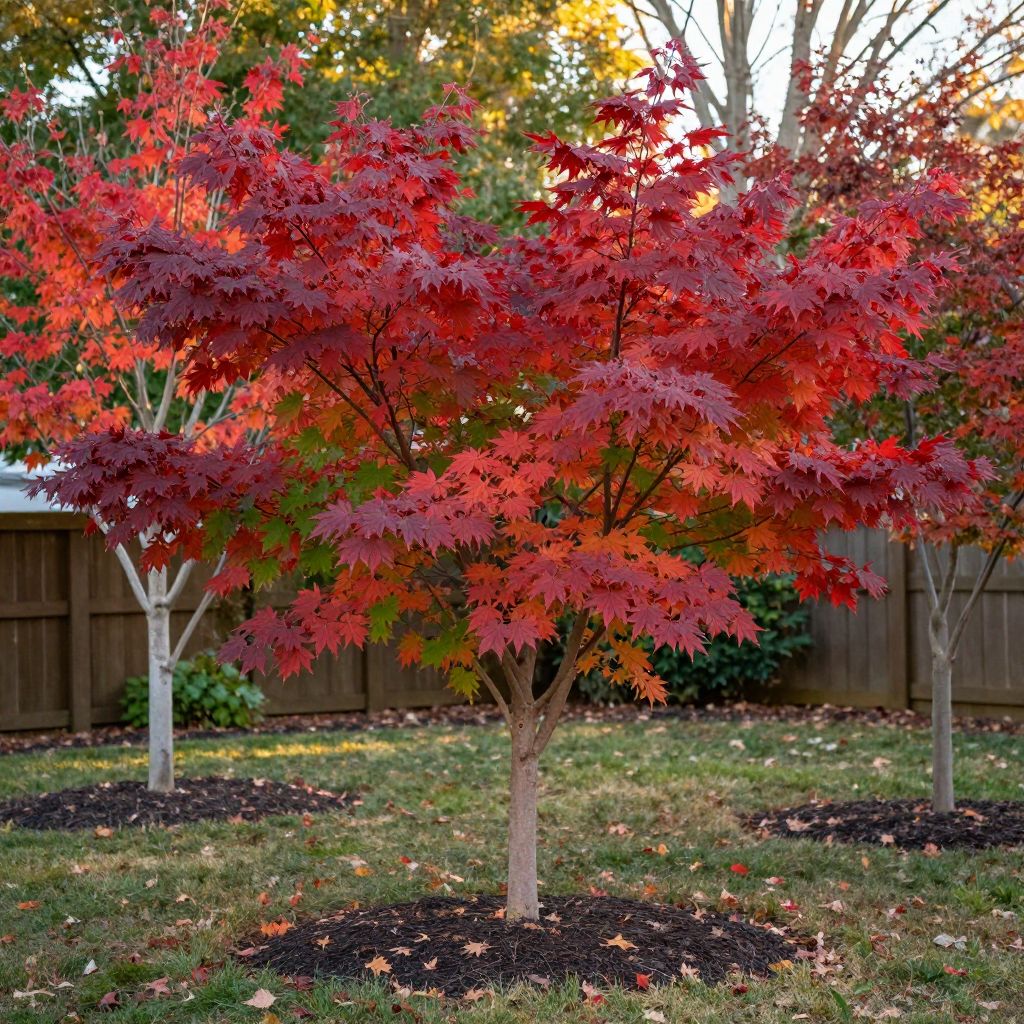
Wondering what trees turn red in the fall and how to choose one for your yard? The best red autumn color usually comes from trees that get full sun, slightly acidic soil, and a healthy, stress-free growing season. Some species turn brilliant scarlet, while others show red only in certain weather or on certain soils.
If you want reliable fall color, it helps to know which trees are naturally red, which ones are unpredictable, and how to give them the conditions that bring out the best display. The right tree in the right place can give you weeks of color without much extra work.
What trees turn red in the fall?
Some of the most dependable red fall trees include red maple (Acer rubrum), sugar maple (Acer saccharum), black gum or tupelo (Nyssa sylvatica), sweetgum (Liquidambar styraciflua), and sumac (Rhus spp.). Several dogwoods, sourwood, and certain oaks can also show red, orange-red, or burgundy tones depending on climate and soil.
The best trees for red fall color
Red maple
Red maple is one of the most widely planted trees for autumn color because it often turns a clear red to crimson. It adapts to many soils, but it usually performs best where the soil stays evenly moist and drains well.
This tree is a strong choice if you want a dependable landscape tree with good seasonal color and broad adaptability. In hot climates, color may be less intense if the tree is stressed by drought or poor soil.
Sugar maple
Sugar maple is famous for rich orange-red to red fall foliage. It prefers deep, fertile, well-drained soil and generally does best where summers are not excessively hot and dry.
If your site suits it, sugar maple can be one of the most dramatic fall trees in the landscape. Poor drainage, compacted soil, and heat stress can reduce color and overall vigor.
Black gum (tupelo)
Black gum often produces brilliant red foliage, sometimes with purple and orange mixed in. It likes moist, acidic soil and can be an excellent choice for wetter sites that still drain reasonably well.
It is especially useful if you want a native tree with strong wildlife value and reliable fall color. Once established, it is usually low-maintenance.
Sweetgum
Sweetgum can turn a striking mix of red, purple, orange, and yellow, often on the same tree. It grows best in full sun and deep, moderately moist soil.
Be aware that sweetgum produces spiky seed balls, which can be a drawback near walkways, patios, or play areas. If you have room, though, the fall color can be outstanding.
Sumac
Staghorn sumac and smooth sumac often turn vivid red to scarlet, especially in sunny locations. These are smaller landscape plants or large shrubs, not typical shade trees, but they can be excellent for naturalized areas.
They tolerate dry, poor soils better than many trees and are useful where you want color with minimal care. They spread by suckers, so give them space.
Dogwood
Flowering dogwood and kousa dogwood can show red to reddish-purple fall color, though the display is usually subtler than maple or tupelo. They prefer partial shade in hotter regions and evenly moist, well-drained soil.
Dogwoods can be beautiful understory trees, especially where you want spring flowers and fall color from the same plant.
Sourwood
Sourwood is a smaller ornamental tree with excellent red fall color, often with orange and purple mixed in. It prefers acidic soil and good drainage, and it dislikes root disturbance.
For the right site, sourwood offers refined texture and dependable seasonal interest. It is a good option for gardeners who can match its soil preferences.
Why some trees turn red and others do not
Fall color is driven by shorter days, cooler nights, and the tree’s natural pigments. Red and purple tones come from anthocyanins, which are influenced by sunlight, temperature swings, and tree health. A tree may be genetically capable of red color but still produce weak foliage if conditions are poor.
Healthy trees usually show better fall color than stressed trees. Drought, compacted soil, nutrient imbalance, root damage, and too much shade can all reduce red tones or cause leaves to drop early.
Conditions that improve red color
- Full sun for many species, especially maples, sweetgum, and sumac.
- Consistent moisture during the growing season, without waterlogged roots.
- Well-drained soil that allows roots to breathe.
- Cool nights and sunny days in early fall.
- Good tree health with minimal pest and disease pressure.
How to choose a red fall tree for your yard
Start with your site, not just the color. A tree that looks perfect in a catalog may perform poorly if your soil is too alkaline, too dry, too wet, or too shaded.
- Check sunlight. Many red-fall trees color best in full sun, though dogwoods and some understory trees tolerate part shade.
- Test drainage. Dig a hole about 12 inches deep, fill it with water, and see how quickly it drains. Slow drainage suggests you need a species that tolerates wet feet or a better planting site.
- Look at soil type. Acidic, loamy soils suit many red-color trees, especially maples, tupelo, and sourwood.
- Match mature size. Make sure the tree has room for its canopy and roots.
- Consider maintenance. If you want low cleanup, avoid trees with messy fruits or heavy seed drop near hardscapes.
Good choices by site
- Moist, acidic soil: black gum, sourwood, red maple
- Average garden soil: red maple, sugar maple in suitable climates, sweetgum
- Dryer, tougher sites: sumac, some red maples once established
- Part shade: dogwood, sourwood, black gum
Planting tips for stronger fall color
Proper planting has a bigger effect on fall color than many gardeners expect. A tree that establishes well will usually color better than one planted too deeply or left to struggle in poor soil.
Planting basics
- Dig a hole only as deep as the root ball, but 2 to 3 times as wide.
- Set the root flare at or slightly above soil level.
- Backfill with the native soil unless your soil is severely compacted or badly drained.
- Water deeply after planting to settle the soil.
- Mulch 2 to 4 inches deep, keeping mulch a few inches away from the trunk.
Avoid burying the trunk flare. Deep planting is a common mistake that can weaken trees over time and reduce their ability to develop good foliage color.
Watering and feeding
Young trees need regular moisture while they establish, especially during dry spells. Mature trees usually need watering only during prolonged drought, but the exact schedule depends on your soil and climate.
Use compost lightly if your soil is poor, but do not pile compost against the trunk. Too much fertilizer can push weak, overly lush growth that may color poorly and be more prone to pests.
Pruning and maintenance for better color
Prune only when needed to remove dead, damaged, or crossing branches, or to improve structure when the tree is young. Heavy pruning can reduce flowering, stress the tree, and sometimes delay a good fall show.
For most red-fall trees, late winter or very early spring is a safer time for major pruning than late summer or fall. Light cleanup is fine anytime if you remove only broken or diseased wood.
Common mistakes to avoid
- Planting a sun-loving tree in deep shade.
- Overwatering in clay soil or poorly drained sites.
- Using too much nitrogen fertilizer.
- Allowing grass to grow right up to the trunk and compete for water.
- Ignoring pests or leaf diseases that cause early leaf drop.
Pests and diseases that can dull fall color
Leaf spots, powdery mildew, aphids, scale insects, root rot, and cankers can all interfere with healthy foliage. When leaves are damaged early, they may yellow or brown before they have a chance to turn red.
If you notice poor color year after year, inspect the tree during summer, not just in autumn. Look for premature leaf drop, twig dieback, spotted leaves, or sticky residue from insects.
Practical troubleshooting
- Leaves turn brown early: check for drought stress, root problems, or disease.
- Color is weak and uneven: the tree may be too shaded or overfertilized.
- Tree is healthy but still not red: the species may simply be variable in your climate.
- Leaves drop before color peaks: look for insect damage, fungal issues, or compacted soil.
How to get the best red color from your trees
You cannot force every tree to turn red, but you can improve the odds. The goal is to keep the tree healthy, well rooted, and growing in conditions that suit its natural preferences.
- Choose a species known for red fall color in your climate.
- Plant it in the right light, usually full sun or bright partial shade.
- Mulch to conserve moisture and protect roots.
- Water during dry periods, especially for young trees.
- Avoid heavy pruning and excessive fertilizer.
- Monitor for pests and disease through summer.
Conclusion: choose the right tree, then let it do the work
If you want to know what trees turn red in the fall, start with red maple, sugar maple, black gum, sweetgum, sumac, dogwood, and sourwood. Then match the tree to your soil, sunlight, and space so it can show its best color year after year. If you are still comparing trees, related reading on what trees have helicopter seeds and what a sycamore tree looks like can help you narrow down the right choice for your landscape.