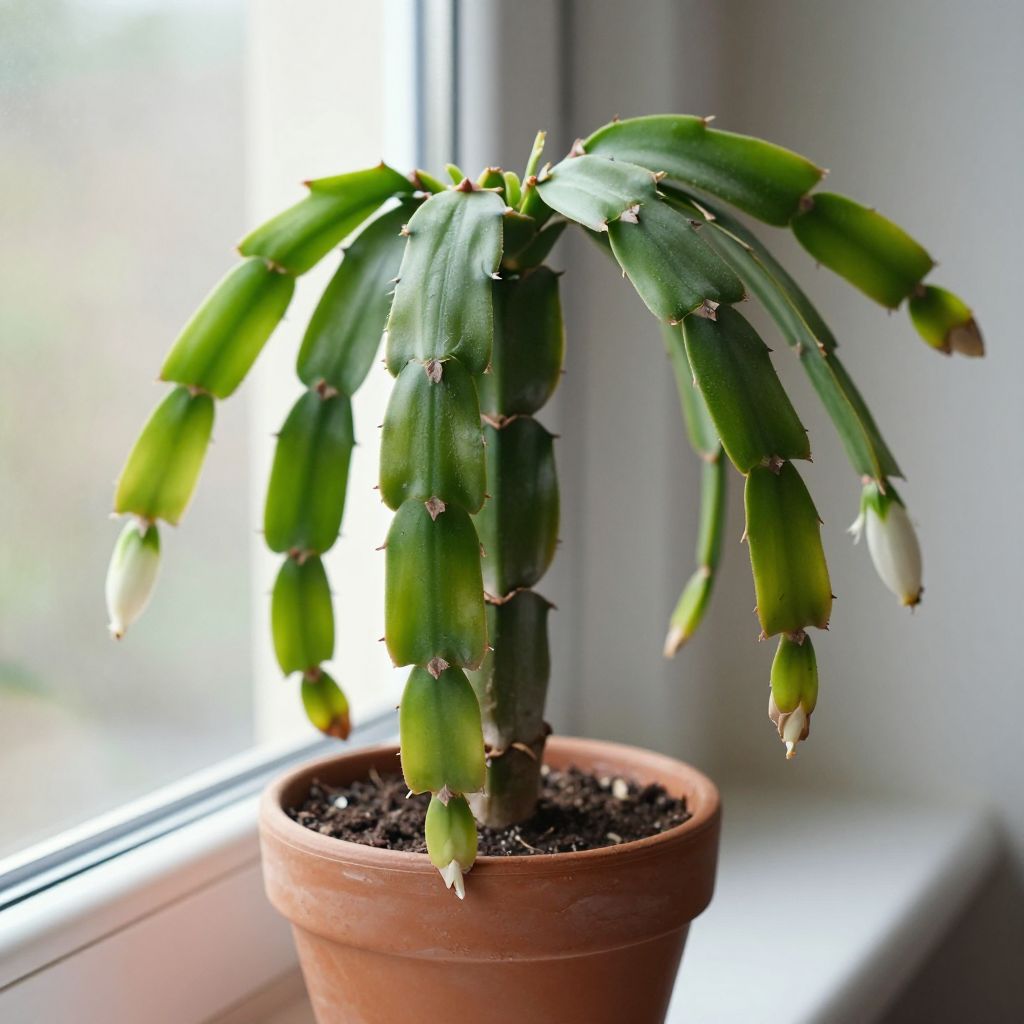
Why are the leaves on my Christmas cactus limp? In most cases, the plant is telling you that its roots, watering, or growing conditions are off. Christmas cactus leaves should feel firm and slightly fleshy, so limp segments usually point to stress rather than a single disease.
The good news is that this is often fixable. With a quick check of moisture, roots, light, and temperature, you can usually narrow down the cause and help your Christmas cactus recover.
Why are the leaves on my Christmas cactus limp?
Limp Christmas cactus leaves are most often caused by watering problems: either the plant is too dry or the roots are staying too wet and can’t function properly. Other common causes include poor drainage, root rot, cold drafts, intense sun, or a potting mix that has broken down and holds water unevenly.
Check the soil first
The fastest way to diagnose a limp Christmas cactus is to feel the potting mix. If the top inch or two is dry and the pot feels very light, underwatering is likely. If the mix feels damp, sour, or heavy for days, overwatering or poor drainage may be the problem.
What healthy soil should feel like
- Moist but not soggy
- Loose and airy, not compacted
- Drying slightly between waterings
Christmas cactus is an epiphytic cactus, so it prefers a mix that drains quickly and still holds some moisture. A standard heavy houseplant soil can stay wet too long and lead to limp, weak segments.
Simple soil test
- Insert your finger 1 to 2 inches into the potting mix.
- Check whether the soil is dry, slightly moist, or wet.
- Lift the pot to judge whether it feels unusually light or heavy.
- Look for water collecting in the saucer after watering.
Is it underwatered or overwatered?
Both can make a Christmas cactus look limp, but the symptoms are a little different. Underwatered plants usually look wrinkled, thin, and dry, while overwatered plants may look limp, swollen, or yellowing before stems become soft and mushy. When in doubt, check the roots.
Signs of underwatering
- Segments feel limp and slightly wrinkled
- Soil pulls away from the sides of the pot
- Pot feels very light
- Leaf edges may look dull or shriveled
Signs of overwatering
- Leaves are limp but may also appear pale or yellow
- Stems feel soft, not firm
- Soil stays wet for several days
- Roots may smell sour or look brown and mushy
Important: A limp plant is not always thirsty. If the roots are damaged from staying too wet, adding more water can make the problem worse.
How to water a limp Christmas cactus correctly
If the soil is dry, water thoroughly until excess runs from the drainage holes. Then let the pot drain completely. Do not leave the plant sitting in water, because Christmas cactus roots need oxygen as much as moisture.
Best watering approach
- Water when the top inch or so of mix feels dry.
- Use room-temperature water.
- Water evenly around the pot, not just in one spot.
- Let all excess water drain away.
- Empty saucers after 10 to 15 minutes.
If the plant was severely dry, the segments may not perk up instantly. Give it a day or two after watering. If the plant stays limp but the soil is moist, stop watering and investigate the roots.
Look at the roots if the plant stays limp
Root problems are a frequent reason Christmas cactus leaves go limp. If the potting mix stays wet too long, roots can rot and stop taking up water, which makes the plant look dehydrated even though the soil is damp.
How to check for root rot
- Gently slide the plant from its pot.
- Inspect the roots for firmness and color.
- Healthy roots are pale and firm.
- Rotten roots are dark, soft, and may break apart easily.
What to do if roots are damaged
- Trim away mushy or black roots with clean scissors.
- Repot into fresh, well-draining cactus or succulent mix.
- Choose a pot with drainage holes only slightly larger than the root ball.
- Wait a few days before watering again if the roots were badly damaged.
If most of the root system is gone, you may be able to save the plant by taking healthy stem segments for propagation. Let cuttings dry for a short time before potting them in a light, well-draining mix.
Light, temperature, and humidity can also cause limp leaves
Christmas cactus prefers bright, indirect light. Too much direct sun can stress the plant and make the segments look limp or washed out, while very low light can weaken growth over time. Sudden temperature swings can also cause drooping.
Ideal growing conditions indoors
- Bright light near an east- or north-facing window, or filtered light in a brighter room
- Moderate indoor humidity, especially in heated winter homes
- Temperatures that stay fairly even
- Protection from hot afternoon sun and cold drafts
Cold windows, air-conditioning vents, heaters, and exterior doors can all stress the plant. If your Christmas cactus is near a drafty spot, move it to a more stable location and watch for improvement over the next week or two.
Potting mix and drainage matter more than many gardeners realize
A dense, peat-heavy mix can hold too much water around the roots, while a mix that is too coarse may dry out too quickly. Christmas cactus does best in a loose, airy blend that drains well but still retains a little moisture.
What to use
- Commercial cactus or succulent mix
- A pot with drainage holes
- Optional perlite or orchid bark to improve airflow
If your plant has been in the same mix for years, the potting medium may have broken down and become compacted. Repotting every few years, or when the mix starts to stay wet too long, can help prevent limp growth.
Pests and disease can weaken the plant
While watering issues are the most common cause, pests and disease can also make Christmas cactus segments limp. Check the plant closely, especially under the leaves and near the base of the stems.
Common problems to inspect for
- Mealybugs: white, cottony insects that suck sap
- Scale: small, hard bumps on stems
- Fungal rot: soft, dark tissue and a bad smell
If you find pests, isolate the plant and remove them promptly with a cotton swab dipped in rubbing alcohol or another suitable houseplant treatment. For rot, remove affected tissue and improve drainage immediately.
How to revive a limp Christmas cactus step by step
Once you know the likely cause, use a simple recovery plan. The goal is to stabilize the roots and growing conditions, not to force a quick fix.
- Check the soil moisture before watering again.
- Inspect the pot for drainage holes and standing water.
- Examine the roots if the plant is still limp after watering.
- Move the plant to bright, indirect light.
- Keep it away from drafts, heaters, and harsh sun.
- Repot into fresh, airy mix if the soil is compacted or soggy.
- Remove damaged roots or stems with clean tools.
Tip: Do not fertilize a stressed Christmas cactus until it starts to recover. Feeding a plant with damaged roots can add more stress.
Pruning and propagation after damage
If some stems have turned soft or collapsed, prune them off with clean scissors. Removing damaged growth helps the plant direct energy into healthy segments.
When to take cuttings
If a section is still firm and healthy, you can often root it as a backup plant. Let cuttings callus briefly, then place them in a lightly moist, well-draining mix. Keep them in bright, indirect light and avoid overwatering while roots form.
How to prevent limp leaves in the future
Prevention is mostly about consistency. Christmas cactus dislikes extremes, especially repeated cycles of soaking wet and bone dry.
- Water only when the top layer of mix begins to dry
- Use a pot with drainage holes
- Keep the plant in bright, indirect light
- Avoid cold drafts and hot vents
- Repot when the mix becomes compacted
- Check for pests regularly
During active growth, the plant may need slightly more frequent watering than in cooler, darker months. In winter, especially indoors, growth slows and the soil dries more slowly, so always check the pot before watering.
When to worry
If the leaves stay limp after correcting watering, or if stems are blackened, mushy, or dropping rapidly, act quickly. Severe root rot, advanced pest damage, or repeated stress can be harder to reverse than a simple dry spell.
For more houseplant troubleshooting, you may also find these guides helpful: why a snake plant is drooping and why hibiscus leaves turn yellow.
If you’re wondering why are the leaves on my Christmas cactus limp, start with the soil and roots, then adjust light and watering. A careful check today can usually tell you whether the plant needs a drink, a drier pot, or a fresh start in better mix.