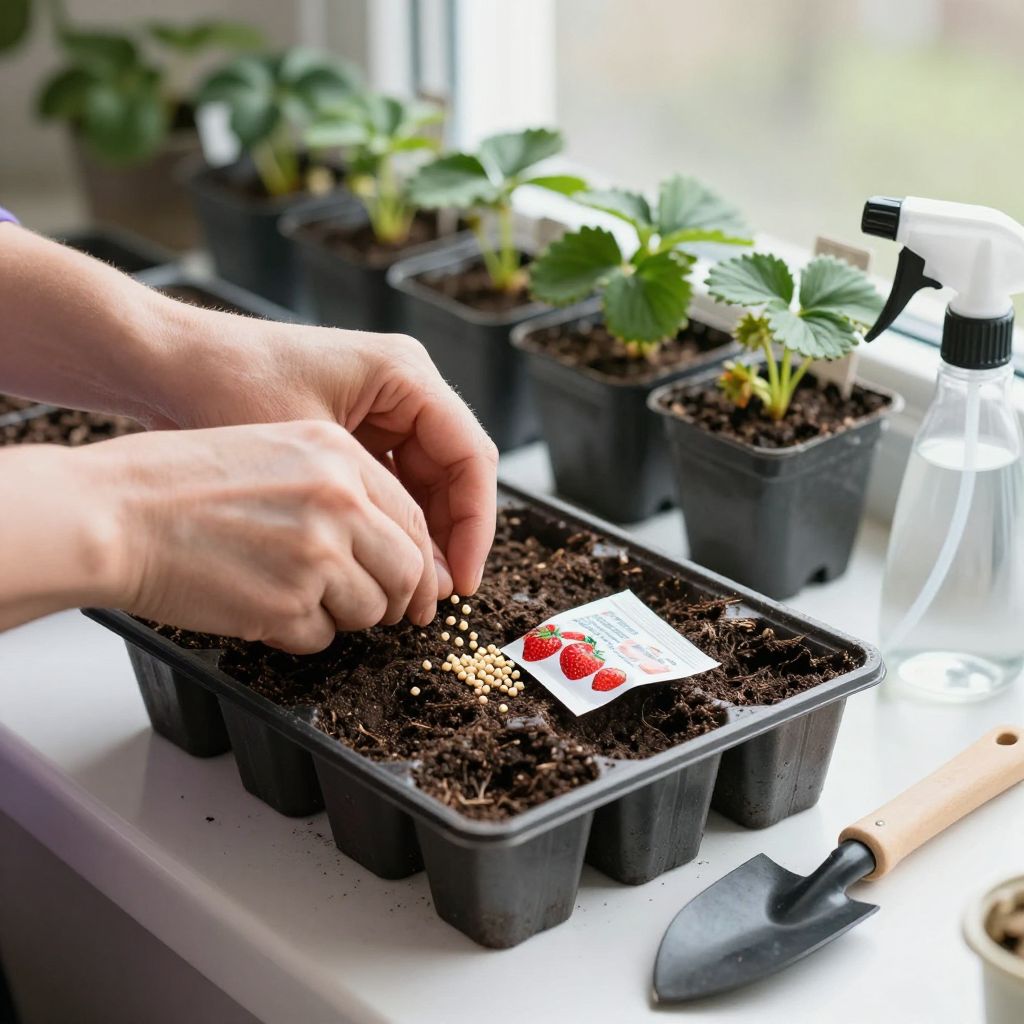
Wondering when to start strawberry seeds? The short answer is that most gardeners start them indoors 8 to 12 weeks before the last expected frost, then move seedlings outside after the weather has warmed and they’ve been hardened off. Strawberries grow slowly from seed, so timing matters if you want strong plants for the first season.
The best schedule depends on your climate, whether you’re growing day-neutral or June-bearing types, and whether you plan to transplant into beds, containers, or a cold frame. With the right timing and steady care, you can raise healthy strawberry seedlings from seed even as a beginner.
When to start strawberry seeds?
Start strawberry seeds indoors about 8 to 12 weeks before your last frost date, or earlier if your spring is short and cool. Strawberry seeds germinate slowly and seedlings develop gradually, so early indoor sowing gives them enough time to size up before transplanting. In mild climates, you can also sow in late winter or early spring under protection.
Why strawberry seeds need early timing
Strawberries are not fast from seed. Even when germination goes well, seedlings can stay tiny for several weeks before they begin to look like “real” plants.
That slow start is why many gardeners prefer bare-root crowns or runners for faster harvests. But if you want to grow a specific variety, save money, or enjoy the process, seeds can be worthwhile.
What affects the sowing date?
- Your last frost date and how long spring stays cool.
- Whether you are growing indoors, in a greenhouse, or outdoors under protection.
- The type of strawberry and how quickly it matures.
- How much indoor light and space you have for seedlings.
How to time strawberry seed starting by season
Use your local frost dates as the main guide, then adjust for your climate. If you live in a very cold region, start on the early side of the range. In warmer areas with long growing seasons, you may have more flexibility.
Late winter to early spring
This is the most common window for indoor sowing in temperate climates. Starting seeds in late winter gives seedlings time to develop before outdoor planting after frost danger passes.
Fall sowing in mild climates
In regions with long, gentle winters, some gardeners sow in fall or late winter under protection. The goal is still the same: give seedlings a long, cool but protected period to establish without freezing.
Outdoors only when conditions are right
Direct sowing outdoors is possible in some climates, but it is less reliable than starting indoors. Strawberry seeds are tiny, slow to germinate, and easily outcompeted by weeds or disturbed by heavy rain.
How to start strawberry seeds indoors
Indoor sowing gives you the most control over moisture, temperature, and light. That matters because strawberry seeds germinate best with steady conditions and patience.
- Fill small pots or seed trays with a fine, sterile seed-starting mix.
- Moisten the mix so it is evenly damp, not soggy.
- Scatter seeds on the surface and press them in lightly.
- Do not bury them deeply; strawberry seeds need light to germinate.
- Cover the tray loosely with a clear lid or plastic to hold humidity.
- Place the tray in bright light and keep the temperature steady.
- Check moisture often and mist if the surface begins to dry.
Many strawberry seeds germinate better after a short cold treatment, so some gardeners refrigerate damp seed for a few weeks before sowing. If you try this, keep the seed moist but not wet, and follow the packet instructions if they differ.
Light and temperature
Bright light is important once seedlings emerge. A sunny windowsill is often not enough, so a grow light can help keep seedlings compact and healthy.
Moderate temperatures are best. Very hot conditions can slow germination or dry out the mix too quickly, while cold conditions can delay sprouting.
How long do strawberry seeds take to germinate?
Strawberry seeds often take 2 to 6 weeks to sprout, and sometimes longer. Uneven germination is normal, so do not assume the tray has failed after only a couple of weeks. Keep the medium lightly moist and continue providing light and warmth.
Because germination can be slow, it helps to label your trays clearly and avoid disturbing them too often. Patience is part of the process.
When to transplant strawberry seedlings
Move seedlings into larger pots when they have several true leaves and are large enough to handle without damage. Transplant them only after outdoor conditions are suitable and you have hardened them off gradually.
Harden off seedlings for 7 to 10 days by exposing them to outdoor conditions a little more each day. Start in shade or filtered light, then increase sun and wind exposure gradually.
Signs seedlings are ready
- They have multiple true leaves, not just the first seed leaves.
- The roots hold the mix together when you lift the plant carefully.
- Stems are sturdy rather than thin and stretched.
- Outdoor nights are no longer cold enough to stress tender growth.
Best growing conditions for strawberry seedlings
Healthy strawberry plants need full sun, well-drained soil, and steady moisture. Seedlings are especially sensitive to extremes, so aim for even conditions rather than big swings in wetness or heat.
Soil and compost
Use a loose, fertile mix that drains well. For garden planting, work in compost to improve soil structure, but avoid heavy, soggy ground that stays wet after rain.
Strawberries generally perform best in slightly acidic to neutral soil, though exact pH depends on your local conditions and soil test results. If you are unsure, a soil test is the safest way to guide amendments.
Sunlight
Strawberries need plenty of sun to grow well and produce fruit. In most gardens, that means at least 6 hours of direct sun daily, though more sun is often better in cooler climates.
Watering
Keep seedlings evenly moist while they establish. Drying out can stall growth, but waterlogged soil can rot roots and encourage disease.
- Water gently so you do not wash away tiny seedlings.
- Let the surface dry slightly between waterings, but never let the root zone bake dry.
- Use containers with drainage holes if growing in pots.
Common mistakes when starting strawberry seeds
Most problems come from sowing too late, burying the seeds, or letting the mix dry out. Strawberry seeds are small and slow, so small mistakes can have a big effect.
What to avoid
- Planting too deep, which can prevent germination.
- Starting too late in spring, leaving seedlings too small for transplanting.
- Using heavy garden soil instead of a fine seed-starting mix.
- Overwatering, which can cause damping off and root problems.
- Not giving enough light after sprouting, which leads to weak, leggy growth.
Troubleshooting slow or weak seedlings
If seeds are slow to sprout, first check moisture and temperature. If the mix is drying out or staying cold, germination may stall.
If seedlings stretch toward the light, move them closer to a stronger light source. If they collapse at the base, reduce excess moisture and improve air circulation to help prevent damping off.
When to thin or separate seedlings
If several seedlings emerge close together, thin them early so each one has room and airflow. If you want to pot them up individually, handle them by the leaves rather than the stem to reduce damage.
Can you grow strawberries from seed outdoors?
Yes, but it is usually less reliable than starting indoors. Outdoor sowing works best where spring is long and mild, the soil drains well, and you can protect the seedbed from heavy rain, birds, and weeds.
If you do sow outside, prepare a fine, weed-free surface and keep it evenly moist. Even then, germination may be patchy, so expect some losses.
What to expect in the first year
Seed-grown strawberries often spend their first season building roots and foliage rather than producing a heavy crop. Some plants may flower lightly, but many gardeners focus on establishing strong crowns first.
That means the real payoff often comes later. Good early care improves the chances of stronger plants and better fruiting in the following season.
Simple timing checklist
- Find your last expected frost date.
- Count back 8 to 12 weeks for indoor sowing.
- Prepare seed trays, labels, and a fine seed-starting mix.
- Keep seeds on the surface and lightly pressed in.
- Provide bright light, steady moisture, and patience.
- Harden off seedlings before planting outside.
Conclusion
If you are asking when to start strawberry seeds, the most useful rule is to begin indoors 8 to 12 weeks before your last frost date and adjust for your local climate. Give the seeds light, moisture, and time, then transplant only after seedlings are sturdy and conditions are mild.
For more help with the next steps, you may also want to read when to fertilize strawberries and whether strawberry plants come back year after year.