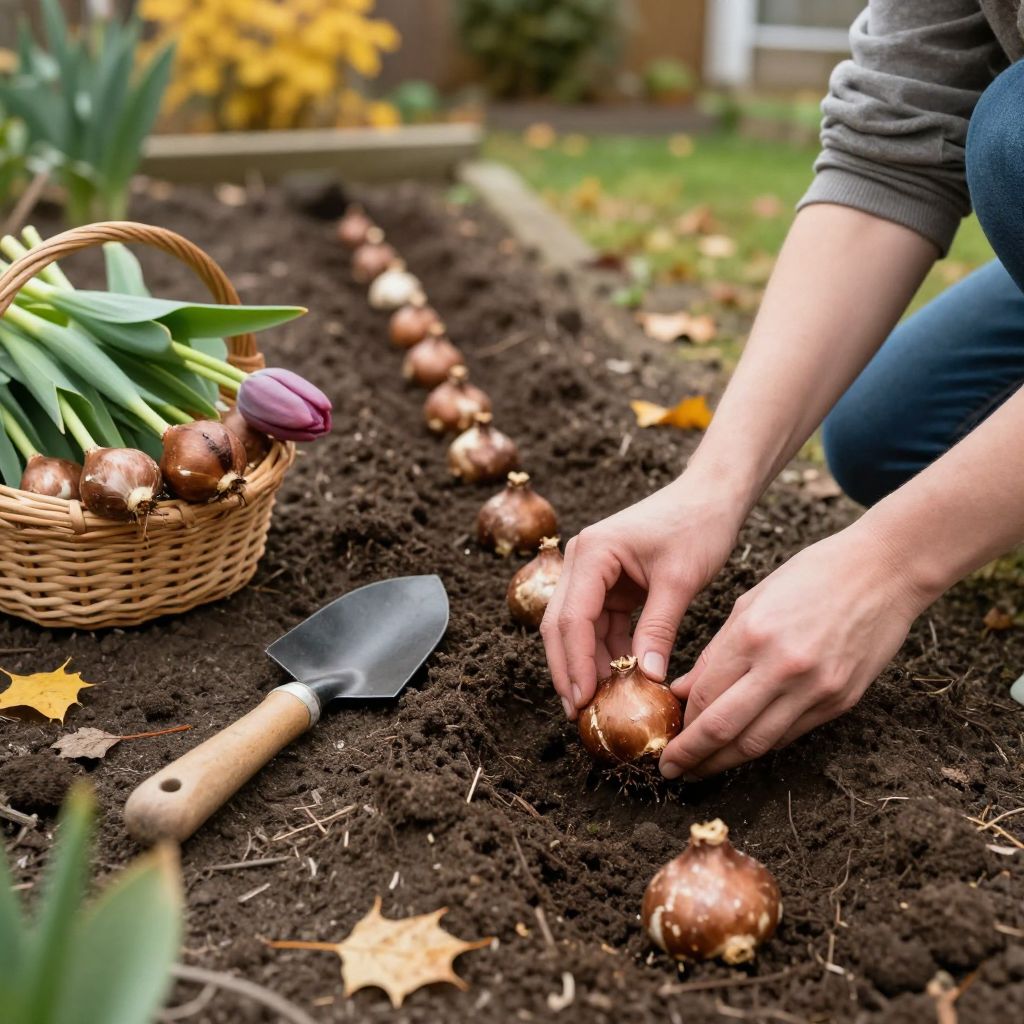
When do you plant tulip bulbs? The short answer is in fall, after the soil has cooled but before the ground freezes. That timing gives tulips the cold period they need to root well and bloom strongly in spring.
The exact window depends on your climate, but the goal is the same: plant late enough to avoid premature top growth, yet early enough for roots to establish before winter. With the right site, soil, and planting depth, tulips are easy to grow and rewarding to plan ahead for.
When do you plant tulip bulbs?
Plant tulip bulbs in fall, ideally when nighttime temperatures are cool and soil temperatures have dropped to roughly 40–50°F (4–10°C). In many places this means several weeks before the ground freezes. If you plant too early, bulbs may sprout; too late, and they may not root well enough for a strong spring display.
Why fall planting matters for tulips
Tulips need a period of cold to trigger spring flowering. Planting in fall allows the bulbs to form roots before winter dormancy, then resume growth when temperatures rise.
If you plant in spring, tulips usually won’t perform well outdoors because they have missed the natural cold period they need. For most gardeners, fall planting is the reliable choice.
How to judge the right time in your area
- Cooler climates: Plant earlier in fall, before hard freezes arrive.
- Mild-winter climates: Plant later in fall, once temperatures are consistently cool.
- Warm climates: Use pre-chilled bulbs if your region does not provide enough winter cold naturally.
If you are unsure, a practical rule is to plant when daytime temperatures are no longer hot and the soil is workable, but before the ground becomes frozen or waterlogged.
How to plant tulip bulbs for the best spring bloom
Tulips do best in full sun, well-drained soil, and a planting hole deep enough to protect the bulb from temperature swings and heaving. Good drainage is especially important, because bulbs rot easily in soggy soil.
Step-by-step planting guide
- Choose a sunny site. Tulips flower best with at least 6 hours of sun a day.
- Check drainage. Avoid spots where water collects after rain.
- Loosen the soil. Work the bed to improve root penetration and drainage.
- Plant pointy side up. Set bulbs about 6–8 inches deep, or roughly 2 to 3 times the bulb’s height.
- Space bulbs well. Leave about 4–6 inches between bulbs for a fuller display.
- Cover and water lightly. Water once after planting to settle the soil, unless rain is already expected.
In heavy clay soil, plant a little shallower only if drainage is poor, but do not sacrifice depth too much. A better fix is to improve the bed or plant in raised beds or containers.
Soil and compost tips
- Add compost to improve structure, especially in sandy or compacted soil.
- Do not overdo rich amendments right in the planting hole; tulips prefer balanced soil, not overly lush conditions.
- If your soil stays wet, consider raised beds or a sloped site.
A thin layer of compost worked into the topsoil is usually enough. Bulbs planted in dense, wet soil are far more likely to rot than bulbs planted in moderately improved ground.
Can you plant tulip bulbs too late?
Yes, but late planting is a compromise. If the ground is still workable and not frozen, you can still plant bulbs, though they may have less time to root before winter. They may bloom later or less vigorously the first spring.
If you find bulbs after your ideal planting window, plant them anyway rather than leaving them to dry out. Bulbs stored too long in warm, dry conditions often decline in quality.
What to do if winter is already near
- Plant immediately if the ground is open.
- Mulch lightly after the soil cools to help buffer temperature swings.
- Avoid planting in frozen ground unless you are using containers or a temporary protected bed.
How to care for tulips after planting
After planting, tulips need very little attention until spring. The main job is to keep the bulbs from sitting in wet soil and to avoid disturbing the bed unnecessarily.
Watering
Water once at planting if the soil is dry. After that, natural rainfall is usually enough in fall and winter unless you are growing in containers or experiencing an unusually dry spell.
Overwatering is a common mistake. Tulip bulbs need moisture to root, but they do not tolerate constantly wet soil.
Mulching
A light mulch layer can help regulate soil temperature and reduce frost heaving. Keep mulch loose and not packed tightly over the bulbs.
- Use shredded leaves, straw, or similar organic mulch.
- Apply after the soil has cooled, not while it is still warm.
- Remove or thin heavy mulch in spring if shoots struggle to emerge.
Growing tulips in containers
Container planting follows the same fall timing, but pots cool and freeze faster than garden beds. That means bulbs in containers benefit from a bit more protection in winter.
Container basics
- Use a pot with drainage holes.
- Choose a container deep enough for the bulbs’ planting depth plus room for roots.
- Use a free-draining potting mix, not heavy garden soil.
Because containers dry out faster, check moisture occasionally in fall. Once cold weather arrives, keep the pot from becoming waterlogged, but do not let the mix dry out completely before roots form.
In very cold regions, move containers to a sheltered spot or insulate them to reduce freeze-thaw damage.
Common mistakes to avoid
Most tulip problems come from timing, drainage, or placement. Avoiding a few simple errors can make a big difference in bloom quality.
- Planting too early: Bulbs may send up shoots before winter.
- Planting too shallow: Bulbs are more likely to heave out of the soil.
- Poor drainage: Wet soil can rot bulbs before spring.
- Too much shade: Blooms may be weak and stems stretched.
- Skipping the chill requirement in warm climates: Some tulips need pre-chilling to flower well.
What affects tulip bloom success?
Even when you plant at the right time, tulips respond to local conditions. Weather, soil type, and bulb quality all influence how well they bloom.
Bulb quality
Choose firm bulbs that feel heavy for their size. Soft, moldy, or damaged bulbs are more likely to fail.
Sunlight
Tulips bloom best in full sun, though they can tolerate light shade. Too much shade often means fewer flowers and weaker stems.
After-flowering care
Once tulips bloom, remove spent flowers if you want to prevent seed production. Leave the foliage in place until it yellows naturally so the bulb can recharge for the next season.
Do not cut leaves too early. The foliage is helping the bulb store energy for future growth.
Pests and diseases to watch for
Tulips are generally straightforward, but a few pests and diseases can interfere with growth. Good planting practices prevent many of them.
- Rodents: Squirrels, mice, and voles may dig up bulbs. Use wire mesh or plant more deeply if this is a problem.
- Bulb rot: Usually caused by wet soil or poor drainage.
- Fungal issues: Can develop in crowded, damp beds or on damaged bulbs.
If bulbs repeatedly fail in one spot, the site may be too wet or too shaded for reliable tulips. Try a raised bed or a better-drained area.
Should you leave tulip bulbs in the ground?
That depends on your climate, soil, and the type of tulip. In some gardens, tulips return for a few years; in others, they decline after the first season. Many gardeners treat them as seasonal bulbs and replant each fall for the best display.
If you want the most dependable show, focus on healthy fall planting, good drainage, and proper after-bloom care. Those basics matter more than trying to force bulbs to perform in a poor site.
Quick tulip planting checklist
- Plant in fall when soil is cool.
- Choose a sunny, well-drained location.
- Set bulbs 6–8 inches deep.
- Space bulbs 4–6 inches apart.
- Water once after planting if needed.
- Mulch lightly after the soil cools.
- Let foliage die back naturally after bloom.
If you are planning your spring garden now, choose a planting week based on your local temperatures and get bulbs in before the ground freezes. For more bulb-growing guidance, you may also want to read about how to plant spring bulbs and choosing the best bulbs for your garden.