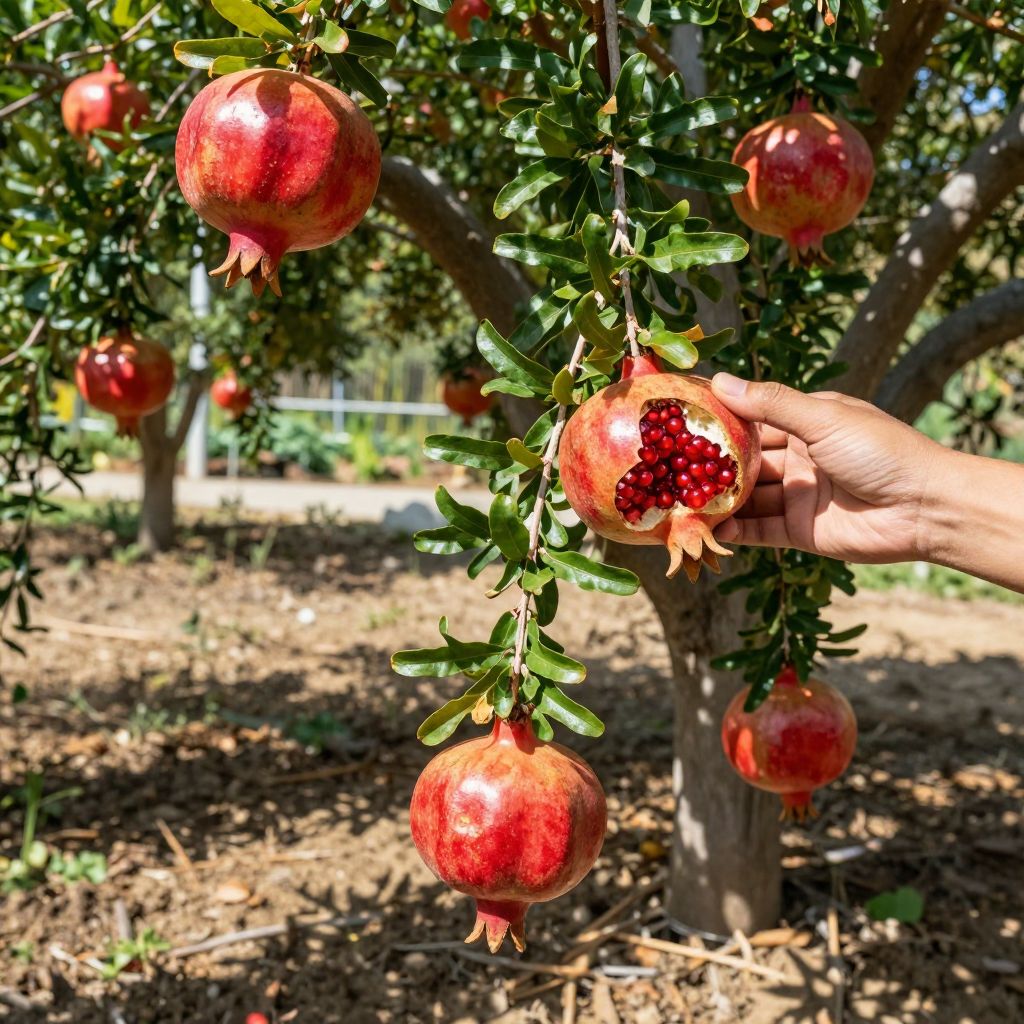
When are pomegranates in season? If you’re growing your own, the answer depends on your climate, variety, and how warm your summer has been. In many gardens, pomegranates ripen from late summer into fall, with harvest often stretching into early winter in mild regions.
The best way to tell is by watching fruit color, skin texture, and how easily the fruit separates from the branch. Pomegranates do not continue ripening much after harvest, so timing matters if you want the best flavor and juiciness.
When are pomegranates in season?
Pomegranates are usually in season from late summer through fall, often peaking between September and November in many growing regions. In warmer climates, some varieties may hang on the tree into early winter. For home gardeners, the exact harvest window depends on heat, sun exposure, and the specific cultivar.
How to tell when pomegranates are ready to pick
Unlike some fruits, pomegranates do not become much sweeter after picking. Harvest them when they look fully colored, feel heavy, and make a metallic sound when tapped. The fruit should also have a slightly angular shape rather than a perfectly round one.
Signs of ripeness
- Deep, even color for the variety you are growing.
- Firm skin with a leathery look, not soft or shriveled.
- Heavier fruit than unripe ones of similar size.
- Splitting may happen on fully ripe fruit, especially after rain or irregular watering.
- The fruit gives a clear, slightly hollow sound when tapped.
What not to rely on
- Do not judge ripeness by size alone.
- Do not assume a red peel means the fruit is ready.
- Do not wait too long after cracking begins, or birds and insects may get there first.
Seasonal timing by climate
Pomegranate season shifts with local weather. In hot, dry regions, fruit often matures earlier than in cooler areas. In marginal climates, fruit may ripen later or not fully mature in shorter summers, especially on young trees.
Warm climates
In long, hot seasons, pomegranates often ripen from late summer into mid-fall. Trees grown in full sun and well-drained soil usually produce the most reliable crops.
Cooler or shorter-season areas
If your summers are mild or brief, fruit may need extra heat to finish ripening. A south-facing wall, reflected warmth, and careful pruning can help the tree mature fruit more consistently.
Container-grown pomegranates
Pomegranates in pots may ripen a little differently because containers warm up and dry out faster. That can speed ripening, but it can also cause fruit splitting if watering is uneven.
Growing conditions that affect harvest timing
Good growing conditions do more than improve yield. They also help fruit ripen on time and reduce problems like splitting, poor color, and low sugar development.
Sunlight
Pomegranates need full sun for the best fruiting. Aim for at least 6 to 8 hours of direct light daily. Less sun often means slower ripening and less flavorful fruit.
Soil and drainage
These shrubs or small trees prefer well-drained soil. Heavy, waterlogged soil can stress the roots and delay fruit development. If your soil stays wet, plant on a raised bed or mound and mix in compost to improve structure.
Watering
Regular moisture helps fruit size up, but uneven watering can trigger cracking. Water deeply when the top layer of soil begins to dry, then let the soil drain well. Avoid alternating drought and heavy soaking.
Feeding
Too much nitrogen can push leafy growth at the expense of fruit quality. Use compost and balanced soil improvement rather than overfeeding. If your tree is vigorous but not fruiting well, excess nitrogen may be part of the problem.
How to harvest pomegranates correctly
Use pruning shears or hand pruners to cut fruit from the branch. Do not pull or twist aggressively, because that can damage the spur and nearby buds for next year’s crop.
- Check fruit color, shape, and firmness.
- Hold the fruit in one hand and cut the stem cleanly with pruners.
- Leave a short stem attached if possible.
- Handle fruit gently to avoid skin damage.
- Store or use the fruit soon after picking, especially if the skin is already splitting.
Best time of day to harvest
Morning harvest is often easiest because fruit is cool and less likely to bruise. If rain is expected and fruit is nearly ripe, it is usually better to pick a little early than to risk splitting.
Common problems that affect pomegranate season
Several issues can make pomegranates seem “late” or reduce the quality of the harvest. Most are tied to water stress, weather swings, or pruning mistakes.
Fruit splitting
This is one of the most common problems near harvest. It often happens after irregular watering or heavy rain following dry weather. Keep moisture more even during fruit development, and harvest promptly when fruit is ready.
Poor color or bland flavor
Insufficient sun, too much shade, or harvesting too early can lead to pale, tart fruit. Make sure the tree is in the sunniest part of the garden and give fruit time to fully mature.
Bird and insect damage
As fruit ripens, birds may peck at it and insects may enter splits. Netting can help in small gardens, and timely harvest is the simplest protection.
Flower drop and low fruit set
Some flower drop is normal. Excess shade, cold snaps, drought stress, or overfertilizing can reduce the number of fruits that reach maturity.
Pruning and maintenance for better fruit timing
Pruning affects airflow, light penetration, and how much energy the plant puts into fruit. A well-shaped pomegranate is easier to manage and often ripens more evenly.
What to remove
- Dead, damaged, or crossing branches
- Dense interior growth that blocks light
- Suckers from the base if you want a tree form
- Weak shoots that crowd fruiting wood
When to prune
Light pruning is usually best during dormant season or after harvest, depending on your climate. Avoid heavy pruning right before fruiting, because it can reduce the current season’s crop.
Can you grow pomegranates if your season is short?
Yes, but you need to choose the right site and manage the plant carefully. In shorter-season climates, pomegranates do best in the warmest microclimate you have, such as a south-facing wall or a sheltered courtyard.
Tips for short seasons
- Choose a warm, sunny planting spot.
- Keep the canopy open so fruit gets direct light.
- Avoid excess nitrogen that delays fruiting.
- Water consistently during fruit development.
- Remove late fruit that is unlikely to finish ripening before cold weather.
Propagation and new plant establishment
If you are starting a new pomegranate plant, remember that young plants may take a few seasons to bear well. Established plants usually produce more predictable harvests and ripen fruit more reliably.
From cuttings or nursery plants
Most home gardeners start with nursery-grown plants or rooted cuttings. Whatever the source, give the plant time to establish before expecting a full crop. Good root establishment improves future fruit timing and quality.
Quick seasonal checklist for pomegranate growers
- Watch fruit color and shape as late summer approaches.
- Keep watering even, especially during dry spells.
- Make sure the tree gets full sun.
- Harvest with pruners when fruit is fully colored and heavy.
- Pick promptly if splitting starts or rain is coming.
Conclusion
Pomegranates are generally in season from late summer through fall, but your exact harvest window depends on climate, sun, and how well the plant has been cared for. Focus on ripeness signs rather than the calendar alone, and you’ll get better flavor and fewer losses.
If you want to improve next year’s harvest, review your tree’s sun exposure, watering pattern, and pruning routine after picking. For more practical fruit-growing guidance, you may also want to read up on pruning fruit trees for better harvests and growing fruit in containers.