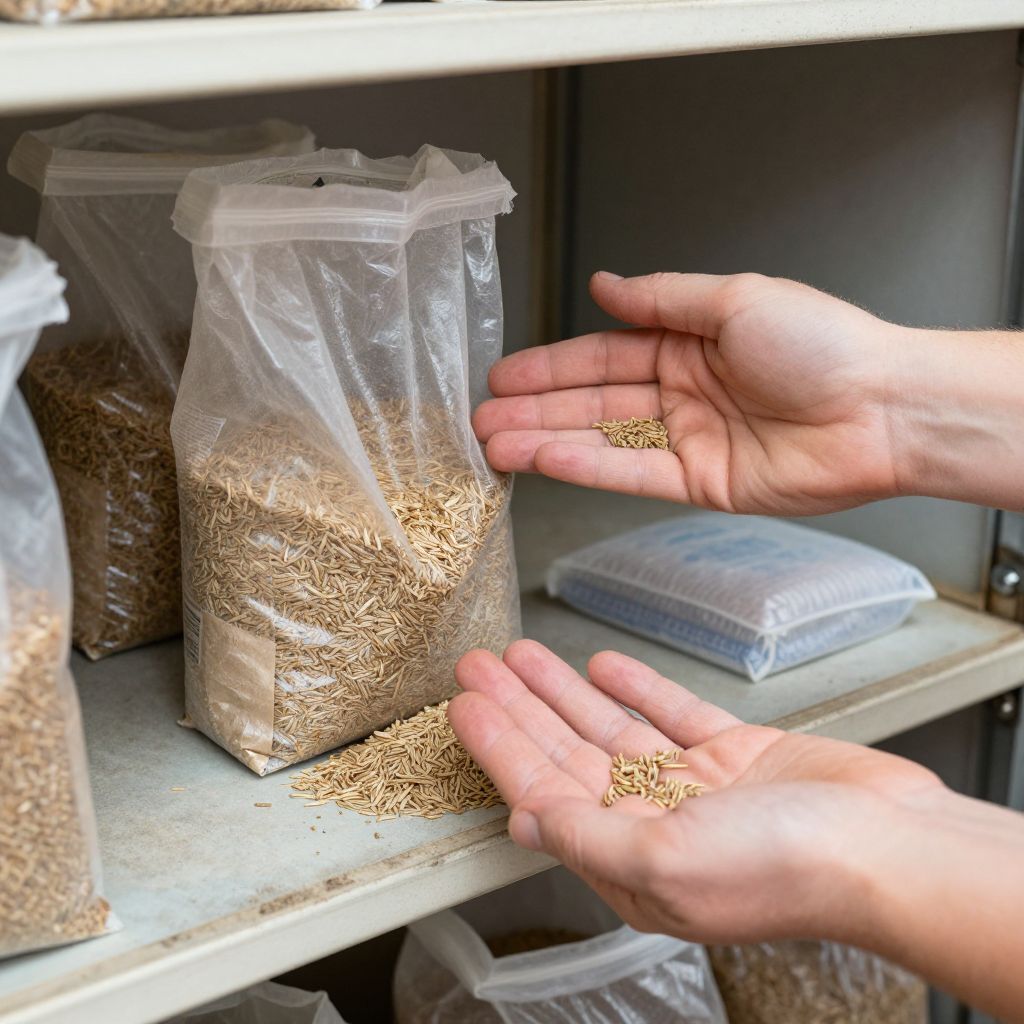
Does grass seed go bad? Yes, it can. Grass seed doesn’t usually “spoil” like food, but its germination rate drops over time, especially if it’s stored in heat, humidity, or an open bag.
If your lawn overseeding project is coming up and you’re unsure whether that old bag is still usable, the good news is that you can often test it before you sow. A quick germination check can save you time, money, and patchy results.
Does grass seed go bad?
Grass seed can lose viability as it ages, but how fast that happens depends on storage conditions. Kept cool, dry, and sealed, many grass seeds stay usable for a few years; stored in a hot garage or damp shed, they may decline much faster. The key issue is reduced germination, not true spoilage.
How long does grass seed last?
There isn’t one exact expiration date for all grass seed. Different grass species age at different rates, and the seed’s quality at harvest matters too.
As a general rule, fresh seed performs best, while older seed may still sprout but less evenly. If the bag has a “packed for” or “sell by” date, treat that as a helpful guide, not a guarantee.
What affects seed life most
- Temperature: Heat shortens shelf life quickly.
- Moisture: Dampness can trigger mold or premature decay.
- Air exposure: Open bags absorb humidity and lose quality faster.
- Seed type: Some grasses naturally store better than others.
- Storage location: A cool indoor closet is far better than a shed or garage.
How to tell if grass seed is still good
The safest way to check old seed is with a simple germination test. This tells you whether the seed is likely to sprout and how many seeds to sow to compensate for lower viability.
Signs grass seed may be bad
- Musty, moldy, or sour odor
- Visible clumps from moisture damage
- Seed that feels damp, sticky, or swollen
- Discoloration, fuzz, or obvious mold
- Very poor sprouting in a test sample
Seed that looks dusty or faded is not automatically bad, but seed that smells moldy or has been wet is much less reliable. If it has been soaked, frozen while wet, or stored in a humid space, expect reduced performance.
Simple germination test
- Count out 10 to 20 seeds.
- Place them on a damp paper towel.
- Fold the towel over the seeds and put it in a labeled plastic bag or covered container.
- Keep it in a warm indoor spot, out of direct sun.
- Check daily for sprouting over the next 7 to 21 days, depending on the grass type.
If 8 out of 10 seeds sprout, that’s about 80% germination. If only 3 or 4 sprout, the seed is weak and you’ll need to sow more thickly or replace it.
What happens when old grass seed is planted?
Old seed often gives uneven results. You may see thin patches, delayed emergence, or a lawn that fills in slowly and never quite thickens the way you hoped.
That’s because aging seed loses vigor first, then germination percentage. Even if some seeds still sprout, weaker seedlings can struggle in poor soil, drought, or heavy competition from weeds.
Common problems with old seed
- Patchy coverage
- Slow or staggered sprouting
- Lower lawn density
- More weed pressure in bare areas
- Wasted effort if the seed is nearly dead
How to store grass seed so it lasts longer
Good storage is the difference between seed that lasts and seed that fails. Your goal is to keep it cool, dry, and sealed from humidity.
Best storage practices
- Keep seed in the original bag if it is intact.
- Seal opened seed in an airtight container or heavy resealable bag.
- Store it indoors in a cool, dry place.
- Avoid garages, sheds, basements with dampness, and sunny windowsills.
- Keep it away from fertilizers, pesticides, and anything that can leak moisture or odor.
If your climate is humid, storage matters even more. In damp regions, seed can absorb moisture from the air even when it seems closed up, so a sealed container is especially helpful.
Should you refrigerate grass seed?
Refrigeration can help in some cases, but only if the seed stays dry and sealed. If condensation forms when you remove it, that moisture can do more harm than good. For most home gardeners, a cool indoor cupboard is enough.
How to use older grass seed successfully
If your seed is still viable but not fresh, you can still use it with a few adjustments. The main goal is to improve seed-to-soil contact and reduce stress on seedlings.
Step-by-step planting tips
- Prepare the seedbed by removing debris, weeds, and loose thatch.
- Loosen the top layer of soil so seed can settle into contact with earth.
- Rake lightly after spreading seed so some grains are covered.
- Press seed into the soil with a roller or by walking gently over the area.
- Apply a thin mulch or clean straw layer if appropriate for your project.
- Water gently so the surface stays evenly moist, not soggy.
Do not bury grass seed too deeply. Most lawn seed needs light contact with the soil surface, not several inches of cover.
How much extra seed to use
If a germination test shows reduced viability, you may need to sow more heavily than usual. The exact amount depends on the seed’s test result, the grass species, and whether you are seeding a bare area or overseeding an existing lawn.
A practical approach is to reduce risk by using seed with a known germination percentage and following the label directions, then adjusting upward only if your test shows a clear loss in sprouting.
Best conditions for grass seed to germinate
Even fresh seed fails if conditions are poor. Grass seed needs consistent moisture, good seed-to-soil contact, and temperatures suitable for the species you’re growing.
Key growing conditions
- Moisture: Keep the top layer evenly damp until seedlings establish.
- Soil contact: Seed must touch soil to absorb moisture and sprout.
- Sunlight: Most lawn grasses need at least some light; shade-tolerant mixes are better for low-light areas.
- Drainage: Waterlogged soil can rot seed before it germinates.
- Temperature: Germination speed varies with grass type and season.
Local climate matters. Cool-season grasses and warm-season grasses have different best planting windows, so match your seed choice and timing to your region rather than following a one-size-fits-all schedule.
When to throw grass seed away
Sometimes old seed is not worth saving. If the bag has been wet, moldy, or stored in extreme heat for a long time, the germination rate may be too low to justify using it.
Consider replacing the seed if:
- It smells sour or moldy
- It has visible fungus or heavy clumping
- Your germination test is very poor
- The bag has been open for years in poor storage
- You need reliable coverage for a large area
For small patch jobs, weak seed may still be worth a trial. For a full lawn renovation, fresh seed usually gives better, more even results and saves frustration.
Common mistakes to avoid
Old seed problems are often made worse by planting errors. Avoid these common mistakes if you want the best chance of success.
- Using seed without testing it first
- Planting into dry, compacted soil
- Letting the seedbed dry out after sowing
- Overwatering until the seed floats or washes away
- Covering seed too deeply with soil or mulch
- Expecting poor-quality seed to perform like fresh seed
Quick answer: should you use old grass seed?
Yes, if it still passes a germination test and has been stored properly. No, if it smells moldy, has been wet, or barely sprouts. The older the seed, the more important it is to test before planting and to prepare the soil carefully.
If you’re planning a lawn project, check your seed now, run a quick germination test, and store any extra in a cool, dry place so it stays usable for the next season. For more practical lawn help, you may also want to read about overseeding a lawn and how to prepare soil for grass seed.