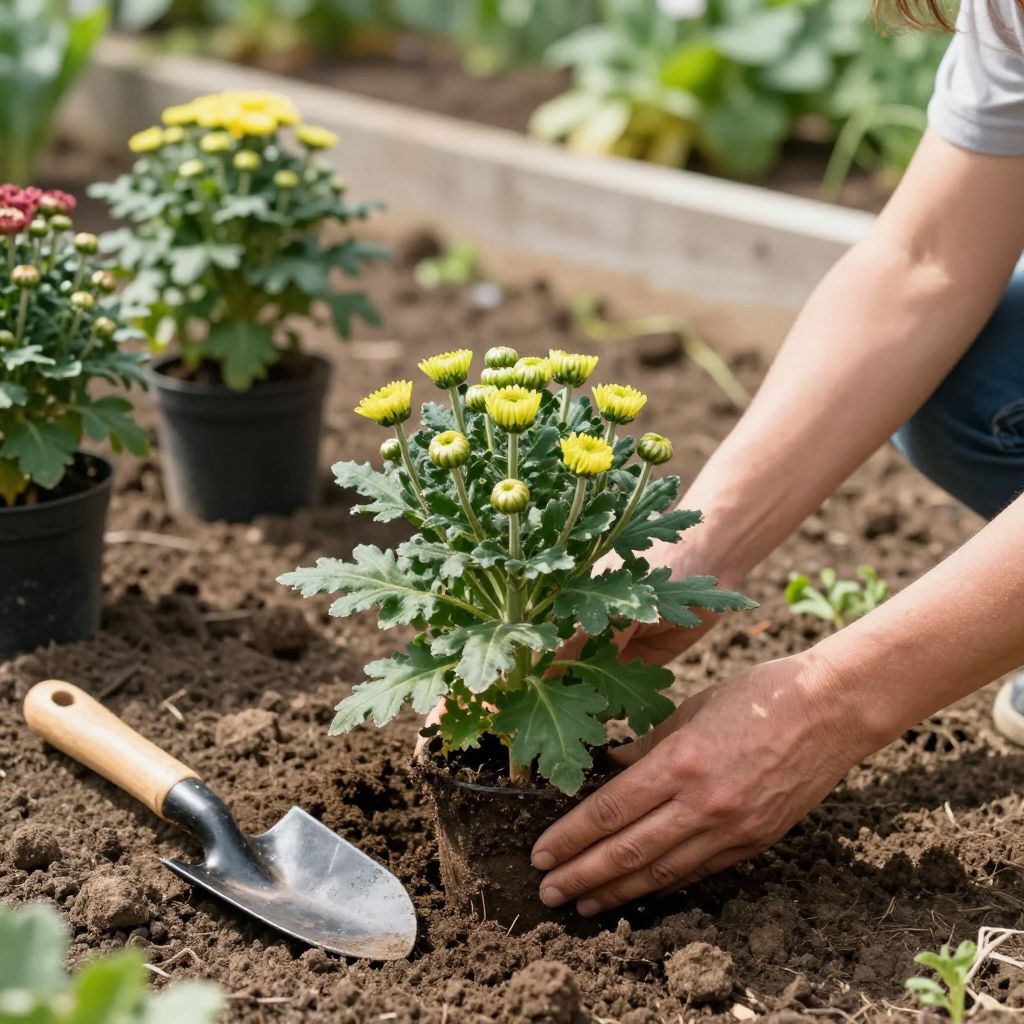
Where should you plant mums so they actually thrive instead of fading fast? The best spot is one that gives chrysanthemums full sun, well-drained soil, and good air movement, with enough room for roots and foliage to spread. Choose the location based on whether you want them as temporary fall color or as a longer-lived perennial planting.
Getting the site right matters more than almost anything else. Mums can look tough in the pot, but they perform best when planted where water does not sit around the roots, the soil is reasonably fertile, and nearby plants will not crowd them out.
Where To Plant Mums?
Plant mums in a sunny location with at least 6 hours of direct sun, loose soil that drains well, and enough space for air to circulate around the plants. They do best in garden beds, borders, raised beds, or large containers placed in bright light. Avoid soggy, shaded, or tightly packed spots.
Best locations for mums in the garden
When deciding where to plant mums, think about light, drainage, and visibility. Mums are often used for a burst of autumn color, so choose a place where you will enjoy them, but also where the site supports healthy growth.
1. Full-sun garden beds
Most mums flower best in full sun. A south- or west-facing bed is often ideal if the soil drains well and the plants are not shaded by trees, fences, or buildings for much of the day.
Sun helps mums stay compact and flower heavily. In too much shade, they may grow lanky, bloom less, and be more prone to disease.
2. Raised beds
Raised beds are one of the easiest places to plant mums if your native soil is heavy clay or tends to stay wet. The improved drainage helps prevent root rot and keeps the crown from sitting in water after rain.
If your garden soil is slow-draining, raised beds can make a big difference in plant health.
3. Borders and foundation plantings
Mums work well along walkways, in mixed borders, and near foundations where they get sun and can be seen from the house. Just be sure the spot is not too dry from roof overhangs or too crowded by established shrubs.
Give them space so air can move around the leaves. Good airflow lowers the risk of powdery mildew and other foliage problems.
4. Containers and patio pots
If you do not have a good garden bed, containers are a practical option. Use a pot with drainage holes and a high-quality potting mix, then place it in bright sun.
Containers dry out faster than in-ground plantings, so they are best for gardeners who can check moisture regularly and keep up with watering as weather changes.
What mums need from the planting site
Mums are adaptable, but they reward the right conditions. Before planting, check the site for light, drainage, soil texture, and nearby competition from roots or overhanging plants.
Sunlight
Mums prefer full sun, which means about 6 or more hours of direct light daily. In very hot climates, a little afternoon shade can help prevent stress, but too much shade usually reduces flowering.
If you are unsure about your site, watch it through the day. A place that looks bright in the morning may be shaded by noon from trees or structures.
Drainage
Drainage is critical. Mums dislike wet feet, especially in cool weather when soil dries slowly. If water puddles after rain or irrigation, choose another spot or improve the bed before planting.
To test drainage, dig a small hole, fill it with water, and see how quickly it empties. If it remains soggy for hours, the site is not ideal without amendments or elevation.
Soil quality
Mums grow best in fertile, loamy soil enriched with compost. They do not need extremely rich soil, but they do benefit from organic matter that improves structure and moisture balance.
A light layer of compost worked into the top few inches of soil is usually enough for home gardens. Avoid burying the crown too deeply or creating a dense, soggy planting hole.
Air circulation
Good airflow helps keep leaves dry and reduces disease pressure. Do not tuck mums tightly against walls, dense hedges, or crowded perennial clumps.
Spacing also matters. When planted too close together, mums can become humid and cramped, which encourages fungal issues.
Where not to plant mums
Some locations look convenient but lead to weak growth. Avoid these problem spots when choosing where to plant mums:
- Deep shade under large trees or on the north side of buildings
- Low spots where water collects after rain
- Heavy clay soil that stays wet and compacted
- Areas with root competition from trees and large shrubs
- Windy, exposed sites that dry plants too quickly
- Tight corners with little air movement
If your only available spot has one of these issues, consider a raised bed or a large container instead of planting directly in the ground.
How to prepare the planting area
Once you have chosen the right location, prepare the soil before planting. Good preparation helps mums root in faster and settle into the garden with less stress.
- Clear away weeds, grass, and debris from the planting area.
- Loosen the soil to a depth of about 8 to 12 inches if possible.
- Mix in compost if the soil is poor, compacted, or sandy.
- Check drainage and avoid planting in a hollow where water collects.
- Set the plant so the top of the root ball sits level with the surrounding soil.
- Water thoroughly after planting to settle the soil around the roots.
Do not plant mums too deep. The crown should sit at soil level, not buried under extra soil or mulch.
Planting mums in the ground vs. in containers
Your best location may depend on whether you want mums as seasonal color or as a plant you hope to keep for another year. Both options can work well if the site matches the plant’s needs.
In the ground
Planting mums in the ground is best when you have a sunny, well-drained bed and want them to settle in as part of the landscape. In-ground plants usually dry out less quickly than container plants and may overwinter better in suitable climates.
In containers
Containers are ideal for porches, patios, and entryways. They also let you move mums to the best light and protect them from excessive rain or early frost if needed.
Use a container that is wide enough for root growth and has drainage holes. A pot that is too small dries out quickly and can stress the plant during warm spells.
Seasonal considerations when choosing a site
The best place to plant mums can change with the season and your climate. A site that works in one region may be too hot, too wet, or too shaded in another.
Cooler climates
In cooler regions, full sun is especially valuable because it helps plants mature and flower before cold weather arrives. Choose a site that warms quickly in spring and drains well after snowmelt or rain.
Warmer climates
In hot climates, mums may appreciate morning sun and light afternoon shade if the heat is intense. The key is still bright light, but with some protection from scorching conditions and drying winds.
Wet climates
In rainy areas, drainage becomes the top priority. Raised beds, sloped sites, and amended soil are often better choices than low, flat ground.
Common mistakes to avoid
Many mum problems start with the wrong planting site. A few simple mistakes can shorten bloom time or weaken the plant.
- Planting in shade, which reduces flowering and encourages stretching
- Choosing a soggy site, which can lead to root rot
- Overcrowding mums with other plants
- Using heavy mulch against the crown, which can trap moisture
- Ignoring container drainage and letting pots sit in saucers of water
- Planting too late in the season in cold climates, leaving roots little time to establish
If you are planting mums for fall display, remember that they often look best when given strong light and steady moisture, not when they are tucked into a shady corner just because it is convenient.
Watering and maintenance after planting
Water newly planted mums deeply after planting, then keep the soil evenly moist while roots establish. After that, water when the top inch of soil feels dry, adjusting for rain, heat, and container size.
Mulch lightly around in-ground plants to help conserve moisture, but keep mulch a little away from the stems. For containers, check soil more often because pots dry out faster than beds.
Pinching and pruning
If you are growing mums as garden perennials rather than just seasonal color, pinching back stems earlier in the season can help produce bushier plants. Stop pinching well before bloom time so flower buds can develop.
Remove faded flowers if you want a tidier look, but do not cut back healthy stems once the plant is actively blooming unless you are cleaning up spent growth after the season.
Pests and diseases tied to poor placement
Bad site selection can make pest and disease problems worse. Mums in shady, crowded, or damp locations are more likely to struggle.
Watch for aphids, spider mites, leaf spots, and powdery mildew. The best prevention is a sunny site with good airflow and soil that drains well.
If leaves stay wet for long periods, move containers to a brighter, breezier spot or thin nearby plants that block airflow.
Quick checklist for choosing the right spot
- At least 6 hours of direct sun
- Soil that drains well after rain
- Room for airflow around the plant
- Fertile soil improved with compost if needed
- No standing water or heavy root competition
- Easy access for watering and deadheading
Conclusion
The best answer to where to plant mums is simple: choose a sunny, well-drained, airy spot where the roots will not sit in wet soil. If your garden does not have that naturally, use a raised bed or container and give the plant the light and drainage it needs. Before planting, inspect your site once more for sun and drainage, then set your mums up where they can actually thrive.
If you want to dig deeper into mum care, you may also find it helpful to read about whether mums need sun and planting mums in the ground.