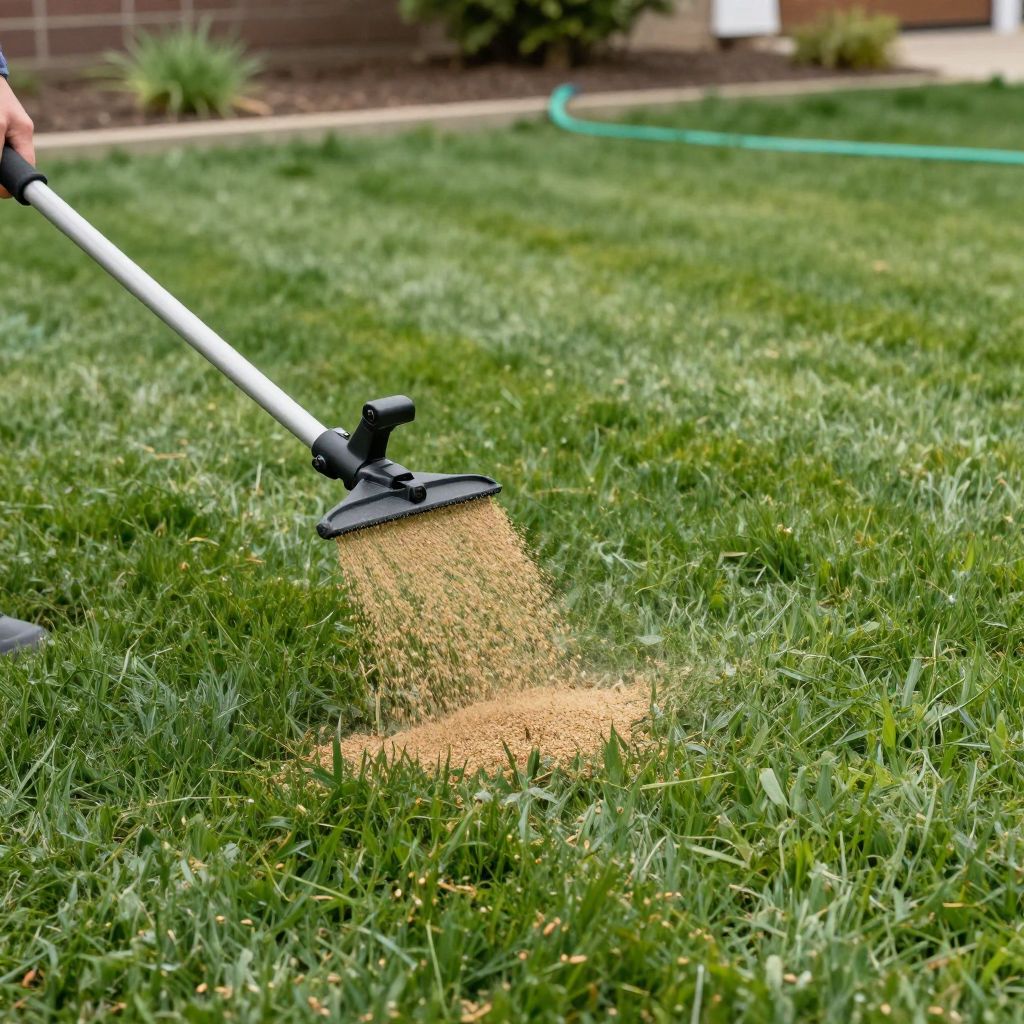
Wondering when to apply grub control? The best timing depends on the grub species, your climate, and whether you’re preventing damage or treating an existing infestation. In most lawns, the most effective time for preventive grub control is late spring to early summer, before eggs hatch and young grubs begin feeding near the surface.
If you’re already seeing brown patches, loose turf, or wildlife digging, you may need a curative treatment at a different time. The key is matching the product and timing to the grub life cycle in your area, then applying it correctly so it can reach the soil where grubs feed.
When should you apply grub control?
Apply grub control when grubs are active in the soil and small enough to be vulnerable. For preventive products, that is usually late spring to early summer, before eggs hatch. For curative treatments, apply when you confirm active feeding grubs in the root zone, often late summer through early fall, depending on your region.
Understand the grub life cycle before you treat
Grubs are the larval stage of several beetles, including Japanese beetles, June beetles, and chafers. They feed on grass roots and other organic material in the soil, which can lead to thinning turf, spongy patches, and increased drought stress.
The timing of control works best when you think in seasons, not just calendar dates. Soil temperature, rainfall, and local beetle activity all affect when eggs hatch and when grubs are most exposed to treatment.
General seasonal timing
- Late spring to early summer: Best window for preventive grub control in many lawns.
- Midsummer: Eggs may hatch and tiny grubs begin feeding; some products can still work if applied early enough.
- Late summer to early fall: Often the best time for curative treatment if you find active grubs.
- Late fall and winter: Grubs are deeper in the soil and less responsive to surface-applied treatments.
Preventive vs. curative grub control
Choosing the right type of control matters as much as timing. Preventive products are designed to stop young grubs before they cause major damage. Curative products are used after you detect an infestation and need to reduce active feeding quickly.
Preventive control
Use preventive grub control if your lawn has a history of grub problems or if beetles are active in your area every year. These products need time to move into the root zone, so they are usually applied before peak egg hatch.
Best for: lawns with recurring grub damage, high-risk landscapes, and gardeners who want to get ahead of the problem.
Curative control
Use curative control when you confirm grubs are already present and causing damage. These products work best on young, actively feeding grubs near the soil surface, not on older grubs that have moved deeper or entered dormancy.
Best for: visible damage, turf that lifts easily like a carpet, or areas where you dig and find several grubs per square foot.
How to tell if it’s the right time in your yard
Local conditions matter more than a fixed date. A cool coastal climate, a hot inland climate, and a northern region will all shift grub activity differently. Use your own lawn as the guide.
Signs you may need treatment now
- Brown or thinning patches that do not recover with watering
- Turf that peels back easily because roots have been eaten
- Birds, raccoons, skunks, or other animals digging for grubs
- More than a few grubs found when you inspect the top few inches of soil
How to check for grubs
- Cut a small square of turf on the edge of a damaged area.
- Peel it back and inspect the roots and topsoil.
- Look for C-shaped larvae with pale bodies and darker heads.
- Check several spots, not just one, because grub damage can be patchy.
If you find only a few grubs and the grass is otherwise healthy, you may not need treatment. Healthy lawns can tolerate some grub feeding, especially if soil moisture, mowing, and fertility are balanced.
How to apply grub control correctly
Good timing helps, but proper application is what makes the treatment reach the grubs. Always read the product label and follow its instructions, since products differ in how they work, how they are watered in, and how long they take to act.
Step-by-step application basics
- Mow the lawn if needed, but avoid scalping it.
- Apply the product evenly across the affected area or the whole lawn if you are preventing future damage.
- Water it in if the label requires it, because many grub controls need moisture to move into the root zone.
- Avoid heavy irrigation that causes runoff or washes product away.
- Keep people and pets off the area for the time specified on the label.
Important: Dry soil, compacted soil, and thatch can reduce effectiveness because the product may not reach the feeding zone. Light, even watering after application is often the difference between success and failure.
Weather and soil conditions that affect timing
Temperature and moisture influence both grub activity and product performance. Warm soil often encourages egg laying and feeding, while very dry soil can push grubs deeper and make control harder.
Best conditions for application
- Moderate soil moisture, not drought-stressed turf
- Calm weather to reduce drift on granular or spray products
- No heavy rain forecast immediately after application unless the label calls for watering in
- Soil temperatures that match active grub development in your region
If your lawn is already stressed by heat or drought, focus first on restoring turf health. A weak lawn is more likely to show grub damage and less likely to recover quickly after treatment.
Common mistakes to avoid
Many grub control failures come from timing errors rather than product choice. A well-timed application is far more effective than repeating the wrong treatment at the wrong season.
- Applying too late: Older grubs are harder to control.
- Using preventive control after damage is obvious: At that point, you may need a curative option instead.
- Skipping watering-in when required: Many products need moisture to reach the root zone.
- Treating without confirming grubs: Not every brown patch is caused by grubs.
- Ignoring label directions: The label is the legal and practical guide for safe use.
What to do after treatment
After applying grub control, monitor the area for new damage and check whether the turf begins to recover. In many cases, the roots need time to regrow before the lawn looks normal again.
Support turf recovery
- Water deeply when needed, especially during dry spells
- Overseed thin areas if the label and season allow it
- Improve drainage in spots that stay wet, since stressed turf is more vulnerable
- Avoid heavy foot traffic while the grass is recovering
If the damage is severe, you may need to reseed or patch bare areas after the grub population is under control. Treating the insects and repairing the turf are both part of the recovery process.
When to call it a bigger lawn problem
Sometimes grub damage is a symptom of broader lawn stress. Poor drainage, compacted soil, shallow roots, and inconsistent mowing can all make a lawn more susceptible to visible damage.
If you see repeated grub problems year after year, consider whether the lawn needs better soil structure, aeration, improved irrigation practices, or a different grass selection better suited to your climate.
Practical seasonal guide
Spring
Watch for adult beetle activity in your area and inspect turf if you had damage the previous year. Spring is often the time to plan preventive treatment, not necessarily to react to old damage.
Summer
Early summer can be an important preventive window. By late summer, active feeding grubs may be easier to find and treat if you confirm they are present.
Fall
Fall is often a strong time for curative treatment in many regions because grubs are still feeding before winter deepens. It is also a good time to repair damaged turf.
Winter
Grubs are generally less accessible in cold weather. Focus on planning, soil improvement, and monitoring rather than expecting surface treatments to work well.
Conclusion
The best answer to when to apply grub control is: treat at the stage that matches the product and the grub life cycle in your area. For prevention, aim for late spring to early summer. For active infestations, treat when grubs are present and feeding, usually late summer to early fall in many lawns. Check your turf, follow the label, and water appropriately for the best results.
If you want to identify the pest before you treat, you may also find these guides helpful: what grubs look like and what grubs are.