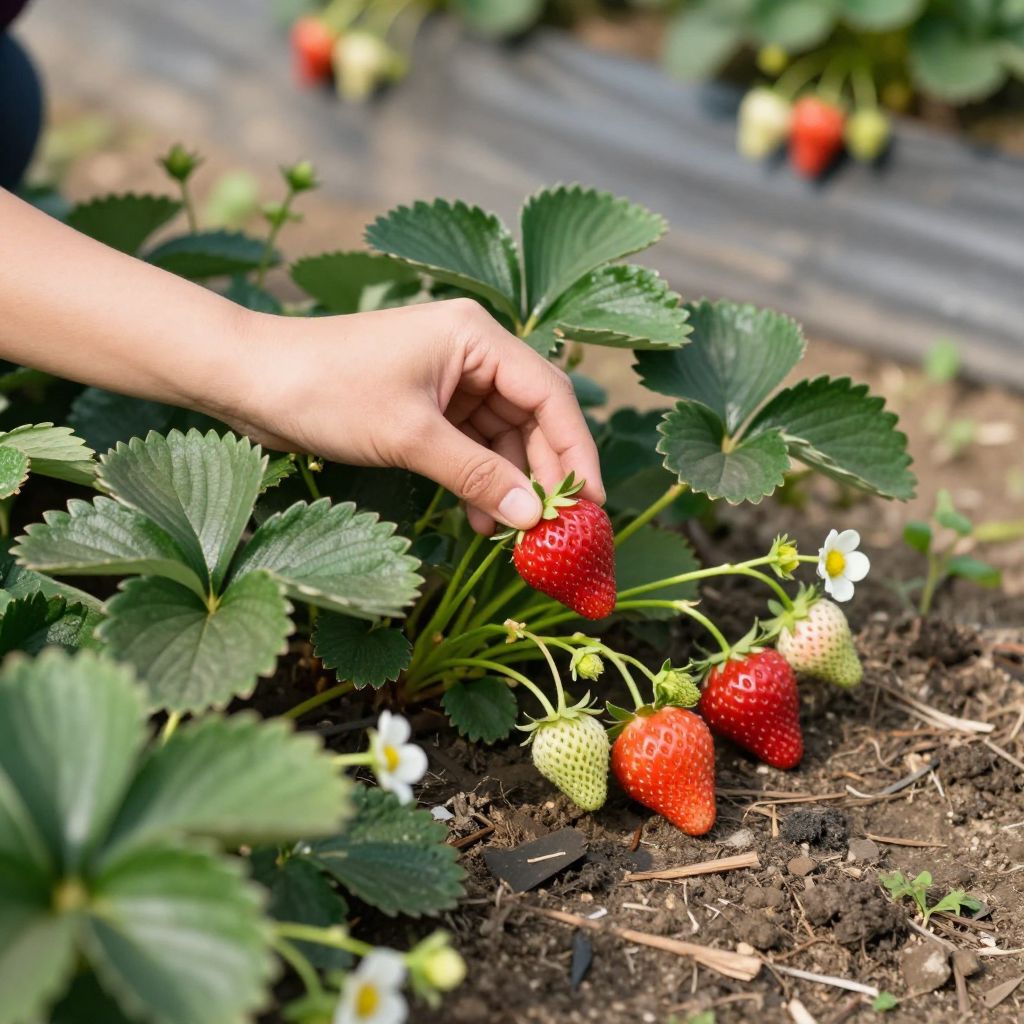
Wondering when to pick strawberries so they’re sweet, fully red, and at their best? The right harvest time depends on ripeness, weather, and the variety you’re growing, but in most gardens strawberries are ready when the berries are uniformly red, fragrant, and easy to detach.
Pick too early and they’ll be tart and underdeveloped; wait too long and they can soften, split, or attract pests. With a few simple checks, you can harvest at peak flavor and keep the plants producing well.
When to pick strawberries?
Pick strawberries when the berries are fully colored, glossy, and fragrant, with no white or green shoulders near the stem. They should feel plump but not mushy, and they should separate from the plant with a gentle twist or a snip. Harvest in the cool of morning for the best texture.
How to tell strawberries are ripe
Color is the easiest clue, but it is not the only one. A ripe strawberry is usually bright red all over, depending on the variety, and it smells noticeably sweet near the stem end.
Ripeness checklist
- Color: Look for even red color from tip to stem.
- Texture: The berry should be firm with a slight give, not hard or watery.
- Shape: A ripe berry is fully filled out and plump.
- Aroma: Ripe fruit often has a sweet, fruity scent.
- Stem attachment: It should release easily without tugging hard.
Some strawberries stay partly pale near the stem even when ripe, especially in certain cultivars, so use the full picture rather than color alone. If the berry tastes flat or acidic, it likely needed a little more time.
Seasonal timing: when strawberries are usually ready
Strawberry harvest time varies by climate, variety, and whether the plants are June-bearing, everbearing, or day-neutral. In many gardens, fruit ripens from late spring into early summer, but a longer harvest window is possible with repeat-bearing types.
What affects harvest timing
- Climate: Warm weather speeds ripening; cool springs slow it down.
- Sun exposure: More sun usually means earlier, sweeter fruit.
- Plant age: Established plants often produce more predictably than young ones.
- Variety type: June-bearing plants crop in a concentrated flush, while day-neutral and everbearing types can produce over a longer period.
- Weather swings: Heat, rain, and cloudy stretches can change ripening speed quickly.
If you are unsure whether your plants are ready, check them every day or two once the first berries start coloring. Strawberries can go from nearly ripe to overripe very quickly in warm weather.
How to harvest strawberries without damaging the plant
Harvesting gently helps protect both the fruit and the crown of the plant. A clean pick reduces bruising and keeps the berries fresher longer.
- Check the berry from all sides for full color and firmness.
- Lift the fruit slightly to see whether the underside is ripe too.
- Pinch or snip the stem just above the berry, leaving a short cap attached.
- Place berries in a shallow container so they are not crushed.
- Keep harvested fruit out of direct sun as soon as possible.
Use scissors or garden snips if the stems are tough, but avoid pulling hard. Tugging can damage nearby flowers, runners, or developing fruit.
Best time of day to pick
Morning is usually best, after the dew has dried but before the day heats up. Cooler fruit stays firmer, stores better, and is less likely to bruise.
What happens if you pick strawberries too early or too late?
Timing matters because strawberries do not continue to sweeten much after harvest. They may soften slightly after picking, but they will not improve in flavor the way some other fruits do.
If you pick too early
- The berries may taste sour or bland.
- They often have a firmer, less juicy texture.
- They may look attractive but lack full flavor.
If you pick too late
- Fruit can become soft and overripe.
- Birds, slugs, and insects may damage it.
- Wet weather can increase mold and splitting.
- Old fruit left on the plant can slow your harvest routine.
For the best quality, err slightly toward full ripeness rather than early picking. A fully ripe strawberry is usually worth the extra day or two of waiting.
Growing conditions that help strawberries ripen well
Good harvest timing starts with healthy plants. Strawberries ripen best when they have strong sun, steady moisture, and well-drained soil.
Sunlight
Most strawberries need full sun for the best fruiting. In cooler climates, at least 6 to 8 hours of direct sun is a good target. In hotter regions, some afternoon protection can help fruit quality if plants are stressed by extreme heat.
Soil and drainage
Strawberries prefer fertile, loose soil that drains well. Heavy, waterlogged soil can lead to weak growth and fruit rot, while very dry soil can cause small, misshapen berries.
- Work in compost before planting to improve soil structure.
- Avoid low spots where water pools after rain.
- Raised beds can help in clay-heavy or poorly drained gardens.
Watering
Keep soil evenly moist while fruit is developing. Irregular watering can lead to smaller berries or fruit that ripens unevenly. Water at the base of the plants rather than overhead when possible, especially during fruiting, to reduce disease pressure.
Common reasons strawberries ripen unevenly
If some berries are ready and others are not, that is usually normal. But if fruit stays pale, small, or oddly shaped, a growing issue may be involved.
Possible causes
- Insufficient sun: Plants in shade often ripen slowly and unevenly.
- Poor pollination: Berries may be misshapen or have pale sections.
- Heat stress: High temperatures can reduce fruit size and quality.
- Water stress: Dry spells or soggy soil can both affect ripening.
- Pests and disease: Damaged fruit may stop developing normally.
If berries are lopsided or have green tips, check for pollination issues and make sure bees and other pollinators have access to the flowers. A diverse garden with nearby flowering plants can help support pollination.
How often to check plants during harvest season
Once strawberries begin ripening, inspect plants frequently. In peak season, daily checking is ideal, especially during warm spells. Even a two-day delay can mean the difference between perfect fruit and overripe berries.
Harvesting frequency by plant type
- June-bearing strawberries: Expect a concentrated harvest over a shorter period.
- Everbearing strawberries: Check regularly through the season for repeat flushes.
- Day-neutral strawberries: Pick as berries ripen throughout the growing season.
Remove all ripe fruit promptly so the plant can keep directing energy into new berries. Leaving ripe fruit on the plant too long can also encourage pests and rot.
How to handle and store freshly picked strawberries
Strawberries are delicate, so careful handling matters as much as picking at the right time. Freshly harvested berries are best used soon after picking, but a few simple steps can help them last longer.
- Do not wash until you are ready to use them.
- Store them in a shallow container in the refrigerator.
- Remove any damaged or moldy berries right away.
- Keep berries dry to slow spoilage.
If you notice soft spots, mold, or leaking juice, sort those berries out immediately. One spoiled berry can quickly affect the rest in the container.
Practical mistakes to avoid when picking strawberries
Small harvesting mistakes can reduce flavor and shorten the life of your fruit. Avoid these common problems to get the best quality from your patch.
- Picking by color alone: Always check firmness and aroma too.
- Pulling instead of cutting: This can damage stems and nearby fruit.
- Using a deep bucket: Bottom berries get crushed easily.
- Harvesting when wet: Wet fruit spoils faster.
- Leaving overripe berries on the plant: This invites pests and disease.
Keeping strawberry plants productive after harvest
Good post-harvest care helps the patch stay healthy for the next flush of fruit or the following season. Keep removing ripe and damaged berries, and continue to monitor moisture and pests.
If your plants send out runners, decide whether you want to propagate new plants or trim them back so the parent plant puts more energy into fruiting. In a small bed, too many runners can crowd the patch and reduce berry size.
Conclusion
The best time for when to pick strawberries is when the berries are fully red, fragrant, and easy to release from the plant. Check your patch often, harvest in the morning, and handle the fruit gently for the sweetest results.
If you want to keep improving your strawberry patch, you may also find these guides helpful: when to fertilize strawberries and do strawberry plants come back?