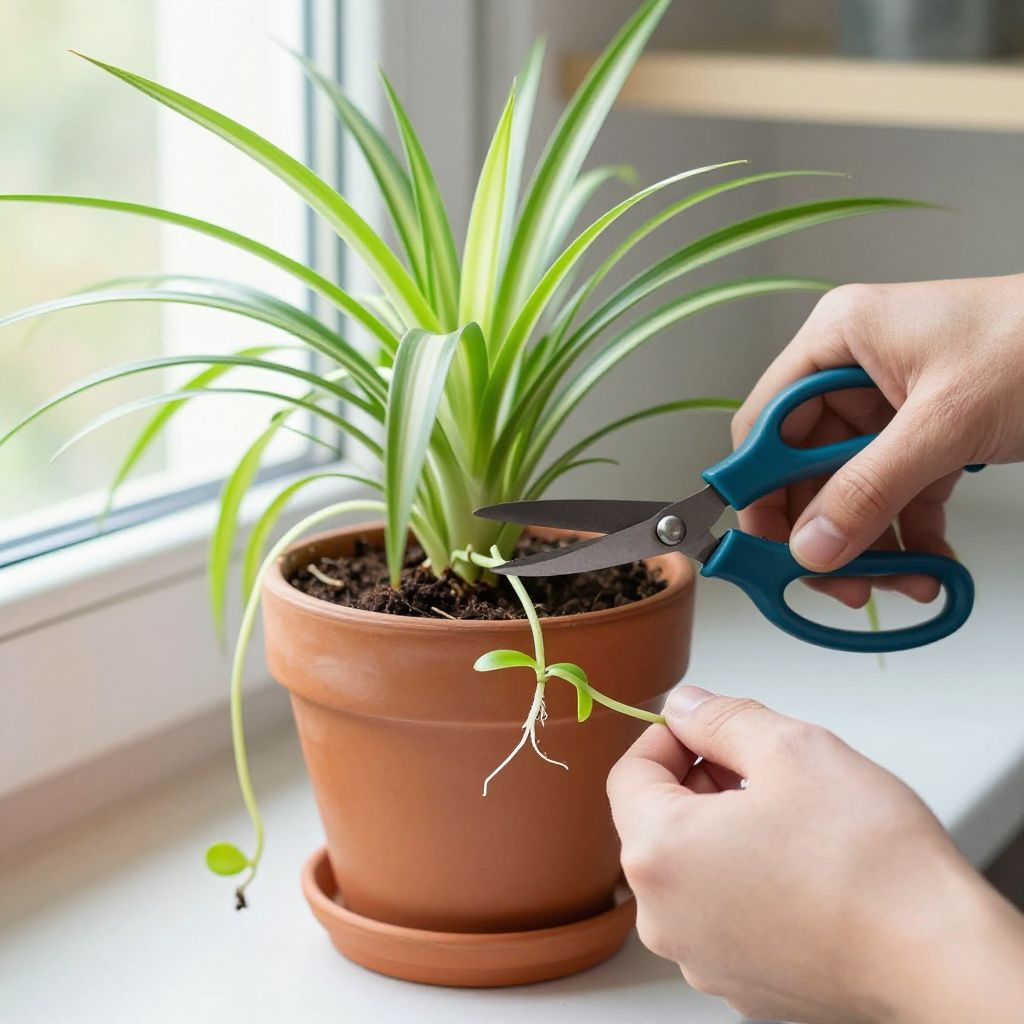
Trying to figure out where to cut spider plant babies? The best cut point is usually the thin stem, or runner, that connects the baby plant to the mother plant. You want to remove the plantlet cleanly without damaging the crown or roots, and the exact spot depends on whether you plan to root it in water, soil, or leave it attached a little longer.
Spider plants (Chlorophytum comosum) are easy to propagate, but a clean cut at the right place makes the process much smoother. With the right tools and timing, you can separate healthy babies and give them the best chance to grow into strong new plants.
Where to cut spider plant babies?
Cut the baby plant off the runner between the mother plant and the baby, leaving a short section of stem attached to the baby if you can. Use clean scissors or pruners and make the cut close enough to remove the plantlet, but not so close that you nick the baby’s crown or roots.
Understand the parts before you cut
A spider plant baby is a small plantlet that forms at the end of a long arching stem called a runner or stolon. The runner is not the same as the baby’s crown, which is the central growing point where new leaves emerge.
When you cut, the goal is to remove the runner, not the crown. Damaging the crown can slow rooting or cause the baby to fail.
What to look for on the plant
- Mother plant: the main potted spider plant.
- Runner: the thin stem that carries the baby.
- Baby plantlet: the small offset at the end of the runner.
- Crown: the center of the baby where leaves emerge.
Best cutting locations for spider plant babies
The best cutting location depends on your propagation method, but in most cases you should cut the runner a short distance from the baby, leaving about 1 to 2 inches of stem attached to the plantlet if possible. If the runner is tangled or crowded, you can also cut it closer to the mother plant and separate the baby later.
If you are rooting in water
Cut the runner so the baby has a short stem attached, then place only the stem end in water. Keep the leaves above the waterline to reduce rot. A short stem is easier to position in a jar or glass than a baby cut flush against the crown.
If you are planting directly in soil
Leave a small section of runner attached to the baby, then nestle the base into moist potting mix. The extra stem gives you something to anchor while the roots form. You can trim away any leftover runner once the plant is established.
If the baby already has roots
When a spider plant baby has visible roots, you can cut the runner a little farther away from the crown and pot it up right away. In this case, the exact cut is less critical than avoiding root damage during handling.
How to cut spider plant babies step by step
- Choose a baby that looks healthy and has formed several leaves. Babies with some root nubs or small roots are usually easiest to start.
- Clean your scissors, snips, or pruners with rubbing alcohol or soap and water.
- Find the runner between the mother plant and the baby.
- Make a clean cut with about 1 to 2 inches of runner attached to the baby when possible.
- Handle the baby by the leaves or stem, not by the crown.
- Pot it in a small container with drainage holes, or place it in water if you prefer water propagation.
When is the best time to cut spider plant babies?
You can remove spider plant babies whenever they are large enough to handle, but they often root best during active growth. Indoors, that usually means spring through summer, though a healthy plant in stable indoor conditions can be propagated at other times too.
Do not rush to cut babies that are tiny, weak, or pale. A larger plantlet with several leaves and at least some root development is more likely to establish quickly.
Signs a baby is ready
- It has several mature leaves.
- The plantlet feels firm, not limp.
- It may have small root bumps or short roots.
- The mother plant is healthy enough to support propagation.
How to root spider plant babies after cutting
Once you cut the baby free, give it a stable place to grow roots. Spider plant babies root well in either water or soil, but soil is often the better long-term option because the plant adapts to its final growing medium right away.
Rooting in soil
- Use a small pot with drainage holes.
- Fill it with a light, well-draining potting mix.
- Moisten the mix so it is evenly damp, not soggy.
- Set the baby so the base sits just at or slightly below the surface.
- Gently firm the mix around the stem.
- Keep the pot in bright, indirect light.
Rooting in water
- Use a clean glass or jar.
- Place only the stem end in water.
- Change the water every few days to keep it fresh.
- Move the baby to soil once roots are a few inches long.
If you root in water, remember that water roots can be more delicate than soil roots. Transplant carefully and keep the potting mix lightly moist for the first couple of weeks.
What kind of potting mix and container should you use?
Spider plants prefer a loose, well-draining mix that holds some moisture without staying wet. A standard indoor potting mix is usually fine, especially if it contains perlite, bark, or other aerating ingredients.
Choose a small pot first. A container that is too large stays wet too long, which increases the risk of rot. A pot just a little wider than the baby’s root mass is usually best.
Good container habits
- Always use drainage holes.
- Do not bury the crown deeply.
- Repot later as the plant grows.
Common mistakes to avoid
Most problems happen when the cut is made too close to the baby’s crown, when the plantlet is too small, or when the new cutting is kept too wet. Spider plant babies are forgiving, but they still need a clean start.
- Cutting into the crown: this can damage the growing point and slow or stop growth.
- Using dull tools: ragged cuts heal more slowly and can invite rot.
- Potting into heavy, soggy soil: poor drainage is a common cause of failure.
- Giving too much direct sun right away: strong sun can stress a newly separated baby.
- Choosing very small babies: tiny offsets may not have enough stored energy to establish well.
How to care for a newly cut spider plant baby
After cutting, keep the baby in bright, indirect light and avoid extremes. A warm indoor spot with good air circulation is ideal. If you are growing it outdoors in a suitable climate, protect it from harsh midday sun, heavy rain, and cold snaps.
Water lightly and consistently. The mix should stay slightly moist while roots form, but never waterlogged. If the leaves start to wilt, check the base for rot or dryness before adding more water.
Simple aftercare checklist
- Bright, indirect light
- Even moisture, not saturation
- Small pot with drainage
- No fertilizer until you see new growth
- Gentle handling for the first few weeks
How to tell if the cutting is failing
A healthy spider plant baby should stay firm and gradually begin to grow new roots or new leaves. If the base turns mushy, smells sour, or collapses, rot is likely the issue. If the leaves dry out and curl badly, the plant may be too dry or stressed.
Yellowing can also happen if the cutting is overwatered, planted too deeply, or kept in low light for too long. In that case, adjust the conditions before assuming the plant is lost.
Should you cut all spider plant babies off at once?
You do not have to remove every baby at the same time. In fact, leaving some attached can help you compare results and reduce stress on the mother plant. If the parent plant looks crowded, you can trim a few runners and leave others for later.
If the mother plant is weak, yellowing, or root-bound, focus on improving its care first. A stressed parent plant may produce babies, but those offsets may be smaller and slower to establish.
Practical tips for healthier propagation
- Use clean, sharp tools for every cut.
- Choose larger, healthier babies when possible.
- Keep the crown above the soil line.
- Provide bright, indirect light rather than harsh sun.
- Use a pot only slightly larger than the root system.
Conclusion
When you ask where to cut spider plant babies, the simple answer is: cut the runner between the mother plant and the baby, leaving a short stem on the plantlet if you can. That clean, careful cut gives you the best chance of successful rooting and healthy new growth.
If you want to keep learning, you may also find it helpful to read about where to cut a spider plant to propagate and why a spider plant turns yellow.