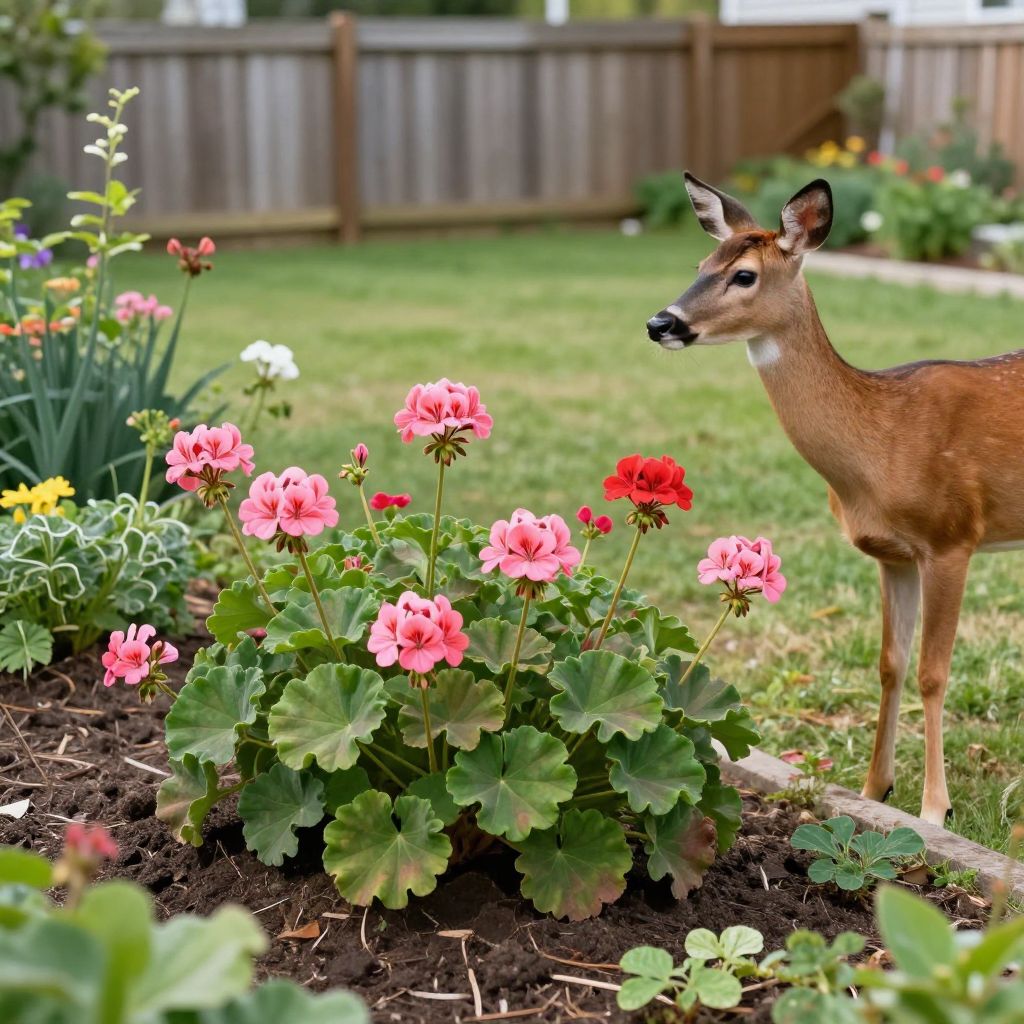
Are geraniums deer resistant? In many gardens, yes—geraniums are usually left alone more often than highly palatable plants. But “deer resistant” does not mean “deer proof,” and hungry deer may still browse them, especially when food is scarce.
If you want to use geraniums for color in a deer-prone yard, it helps to know which types perform best, how to plant them well, and what to do when deer pressure is heavy. Good cultural care also makes plants more resilient if they do get nipped.
Are geraniums deer resistant?
Geraniums are generally considered deer resistant, especially compared with tender, juicy ornamentals. Deer often avoid them because of their scent, texture, and mildly bitter foliage, but they may still sample plants in dry seasons, high-pressure areas, or newly planted beds. Expect “less likely to be eaten,” not “never eaten.”
Why deer usually avoid geraniums
Deer browsing is driven by availability, season, and local pressure. Geraniums tend to rank lower on a deer’s preferred menu because the leaves are aromatic and somewhat fuzzy or textured, which can make them less appealing.
That said, deer behavior varies widely. In some neighborhoods, deer ignore geraniums almost completely; in others, they nibble them when other plants are scarce. Young, lush growth is usually the most vulnerable.
Factors that affect deer damage
- Food scarcity: Deer are more likely to sample plants when natural forage is limited.
- Plant age: New transplants and soft new growth are easier to browse.
- Local deer pressure: Heavy deer populations can override normal preferences.
- Season: Late winter, drought, and early spring can increase browsing.
- Garden placement: Edges, open lawns, and unfenced beds are more exposed.
Which geraniums are most useful in deer-prone gardens?
For most home gardeners, the best-known bedding “geraniums” are Pelargonium species and hybrids. These are the plants commonly sold in garden centers as annual geraniums. True hardy geraniums, or cranesbills (Geranium spp.), are different plants, but they are also often considered deer resistant.
Both groups can work well in landscapes where deer are a concern, but you should still choose based on sun, soil, and climate first. Deer resistance is only one part of the decision.
Bedding geraniums (Pelargonium)
These are popular for pots, window boxes, and seasonal beds. They usually have thick stems and aromatic foliage, which can help discourage browsing.
Hardy geraniums (Geranium spp.)
These perennial cranesbills are often tougher in the landscape and can be excellent ground covers or border plants. Many species are low maintenance and useful where deer are active.
How to grow geraniums so they stand up better to deer pressure
Healthy plants recover from nibbling more easily than stressed ones. Strong growth starts with the right site, good drainage, and careful watering. A vigorous geranium is less likely to be repeatedly targeted than a weak, leggy plant.
Planting site and sunlight
- Give geraniums bright light; most bedding types flower best in full sun to light shade.
- In very hot climates, afternoon shade can reduce stress and keep foliage firmer.
- Hardy geraniums often tolerate more shade than bedding types, depending on the species.
Soil and drainage
Geraniums dislike soggy roots. Use loose, well-drained soil enriched with compost, but avoid making the bed overly rich or heavy. If your soil stays wet after rain, plant in raised beds or containers with drainage holes.
A simple test: if water puddles for hours after irrigation, improve drainage before planting. Poor drainage weakens plants and can make deer damage more likely because stressed plants bounce back slowly.
Watering
Water deeply when the top inch or two of soil feels dry, then let the soil partly dry again before watering. Container plants usually need more frequent checks than in-ground plants, especially in warm, windy weather.
Avoid frequent shallow watering. It encourages weak surface roots and can lead to lanky growth that is more vulnerable to pests and browsing.
Feeding and pruning
Use moderate feeding rather than pushing soft, lush growth. Too much nitrogen can produce tender leaves that deer may sample more readily. Pinch back bedding geraniums to encourage branching, and remove spent flowers to keep plants tidy and flowering.
For hardy geraniums, cut back tired growth after the main flush of bloom if needed. Clean, compact plants are easier to protect and recover from damage.
How to reduce deer damage around geraniums
No single method works perfectly, so the best approach is usually a combination of planting choices, barriers, and deterrents. If deer are a regular problem in your area, plan for protection from the start rather than waiting until plants are damaged.
Practical deer-management steps
- Plant geraniums near the house or patio where deer are less comfortable approaching.
- Group them with less-palatable plants to make the bed less attractive overall.
- Use fencing where possible; physical barriers are the most reliable option.
- Apply repellents as directed and reapply after heavy rain or new growth.
- Protect young plants with temporary netting or cages until they are established.
What to avoid
- Do not assume one deer-resistant plant will protect the whole bed.
- Do not let plants become overfertilized and overly tender.
- Do not rely on a single repellent all season without checking effectiveness.
- Do not plant geraniums in a deer highway and expect them to be ignored.
Container growing tips for deer-prone areas
Containers can help because they let you place geraniums closer to doors, decks, and protected areas. That said, deer can still reach pots on low stands or railings, so placement matters.
Use a pot with drainage holes and a quality potting mix that drains well. Container geraniums dry out faster than in-ground plants, so check moisture often and avoid letting the root ball stay waterlogged after rain.
For extra protection, place containers where deer movement is naturally limited, such as on a porch, against a wall, or inside a fenced patio. Elevated planters may help, but they are not foolproof if deer are persistent.
Common problems that can look like deer damage
Not every missing leaf is caused by deer. Before you blame browsing, look for clues that point to insects, disease, weather, or cultural stress.
Signs it may be deer
- Leaves and stems are torn or cleanly clipped at an angle
- Damage is higher on the plant and within easy browsing height
- Footprints or disturbed soil are nearby
- Only the tender tips are missing overnight
Other common issues
- Slug or caterpillar feeding: Often leaves irregular holes rather than whole stems removed.
- Overwatering: Can cause yellowing, wilting, and root decline.
- Heat stress: May make foliage droopy and reduce flowering.
- Fungal disease: Poor airflow and wet leaves can lead to spotting or rot.
If you are unsure, inspect damage at dusk or early morning, and look for tracks, droppings, or repeated browsing patterns. That can help you choose the right fix instead of treating the wrong problem.
Can geraniums recover after deer browse them?
Often, yes. Geraniums can rebound if the growing point is still intact and the plant is otherwise healthy. Light browsing may only slow flowering temporarily, while severe damage can set the plant back more significantly.
After browsing, trim ragged stems back to healthy tissue, water consistently, and avoid heavy feeding right away. If the plant was newly planted, give it time to re-root before expecting strong regrowth.
Recovery checklist
- Remove torn or damaged stems cleanly
- Check soil moisture and correct drought stress
- Keep weeds down so the plant is not competing for resources
- Protect the plant from repeat browsing while it regrows
Best uses for geraniums in deer-resistant landscapes
Geraniums work well in borders, foundation plantings, containers, hanging baskets, and mixed beds. They are especially useful where you want color without relying on highly palatable flowers.
For a stronger deer-resistant design, combine geraniums with other plants that are less appealing to deer and match them to your site conditions. The healthier the planting, the less likely it is to suffer repeated damage.
Bottom line
Are geraniums deer resistant? Generally, yes, but not completely. They are a smart choice for many deer-prone gardens, especially if you give them good drainage, steady moisture, and some protection when deer pressure is high.
If you are planning a mixed border, it may also help to compare other deer-resistant choices such as begonias and azaleas so you can build a planting scheme that fits both your garden style and your local deer pressure.