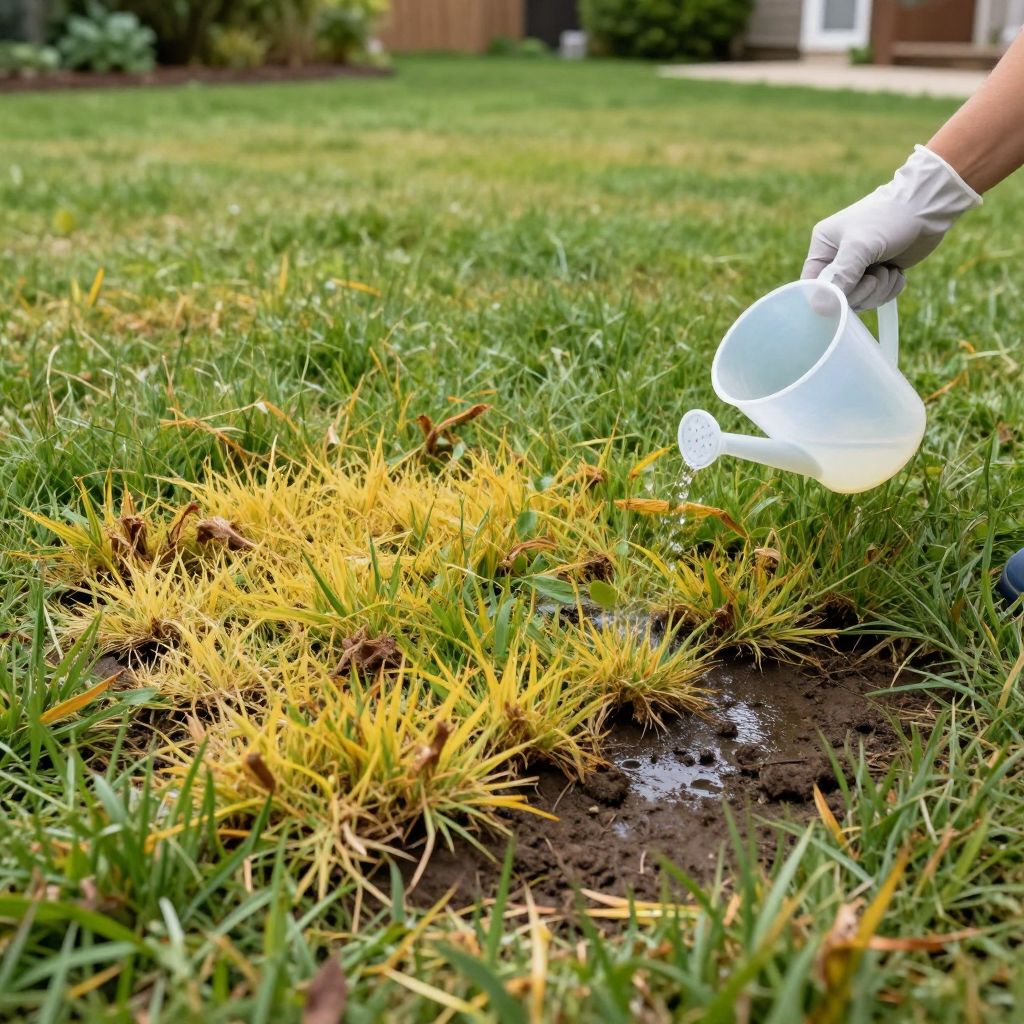
Does bleach kill grass? Yes, it usually does, and often very quickly. Bleach is a harsh chemical that strips foliage, damages roots, and can leave bare patches where grass once grew.
If you spilled bleach on the lawn or are thinking of using it for weed control, the safest approach is to act fast and understand the limits. Bleach is not a selective lawn treatment, and it can also harm soil life, nearby plants, and hardscape surfaces.
Does bleach kill grass?
Yes. Household bleach can kill grass by burning leaf tissue and damaging the crown and roots, especially with direct contact or repeated exposure. Small splashes may only scorch the blades, but enough bleach can kill the plant and leave a dead patch. It is not a safe lawn-care product.
How bleach affects grass and soil
Bleach is typically a sodium hypochlorite solution. On grass, it acts as a strong oxidizer that destroys living cells on contact. That means visible damage can start within hours, especially in warm weather or when the grass is already stressed.
What happens above and below ground
- Leaves and blades: turn pale, then brown or straw-colored.
- Crowns: may be damaged if bleach pools in one spot.
- Roots: can be harmed if the chemical soaks into the soil.
- Soil biology: beneficial microbes may be reduced in the treated area.
Light splashes on established turf may only burn the top growth, and the grass can sometimes recover if the crown survives. A heavier spill, however, often kills the turf completely and may leave the soil less healthy for replanting until it is flushed and recovered.
What to do if bleach gets on your lawn
If bleach spills on grass, the goal is to dilute and remove as much as possible quickly. The faster you respond, the better the chance of saving surrounding turf.
- Keep people and pets away from the area until it is rinsed.
- Rinse the spot thoroughly with clean water as soon as you safely can.
- Water the surrounding soil to help dilute any residue that soaked in.
- Do not add more chemicals to “neutralize” it unless a product label specifically says to do so.
- Watch the area for 1–2 weeks to see whether the grass recovers or dies back.
If the spill was large, you may need to remove dead turf and reseed or patch the area later. In some cases, repeated watering over several days helps flush residues deeper into the soil, but avoid creating runoff into drains, flower beds, or stormwater areas.
Can bleach be used to kill weeds in grass?
Bleach can kill weeds, but it will also kill or injure nearby grass, so it is a poor choice for lawns. It is non-selective, meaning it does not distinguish between weeds and turf. Even careful spot use can drift, splash, or soak into surrounding roots.
Why bleach is a bad lawn weed killer
- It can leave dead circles or streaks in the lawn.
- It may damage soil organisms that support turf health.
- It can discolor concrete, pavers, fencing, and garden edging.
- It offers no long-term weed prevention, so weeds often return.
If you need to control weeds in turf, use methods designed for lawns instead. Hand removal, mowing at the correct height, overseeding thin areas, and using a lawn-appropriate selective herbicide are usually much safer choices, depending on your grass type and the weed involved.
How to tell whether grass is dead or just injured
After bleach exposure, grass may look dead before it actually is. Give it a little time before deciding to replace it, unless the damage is obviously severe.
Signs of temporary injury
- Blades are yellowed or bleached, but the base still looks firm.
- Damage is limited to the top growth.
- New green growth appears after a week or two.
Signs the grass is likely dead
- The crown feels dry, brittle, or mushy.
- Pulling gently lifts the plant with little resistance.
- The patch stays brown after watering and waiting.
- Damage spreads in a clear spill pattern with no recovery.
In cool weather, recovery can be slower. In hot, dry weather, stressed turf is less likely to bounce back because bleach injury combines with heat and moisture stress.
How to repair a bleach-damaged lawn
Once you know the grass is not recovering, repair the area based on the size of the damage. Small spots can often be patched, while larger areas may need a more complete renovation.
For small patches
- Rake out dead blades and loosen the top inch of soil.
- Flush the area with water if residue may still be present.
- Add a thin layer of compost if the soil looks poor or compacted.
- Reseed or place a matching sod patch suited to your lawn type.
- Keep the surface evenly moist until new grass is established.
For larger damaged areas
- Remove dead turf and any heavily affected soil surface if needed.
- Check drainage and compaction before replanting.
- Level the area with quality topsoil or compost if the surface is uneven.
- Match the repair method to your grass species and season.
For best results, repair the lawn when your local weather supports active growth. Cool-season grasses often recover best in cooler months, while warm-season grasses usually respond better in warmer weather. If you are unsure of your grass type, observe whether it grows most strongly in spring/fall or in summer.
Safety tips if bleach is used near the garden
Bleach should be handled carefully around lawns, flower beds, shrubs, and vegetable gardens. Even small amounts can drift or wash into root zones where they do harm.
- Use it only where necessary and never as a routine lawn treatment.
- Protect nearby plants from splash and runoff.
- Rinse tools and surfaces if bleach contacts them, then let them dry.
- Keep it out of compost because it can harm the microbes that make compost work.
- Never mix bleach with other cleaners or garden chemicals.
If you are cleaning outdoor surfaces near grass, consider whether plain water, a scrub brush, or a less aggressive cleaner would do the job. The less chemical runoff you create, the safer your lawn and landscape will be.
Better alternatives for weed and lawn care
If your goal is a healthier lawn, bleach is the wrong tool. Better options depend on the problem you are trying to solve.
For weeds in the lawn
- Pull young weeds by hand when soil is moist.
- Mow at the proper height for your grass type.
- Overseed thin turf so weeds have less room to spread.
- Use a lawn-safe selective herbicide only if needed and labeled for your turf.
For moss, algae, or stains on hardscape
- Scrub with water and a stiff brush first.
- Improve drainage and sunlight if the area stays damp.
- Keep bleach away from lawn edges and ornamental plants.
Healthy grass is the best long-term weed control. Thick turf, proper mowing, good drainage, and appropriate watering usually do more to prevent weed problems than any harsh spot treatment ever will.
Common mistakes to avoid
- Using bleach as a weed killer in the middle of the lawn.
- Applying it on windy days when drift is likely.
- Pouring it on dry, heat-stressed grass.
- Ignoring runoff into beds, borders, or storm drains.
- Assuming a brown patch is permanent before waiting for recovery.
One of the biggest mistakes is treating bleach like a normal garden product. It is a disinfectant and cleaner, not a turf-care solution, and the damage it causes can be difficult to reverse.
Conclusion
So, does bleach kill grass? Yes, and it can do so quickly, especially with direct contact or repeated exposure. If you have a spill, rinse it immediately, then watch for recovery before deciding whether to patch the area. For weed control, choose lawn-safe methods instead of bleach.
If you want to compare other risky lawn treatments, you may also find these guides helpful: does bleach kill weeds and does salt kill grass.