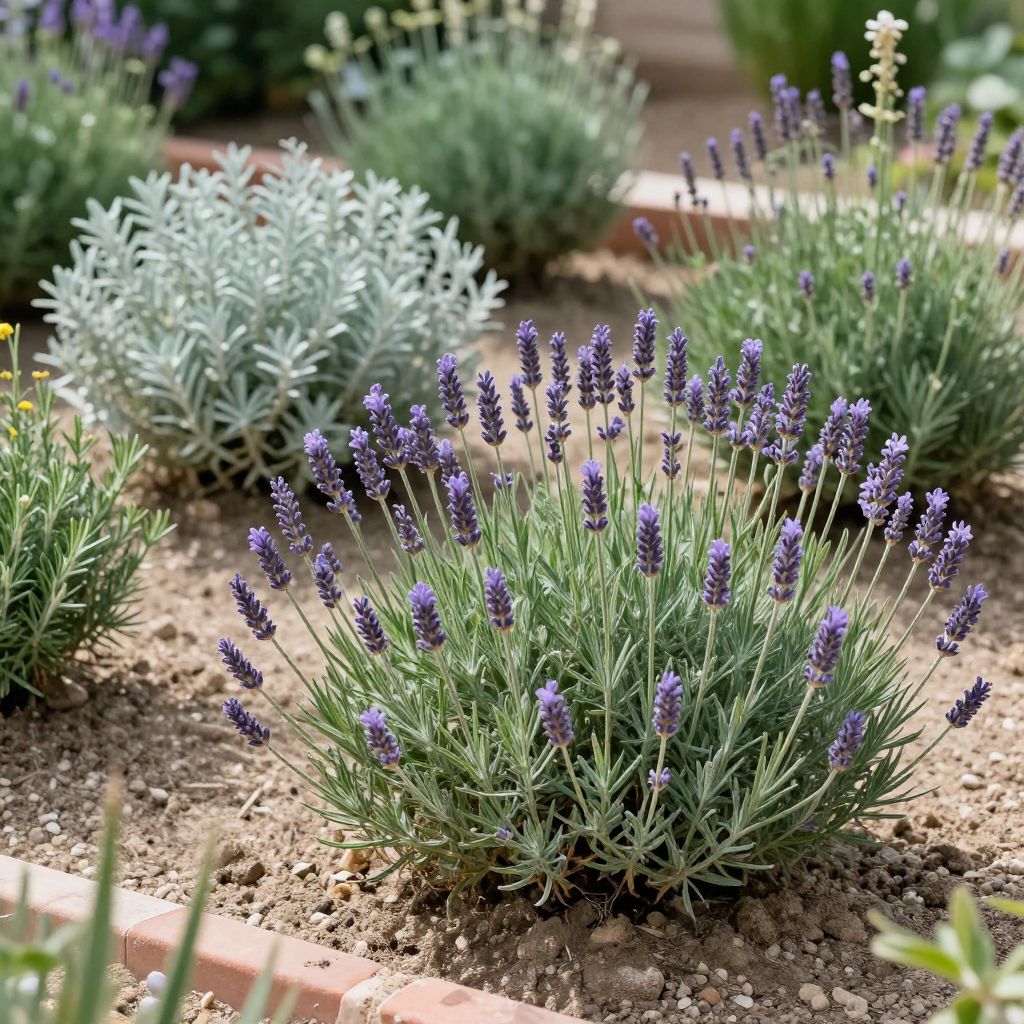
What grows well with lavender? The best companions are plants that like the same sunny, dry, well-drained conditions and won’t compete with lavender’s roots. Think Mediterranean herbs, drought-tolerant perennials, and low-water shrubs that enjoy lean soil and good airflow.
If you match plants to lavender’s needs instead of forcing it into rich, wet beds, your planting will be healthier and easier to maintain. The right companions also help create a beautiful border, pollinator patch, or herb garden with less watering and fewer disease problems.
What grows well with lavender?
Plants that grow well with lavender usually prefer full sun, sharp drainage, and moderate to low fertility. Good choices include rosemary, thyme, sage, santolina, Russian sage, yarrow, salvia, and many ornamental grasses. Avoid moisture-loving plants, rich compost-heavy soil, and anything that needs frequent watering.
Why companion planting works with lavender
Lavender is happiest when it is not crowded, overwatered, or planted in heavy soil. That makes companion planting less about “helping” lavender and more about choosing neighbors with the same cultural needs.
When you group compatible plants, you get:
- Less watering because the whole bed can be managed for dry conditions.
- Better airflow around lavender, which helps reduce fungal problems.
- Cleaner design with plants that share a similar texture and color palette.
- Lower maintenance since you are not trying to satisfy conflicting soil and moisture needs.
Best companion plants for lavender
Herbs that like the same conditions
Many Mediterranean herbs are excellent neighbors for lavender because they thrive in sun and drainage, not rich moisture-retentive soil.
- Rosemary (Salvia rosmarinus)
- Thyme (Thymus spp.)
- Sage (Salvia officinalis)
- Oregano (Origanum vulgare)
- Marjoram (Origanum majorana)
These herbs work well in a kitchen garden or border, but give each enough space. Lavender dislikes being shaded or hemmed in by sprawling herbs that trap humidity at the base.
Flowering perennials and pollinator plants
For a more ornamental look, choose perennials that tolerate lean soil and sun-baked spots.
- Salvia species and cultivars
- Yarrow (Achillea millefolium)
- Russian sage (Salvia yangii)
- Catmint (Nepeta spp.)
- Echinacea (Echinacea spp.) in well-drained beds
These plants add long bloom periods and attract bees and other pollinators. Just keep an eye on catmint, which can spread and crowd smaller lavender plants if you do not trim it back.
Low-water shrubs and structure plants
In larger borders, shrubs can frame lavender beautifully if they do not create too much shade or root competition.
- Westringia (coastal rosemary, where suitable)
- Potentilla (Dasiphora fruticosa) in drier sites
- Cistus (rockrose) in mild climates
- Santolina (Santolina chamaecyparissus)
These are especially useful in gravel gardens, dry borders, and Mediterranean-style landscapes. They help create a layered planting without asking for rich, wet conditions.
Grasses and edging plants
Ornamental grasses can soften lavender’s mounded shape and give the planting movement. Choose clumping types that prefer sun and drainage rather than thirsty, lush grasses.
- Blue fescue (Festuca glauca)
- Feather reed grass (Calamagrostis spp.) in suitable climates
- Small sedges for drier, sunny spots
Use grasses sparingly. Too many dense plants around lavender can reduce airflow and increase the risk of root and crown problems.
Plants to avoid near lavender
Not every attractive plant is a good companion. Lavender struggles when paired with plants that need rich soil, frequent watering, or partial shade.
- Hostas and other shade lovers
- Hydrangeas in typical garden conditions
- Impatiens and other moisture-loving annuals
- Mint, which spreads aggressively and prefers more moisture
- Ferns and other plants that want consistently damp soil
These plants may survive nearby in a large mixed border, but they usually need very different care. If you plant them too close, one side of the bed will always be compromised.
How to plant companions with lavender
Start with the right site
Lavender and its companions do best in full sun, ideally with at least 6 to 8 hours of direct light. In hotter climates, a little afternoon relief can help, but too much shade reduces flowering and can make plants leggy.
Good drainage matters just as much as sunlight. If water sits in the bed after rain, improve the site before planting.
Prepare the soil carefully
Lavender prefers soil that drains quickly and is not overly fertile. If your soil is heavy clay, consider raised beds, mounded rows, or generous incorporation of coarse material that improves drainage without turning the soil into a soggy mix.
Avoid loading the planting hole with rich compost or manure. That can encourage soft, weak growth and shorten lavender’s life in wet climates.
Space plants for airflow
Give lavender enough room so mature plants do not touch tightly. Spacing depends on the variety, but many home garden lavenders need about 18 to 36 inches between plants, with companions placed so they do not crowd the crown.
Airflow is a real part of lavender care. It helps foliage dry quickly after rain and reduces disease pressure.
Plant in layers
A simple design approach is to place lavender as the main structure plant, then tuck in lower, similarly drought-tolerant companions around it.
- Place the lavender first and check mature spread.
- Add taller companions only where they will not shade it.
- Fill gaps with low growers such as thyme, santolina, or blue fescue.
- Leave enough bare soil or gravel around the crown for airflow and easy pruning.
Watering and feeding a mixed lavender bed
Young plants need regular watering while they establish, but established lavender prefers a lighter touch. Water deeply when the soil is dry several inches down, then let it dry again before the next watering.
In mixed beds, the challenge is matching the whole planting to lavender’s needs. If one companion needs constant moisture, it is usually better placed elsewhere or grown in a separate container.
Fertilizer is rarely necessary for lavender. In fact, too much nitrogen can cause floppy growth and fewer flowers. If your soil is very poor, a light top-dressing of compost around the broader bed may be enough, but keep it away from the crown.
Seasonal care for lavender companions
Spring
Check for winter dieback, trim lavender lightly after new growth starts, and remove any dead or crossing stems. Replant gaps with compatible annuals only if they can handle the same dry conditions; otherwise, use perennials or herbs.
Summer
Watch for overcrowding and reduce competition by trimming back vigorous neighbors. Deadhead flowering companions if you want a tidier look, but leave some blooms for pollinators if that suits your garden style.
Fall
In colder regions, avoid pushing tender new growth with late feeding. Clean up fallen leaves that may trap moisture around the base of lavender. If drainage is poor, fall is a good time to plan a raised bed or improved planting area for next season.
Winter
Lavender dislikes wet winter soil more than cold alone. In rainy climates, protect the crown from standing water and avoid heavy mulches that hold moisture against the plant. Gravel mulch is often better than thick organic mulch in these conditions.
Common problems and practical fixes
Lavender turns woody and sparse
This often happens when plants are too shaded, too crowded, or left unpruned for years. Light annual pruning helps maintain shape, but do not cut into old bare wood if there is no green growth below.
Leaves yellow or stems blacken
These are common signs of excess moisture or poor drainage. Improve drainage, reduce watering, and check whether nearby plants are creating too much shade or humidity.
Companion plants overtake lavender
Fast growers can shade lavender and reduce airflow. Cut them back hard, divide them, or move them to another bed if they keep crowding the lavender.
Few flowers
Too much fertilizer, too much shade, or overly rich soil can all reduce bloom. Move the plant to a sunnier location or adjust the surrounding planting so lavender gets more light and less competition.
Good garden designs with lavender
Lavender works especially well in a few proven planting styles:
- Herb border with rosemary, thyme, and sage.
- Pollinator strip with salvia, yarrow, and catmint.
- Gravel garden with santolina, blue fescue, and low-growing herbs.
- Dry slope planting where drainage is naturally fast.
These designs are attractive because they follow the same rule: keep the bed sunny, airy, and on the dry side.
Final tips for choosing the right companions
Before you plant, ask one simple question: does this plant want the same conditions as lavender? If the answer is yes, it is probably a good match. If it needs rich, moist soil or partial shade, place it somewhere else in the garden.
For the best results, combine lavender with drought-tolerant herbs, silver-leaved perennials, and low-water shrubs, then give everything room to breathe. If you want more planting ideas, see what to plant with lavender and explore what plants like eggshells for more soil-friendly garden planning.