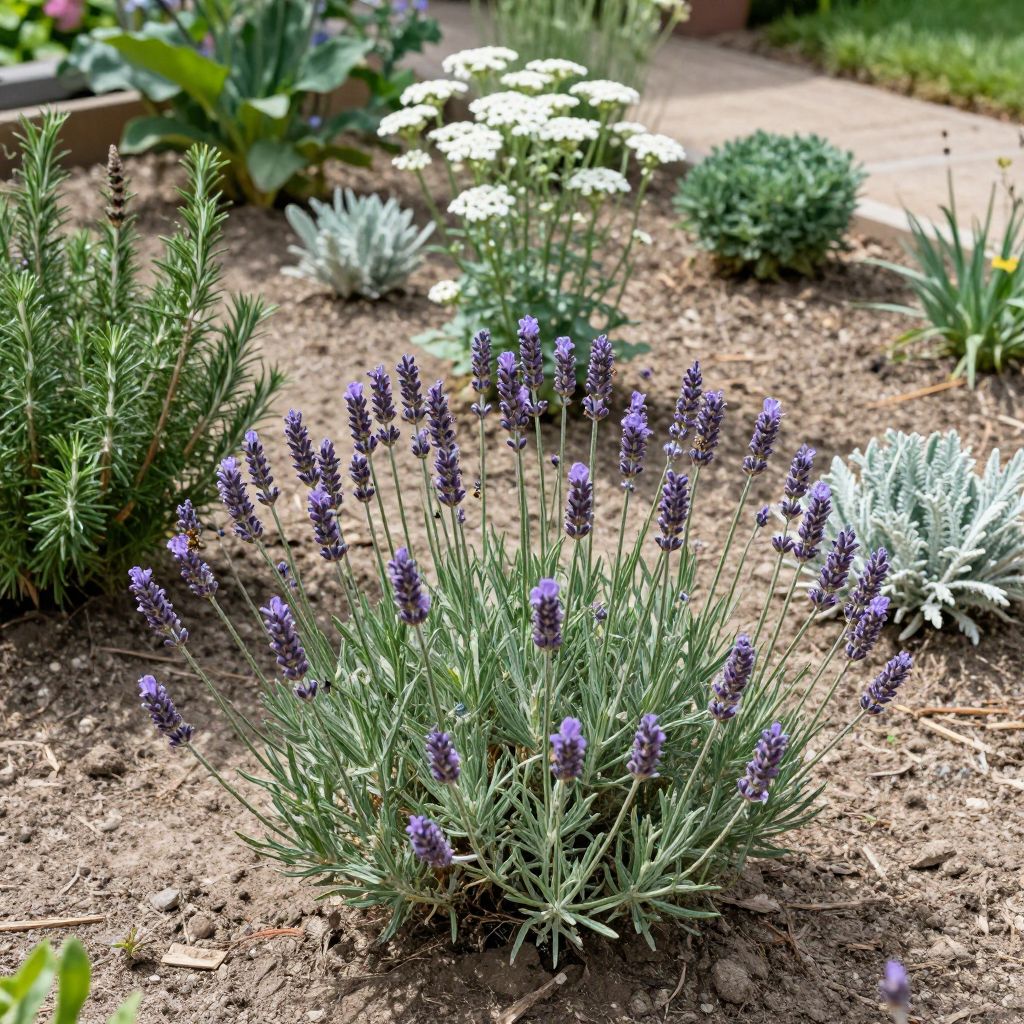
Wondering what to plant with lavender so your border looks good and grows well? The best companions are plants that like the same sunny, dry, sharply drained conditions. Choose herbs, Mediterranean perennials, and drought-tolerant flowers that won’t compete with lavender’s roots or crowd its airflow.
Good companion planting with lavender is less about color alone and more about matching growing needs. When you pair lavender with plants that prefer lean soil, full sun, and low to moderate water, you get a healthier planting and far less maintenance.
What to plant with lavender?
Plant lavender with sun-loving, drought-tolerant companions such as rosemary, sage, thyme, santolina, yarrow, sedum, catmint, and ornamental grasses. These plants share lavender’s need for excellent drainage and lean soil, so they look good together and are less likely to suffer from overwatering, root rot, or overcrowding.
Best companion plants for lavender
Herbs that thrive beside lavender
Many culinary herbs make excellent partners because they enjoy similar conditions and create a cohesive, useful garden bed.
- Rosemary (Salvia rosmarinus) — upright, woody, and drought-tolerant, with a similar Mediterranean look.
- Thyme (Thymus spp.) — low-growing and perfect for edging or filling gaps at the front of a border.
- Sage (Salvia officinalis) — suits the same lean, sunny site and adds silvery foliage.
- Oregano (Origanum vulgare) — useful in herb gardens, though it can spread more than lavender, so give it space.
These herbs work especially well if you want a planting that is attractive and practical. They also help avoid the common mistake of mixing lavender with moisture-loving herbs that need richer soil.
Flowering perennials that complement lavender
If you want a more ornamental planting, choose perennials with similar water and sun needs and a long season of interest.
- Catmint (Nepeta spp.) — soft, mounding growth and long bloom time; a classic lavender companion.
- Yarrow (Achillea spp.) — flat flower clusters and feathery foliage add contrast.
- Salvia (Salvia spp.) — many ornamental salvias pair beautifully with lavender in dry borders.
- Russian sage (Salvia yangii) — airy, silvery, and drought-tolerant, though it needs room.
These plants give you different heights and textures, which helps lavender stand out instead of blending into a flat planting.
Low-growing fillers and edging plants
Lavender often looks best with low companions that soften the edge of a path or bed without shading it.
- Stonecrop (Sedum spp.) — ideal for dry, sunny spots and poor soil.
- Santolina (Santolina chamaecyparissus) — silver foliage echoes lavender’s color palette.
- Heuchera (Heuchera spp.) — can work in milder climates if drainage is excellent, though it usually prefers a bit more moisture than lavender.
- Low ornamental grasses — useful for movement and structure, especially in larger plantings.
Use these plants to frame lavender rather than crowd it. The goal is to keep the base of the lavender open to sun and air.
What lavender needs from its companions
Lavender grows best with plants that tolerate full sun, dry conditions, and lean soil. It dislikes heavy shade, soggy roots, and rich, nitrogen-heavy soil. If nearby plants need frequent watering or fertile, moisture-retentive compost, they are usually poor companions.
Match these growing conditions
- Sun: at least 6 hours of direct sun, preferably more.
- Drainage: fast-draining soil is essential.
- Soil: average to poor soil is better than rich, heavy soil.
- Water: low to moderate once established, depending on climate.
- Airflow: enough space to reduce humidity around the foliage.
If a companion plant needs regular irrigation to stay healthy, place it in a different part of the garden. Lavender does not mix well with plants that want consistently moist roots.
How to design a lavender planting
A successful lavender bed is usually simple, open, and well spaced. Think in layers: taller plants behind or in the center, lavender in the middle, and low edging plants in front.
Simple planting combinations
- Classic herb border: lavender + rosemary + thyme + sage
- Pollinator border: lavender + catmint + yarrow + ornamental grass
- Dry cottage style: lavender + salvia + sedum + santolina
- Path edging: lavender + thyme + low sedum
Keep repeated drifts of the same plants rather than mixing too many species. Repetition makes the planting feel calm and helps you group plants with the same care needs.
Spacing matters
Lavender needs room for air to move through the plant. Most varieties should not be packed tightly against neighboring perennials, even if they look small at planting time.
- Leave enough space for mature width, not just the nursery pot size.
- Avoid planting tall, spreading perennials directly over lavender.
- Keep thirsty annuals out of the same root zone.
Good spacing reduces fungal problems and helps the lavender keep its neat shape.
Soil and drainage: the most important part
Even the best companion plants will struggle if the soil stays wet. Lavender is one of the clearest examples of a plant that needs drainage first and fertility second.
How to improve the planting site
- Choose the sunniest, driest part of the garden.
- Test drainage after rain by checking whether water lingers for hours.
- If soil is heavy clay, raise the bed or plant on a slope or mound.
- Work in gritty material or coarse organic matter only if it improves structure without making the soil too rich.
- Keep compost use modest; too much can encourage lush growth and fewer flowers.
For containers, use a free-draining potting mix and a pot with large drainage holes. Lavender in pots usually fails from overwatering or poor drainage, not from lack of feeding.
Plants to avoid near lavender
Some plants simply ask for opposite conditions. Avoid pairing lavender with plants that need rich soil, frequent watering, or dense shade.
- Hosta — prefers shade and moisture.
- Astilbe — likes consistently moist soil.
- Impatiens — too shade-loving and water-dependent.
- Hydrangea — usually wants more moisture and richer soil.
- Mint — vigorous and moisture-loving; it can overwhelm nearby plants.
These plants may survive briefly near lavender, but they usually create care conflicts. One plant will always be compromised.
Planting lavender with companions
When you plant lavender with other species, the goal is to set up the bed so each plant can establish without being overwatered or shaded.
Step-by-step planting guide
- Prepare the site in full sun with excellent drainage.
- Lay out the mature spacing of each plant before digging.
- Dig holes only as deep as the root balls and a little wider.
- Set lavender slightly high if your soil tends to hold water.
- Backfill with the existing soil unless your local soil is extremely poor or compacted.
- Water in once to settle the soil, then let the surface dry before watering again.
- Mulch lightly with gravel or a thin layer of coarse material, keeping mulch away from the crown.
Avoid burying lavender in rich compost or deep mulch. A damp crown is one of the fastest ways to lose the plant.
Watering and feeding mixed lavender beds
Mixed beds often fail because one plant gets the right amount of water while another gets too much. With lavender, less is usually better once the plants are established.
How to water correctly
- Water newly planted lavender and companions more often at first, until roots settle.
- After establishment, water only when the soil is drying out and the plant shows it needs moisture.
- Water deeply rather than frequently.
- Keep foliage as dry as possible, especially in humid weather.
If nearby plants need more water, use separate zones, containers, or a different bed. Do not try to “compromise” by watering lavender and moisture-loving plants the same way.
Feeding tips
Lavender usually needs little to no fertilizer in average garden soil. Excess feeding can produce floppy growth and fewer flowers.
- Use compost sparingly, if at all, around established plants.
- Avoid high-nitrogen lawn fertilizers drifting into the bed.
- If companion plants need richer soil, place them elsewhere.
Pruning and maintenance in mixed plantings
Lavender stays healthiest when pruned regularly, and that matters even more in a companion planting because a tidy shape preserves space and airflow.
Pruning basics
- Trim after flowering, or lightly in the season suited to your climate and variety.
- Remove spent flower stems and reduce leggy growth.
- Do not cut into old woody stems that have no green growth.
Also trim or deadhead neighboring plants if they begin to lean into the lavender. The bed should remain open, not tangled.
Common problems and how to fix them
Lavender turns yellow or collapses
This is often linked to too much water, poor drainage, or root stress. Check the soil first before adding fertilizer.
Lavender grows leafy but flowers poorly
Too much shade or too much nitrogen is usually the cause. Move nearby plants if they are blocking sun, and avoid feeding the bed heavily.
Plants crowd each other
Divide or move vigorous companions before they smother lavender. Good companion planting should reduce maintenance, not create a yearly battle for space.
Fungal issues appear in humid weather
Improve airflow, widen spacing, and avoid overhead watering. In damp climates, choose the most open site you have.
Best uses for lavender companions in the landscape
Lavender works especially well in borders, along paths, in herb gardens, and in dry, sunny foundation plantings. It also suits pollinator gardens where bees and butterflies can move easily from plant to plant.
Use companions that reinforce the same design idea: silvery foliage, soft mounds, upright flower spikes, and a restrained color palette. That creates a planting that looks intentional and stays manageable.
Conclusion
If you are deciding what to plant with lavender, choose plants that love sun, dry soil, and good drainage just as much as lavender does. Start with herbs like rosemary and thyme, or perennials like catmint, yarrow, and sedum, then give everything enough space to breathe. For more ideas on building a drought-tolerant border, explore related gardening guides on herb planting and low-water perennial design.
Leave a Reply