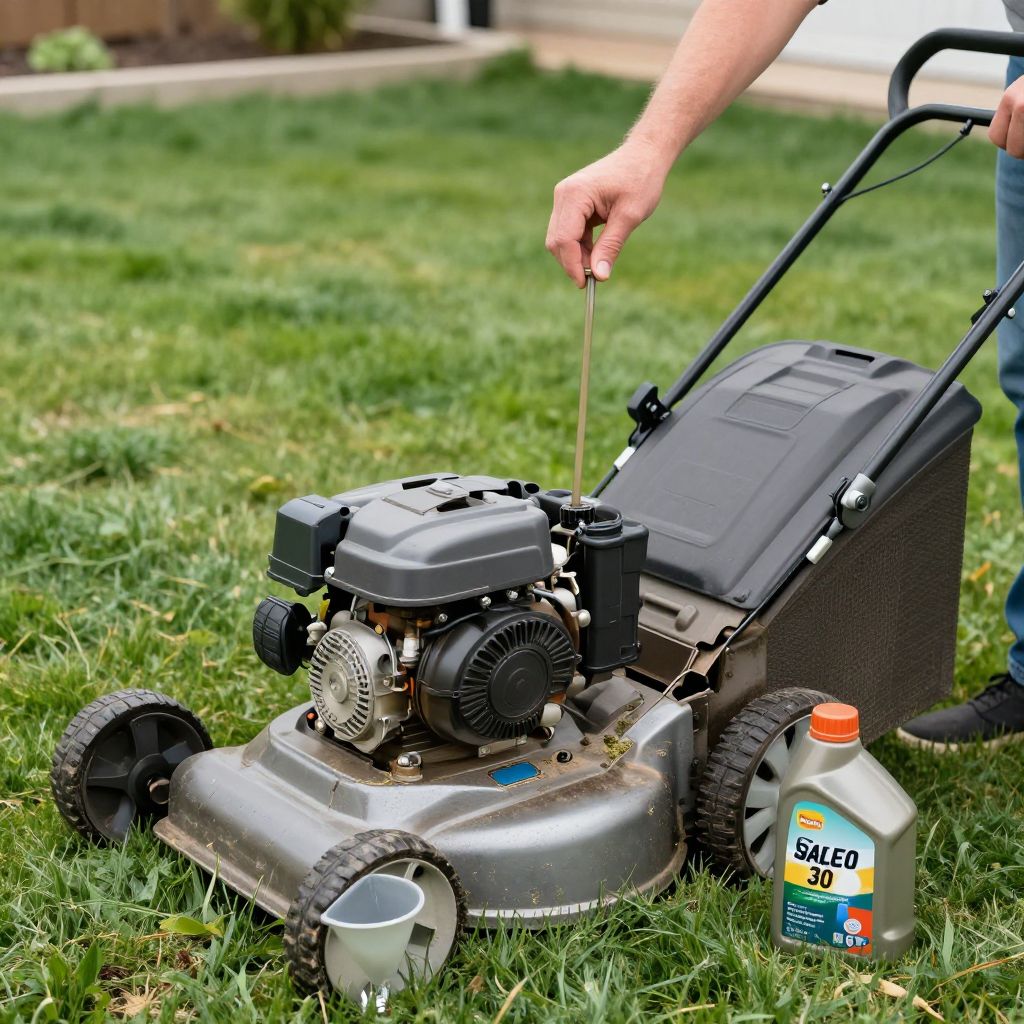
What type of oil does a lawn mower take? The short answer is: it depends on the engine, the season, and the mower type. Most four-stroke lawn mowers use SAE 30, 10W-30, or 5W-30, while two-stroke engines need a fuel-and-oil mix rather than a separate crankcase oil fill.
Choosing the right oil matters because it affects starting, lubrication, engine wear, and performance in hot or cool weather. The best place to begin is your owner’s manual, but if you do not have it, you can still identify the right oil with a few simple checks.
What Type Of Oil Does A Lawn Mower Take?
Most walk-behind lawn mowers with four-stroke engines take SAE 30 in warm weather, while many newer models also accept 10W-30 or 5W-30 depending on temperature. If your mower has a two-stroke engine, it does not use straight oil in the crankcase; instead, oil is mixed with gasoline at the ratio specified by the manufacturer.
First, identify your mower engine type
Before you add anything, confirm whether your mower is a four-stroke or two-stroke model. This is the most important step, because the wrong oil type can cause poor lubrication or engine damage.
Four-stroke mowers
These are the most common lawn mowers today. They have a separate oil fill cap and dipstick, and the oil is added directly to the engine.
Two-stroke mowers
These are less common in modern lawn mowers but still appear in some older or specialty equipment. They usually require a gasoline-oil mixture, not a separate oil reservoir.
How to tell which one you have
- Look for an oil fill cap and dipstick on the engine.
- Check the mower label or engine sticker for the engine type.
- Review the owner’s manual if you have it.
- If the mower has a fuel mix ratio listed, it is likely a two-stroke engine.
Common oil types for lawn mowers
Once you know the engine type, the next step is choosing the correct viscosity. Viscosity simply means how thick or thin the oil is at different temperatures.
SAE 30
SAE 30 is a common choice for many four-stroke lawn mowers used in warm weather. It is often recommended for steady mowing conditions when temperatures are consistently above about 40°F (4°C).
10W-30
10W-30 is a multigrade oil that performs better across a wider temperature range. It can help with easier starting in cooler conditions, though some engines may use more oil with multigrade formulas during hot weather or heavy use.
5W-30
5W-30 is often used in colder climates or where spring and fall mowing happens in cooler temperatures. It flows more easily at startup, which can reduce strain on the engine.
Synthetic oil
Some mowers can use synthetic oil if the manufacturer allows it. Synthetic oil can handle temperature swings well and may offer better protection, but it is not automatically necessary for every mower.
Two-stroke oil
Two-stroke engines need a specific oil designed to mix with fuel and burn cleanly. Use only the ratio and product type listed by the manufacturer.
How weather affects the oil you choose
Temperature is one of the biggest factors in oil selection. A mower used in a cool spring lawn in the north may need different oil than one used through a long hot summer in a warm region.
- Warm weather: SAE 30 is often a reliable choice for many four-stroke mowers.
- Cool weather: 5W-30 or 10W-30 may improve starting and flow.
- Changing seasons: A multigrade oil can be useful if your mowing season includes both cool and hot conditions.
Always check the engine manual first, because some manufacturers specify one oil over another even when the weather changes.
How to check and change mower oil
Regular oil checks are part of basic mower maintenance and help keep the engine running smoothly through the growing season. If the oil looks dirty, low, or milky, it is time to act.
- Park the mower on level ground and let the engine cool.
- Remove the dipstick and wipe it clean.
- Reinsert it fully, then remove it again to check the level.
- Add oil slowly if needed, using small amounts at a time.
- Do not overfill; stop when the level reaches the mark on the dipstick.
When to change mower oil
Many mowers need an oil change after the first few hours of use on a new engine, then periodically during the season or at least once a year. The exact interval depends on the engine and how hard you use it.
If you mow thick grass, dusty edges, or large areas, the engine may work harder and the oil may need attention sooner. Frequent short mowing jobs can still create wear if the mower is stored with old oil in it.
Common mistakes to avoid
Most mower oil problems come from simple mistakes rather than major mechanical failure. A careful check before mowing can prevent many of them.
- Using the wrong engine type oil: Never pour straight oil into a two-stroke fuel tank unless the manual says to mix it that way.
- Overfilling the crankcase: Too much oil can cause smoke, fouled spark plugs, and poor running.
- Ignoring the manual: Some engines have specific oil requirements that override general advice.
- Using old or contaminated oil: Water, dirt, or fuel contamination can reduce protection.
- Mixing random brands or viscosities: This is not ideal unless the products are compatible and the engine allows it.
Troubleshooting oil-related mower problems
If your mower is not running well, oil may be part of the issue. The symptoms can point to the wrong viscosity, a low oil level, or a maintenance problem.
Hard starting
Thick oil in cold weather can make starting harder. A lower-viscosity oil approved by the manufacturer may help in cooler conditions.
Smoke from the engine
Blue or white smoke can happen if the mower is overfilled with oil, tipped the wrong way, or has oil in the combustion chamber. Check the level first.
Oil leaking or spilling
If oil appears near the air filter or engine housing, the mower may have been stored on its side or overfilled. Clean the area and verify the correct fill level before running it again.
Milky oil
Milky or cloudy oil can indicate moisture contamination. This is a sign to drain and replace the oil and inspect how the mower is stored.
Storage and seasonal maintenance tips
Good mower care is not just about mowing season. A few storage habits can protect the engine and make spring startup easier.
- Change old oil before long-term storage if the mower manual recommends it.
- Store the mower on a level surface when possible.
- Keep the air filter clean so the engine runs efficiently.
- Check for oil leaks before putting the mower away.
- Use fresh fuel and the correct oil mix for two-stroke engines.
If you live in a region with a short mowing season, seasonal storage matters even more. Old oil sitting through winter can collect moisture and debris, so starting the next season with clean oil is a smart habit.
Quick guide: what to use in common situations
Use this as a general reference only, then confirm with your mower manual.
- Standard four-stroke mower in warm weather: SAE 30
- Four-stroke mower in cooler weather: 10W-30 or 5W-30 if approved
- Variable spring-to-summer temperatures: 10W-30 may be a practical option
- Two-stroke mower: Fuel-oil mix at the manufacturer’s ratio
- Unsure of engine type: Check the manual or engine label before adding oil
Conclusion
The best answer to what type of oil does a lawn mower take is simple: match the oil to the engine type and the temperature conditions, then confirm with the manual. For most four-stroke mowers, SAE 30, 10W-30, or 5W-30 are common choices, while two-stroke mowers need a fuel mix instead of crankcase oil.
Before your next mow, check the dipstick, verify the engine type, and make sure the oil level is correct. If you want more practical mower care guidance, you may also find this helpful: what kind of oil does a lawn mower take.