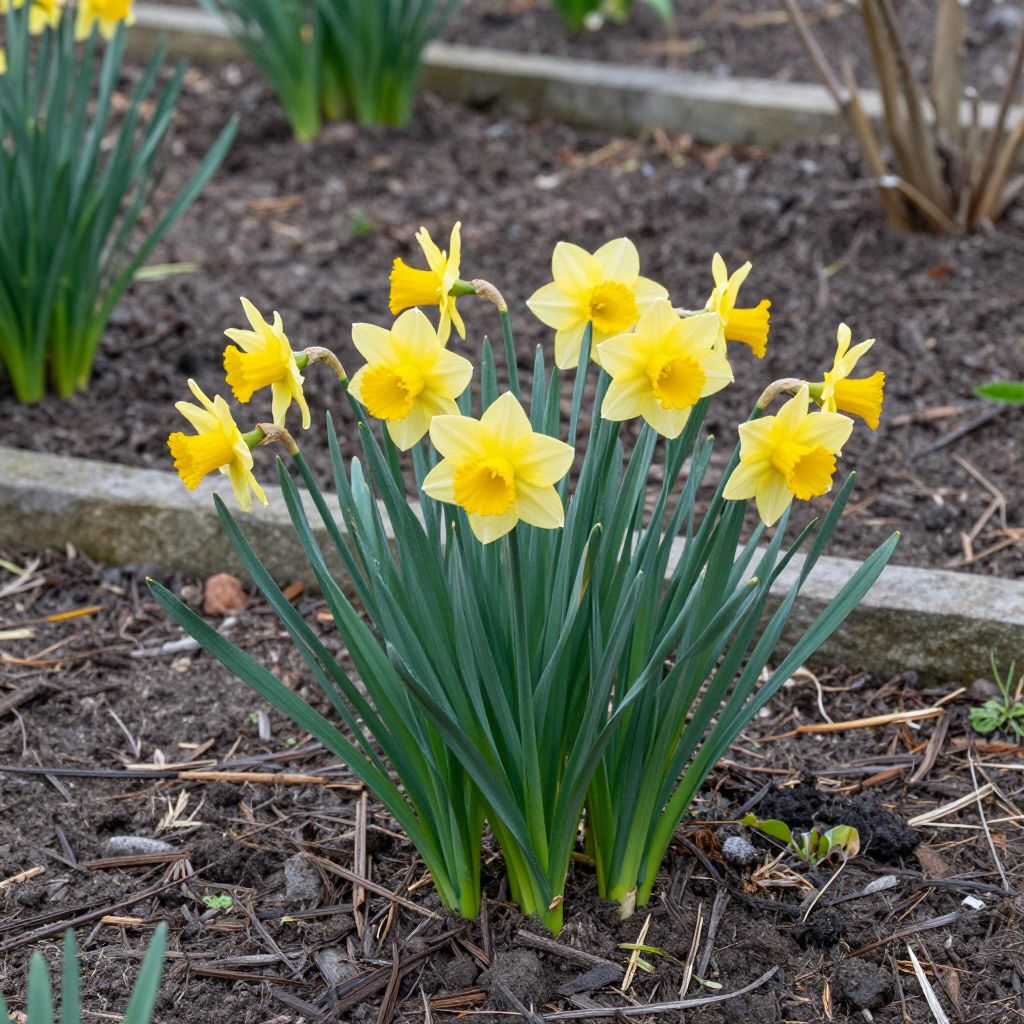
Are daffodils perennials? Yes, daffodils (Narcissus) are true perennial bulbs, which means they can return year after year when they’re planted in the right conditions and allowed to rebuild energy after bloom.
They’re one of the easiest spring flowers to naturalize in borders, lawns, and under deciduous trees. The key is giving the bulbs good drainage, enough sun, and time for the foliage to die back naturally.
Are daffodils perennials?
Yes. Daffodils are perennial bulbs that can bloom for many years, often multiplying over time. Their performance depends on planting depth, soil drainage, sunlight, and whether the leaves are left in place long enough to recharge the bulb after flowering.
Why daffodils come back each year
Daffodils store energy in their bulbs. After flowering, the leaves keep making food through photosynthesis, which replenishes the bulb for next spring’s bloom.
If the bulb stays healthy and the site suits it, the plant can persist for decades. In many gardens, daffodils become more reliable with age rather than less.
What helps daffodils perennialize
- Well-drained soil: Bulbs rot easily in soggy ground.
- Enough sun: Full sun to light shade is ideal in most climates.
- Undisturbed foliage: Leaves should stay until they yellow naturally.
- Proper planting depth: Bulbs planted too shallow are more stressed.
- Low competition: Dense groundcovers and thirsty roots can weaken bulbs.
Best growing conditions for perennial daffodils
Daffodils are adaptable, but they perform best in loose, fertile soil that drains quickly after rain or irrigation. Heavy clay can work if improved with compost and planted where water does not pool.
Soil and drainage
Good drainage matters more than rich soil. If your garden holds water for hours after a storm, plant daffodils in raised beds, slopes, or amended borders instead of low spots.
Mixing in compost can improve structure, but avoid creating a planting hole that acts like a bathtub in clay soil. The surrounding soil should drain at roughly the same rate as the planting area.
Sunlight
Most daffodils bloom best in full sun, but they also do well in light shade, especially where spring sun reaches them before nearby trees leaf out.
In hotter regions, a little afternoon shade can help flowers last longer. In cooler climates, more sun usually improves bloom strength.
Watering
Water newly planted bulbs after planting to settle the soil. After that, daffodils usually need little extra water unless your climate is dry or the spring is unusually dry.
Once established, they prefer evenly moist soil during active growth and drier conditions during summer dormancy. Overwatering is a common cause of decline.
How to plant daffodils so they return reliably
Planting depth and timing strongly affect whether daffodils behave like dependable perennials. Bulbs planted too late, too shallow, or in poor soil often flower weakly or disappear over time.
- Choose a site with sun and drainage.
- Loosen the soil and mix in compost if needed.
- Plant bulbs with the pointed end up.
- Set bulbs about 2 to 3 times as deep as the bulb is tall.
- Space them so they have room to multiply.
- Water once after planting, then let seasonal moisture do the rest.
For most gardeners, a planting depth of about 6 inches works well for medium-sized bulbs, but adjust for bulb size and soil type. In sandy soil, slightly deeper planting can help; in heavier soil, avoid planting too deep in poorly drained ground.
Common planting mistakes to avoid
- Planting in standing water or compacted soil
- Removing foliage too early after bloom
- Overcrowding bulbs in a tiny space
- Using too much high-nitrogen fertilizer
- Digging and disturbing bulbs every year
Care after bloom: the secret to perennial daffodils
The biggest reason daffodils stop blooming well is not the flower itself, but what happens after flowering. The leaves must remain until they naturally yellow and collapse.
Cutting the foliage too soon weakens the bulb and reduces next year’s bloom. If the leaves look messy, tuck them behind nearby perennials or plant daffodils among later-emerging plants that can hide the fading foliage.
Deadheading and leaf care
Remove spent flowers after blooming so the plant doesn’t waste energy making seed. Leave the stem and leaves in place until they fade on their own.
- Deadhead the flower head only.
- Do not braid, tie, or mow the leaves while green.
- Wait until foliage turns yellow or straw-colored before cutting it back.
Feeding daffodils
If your soil is average, daffodils often do fine without heavy feeding. A light top-dressing of compost in fall or early spring can be enough in many gardens.
In poor soil, a balanced bulb fertilizer can help, but avoid overdoing it. Too much nitrogen may produce lush leaves and fewer flowers.
Why daffodils stop blooming well
If your daffodils return but fail to flower strongly, the bulbs are usually stressed rather than dead. Most bloom problems come from site conditions, overcrowding, or foliage being removed too early.
Common causes of weak bloom
- Too much shade: Bulbs need enough spring sunlight to recharge.
- Poor drainage: Wet soil leads to rot and weak growth.
- Overcrowding: Clumps may need dividing after several years.
- Early mowing or cutting: Leaves must finish feeding the bulb.
- Low fertility: Very depleted soil can reduce flower size and count.
What to do if blooms decline
First, check whether the site has become shadier or wetter over time. Trees grow, lawns thicken, and water patterns change.
If the clump is crowded, lift and divide it after the foliage dies back. Replant healthy bulbs immediately in a better-drained spot with enough room to spread.
Dividing and propagating daffodils
Daffodils naturally multiply by forming offsets, which is one reason they’re such dependable perennials. Over time, clumps can become crowded and bloom less heavily, so dividing them can restore vigor.
When to divide
Divide daffodils when flowering becomes sparse or the clump looks congested. The best time is usually after foliage has yellowed and the bulbs are dormant or nearly dormant, depending on your climate.
How to divide them
- Dig carefully around the clump to avoid slicing bulbs.
- Lift the bulbs and brush off excess soil.
- Separate offsets from the parent bulb.
- Replant immediately in prepared soil.
- Water lightly if the soil is dry.
Handle bulbs gently and discard any that are soft, moldy, or damaged. Healthy bulbs should feel firm and look plump.
Pests and diseases that can shorten daffodil life
Healthy daffodils are fairly trouble-free, but a few problems can reduce their perennial performance. Most are prevented by good drainage and careful handling.
Common issues
- Bulb rot: Caused by overly wet soil or damaged bulbs.
- Narcissus fly: Larvae can damage bulbs in some areas.
- Slugs and snails: May nibble new shoots and flowers.
- Virus problems: Can cause streaking, distortion, or poor vigor.
If a bulb is soft or smells bad, discard it rather than replanting it. If you see distorted leaves or flowers year after year, remove affected plants to reduce spread.
Using daffodils in the landscape
Daffodils work beautifully in drifts, mixed borders, woodland edges, and naturalized plantings. Their perennial habit makes them especially useful where you want a low-maintenance spring display.
Good companion planting ideas
- Under deciduous shrubs and trees
- With later-emerging perennials that hide fading foliage
- In sunny borders with summer perennials filling in later
- In lawn edges where mowing can wait until leaves yellow
For lawns, choose a spot where you can delay mowing until the foliage has finished feeding the bulbs. This is one of the simplest ways to keep daffodils perennial in a naturalized setting.
Indoor vs. outdoor daffodils
Outdoor daffodils are the easiest to keep perennial. Potted or forced daffodils can sometimes be planted outdoors afterward, but their recovery depends on how they were grown and whether the bulbs were exhausted by forcing.
If you want long-term perennial performance, plant bulbs in the ground where roots can spread and the bulbs can rebuild energy naturally each year.
Simple seasonal care checklist
- Fall: Plant bulbs in well-drained soil and water once if dry.
- Spring: Enjoy bloom, deadhead spent flowers, and keep foliage intact.
- Early summer: Let leaves yellow naturally before removing them.
- Late summer: Divide crowded clumps if flowering has declined.
Conclusion
Daffodils are dependable perennials when you give them sun, drainage, and time to recharge after bloom. If yours are fading, start by improving the site and protecting the foliage until it yellows. For more timing help, you may also want to read when to plant daffodil bulbs and when daffodils bloom.