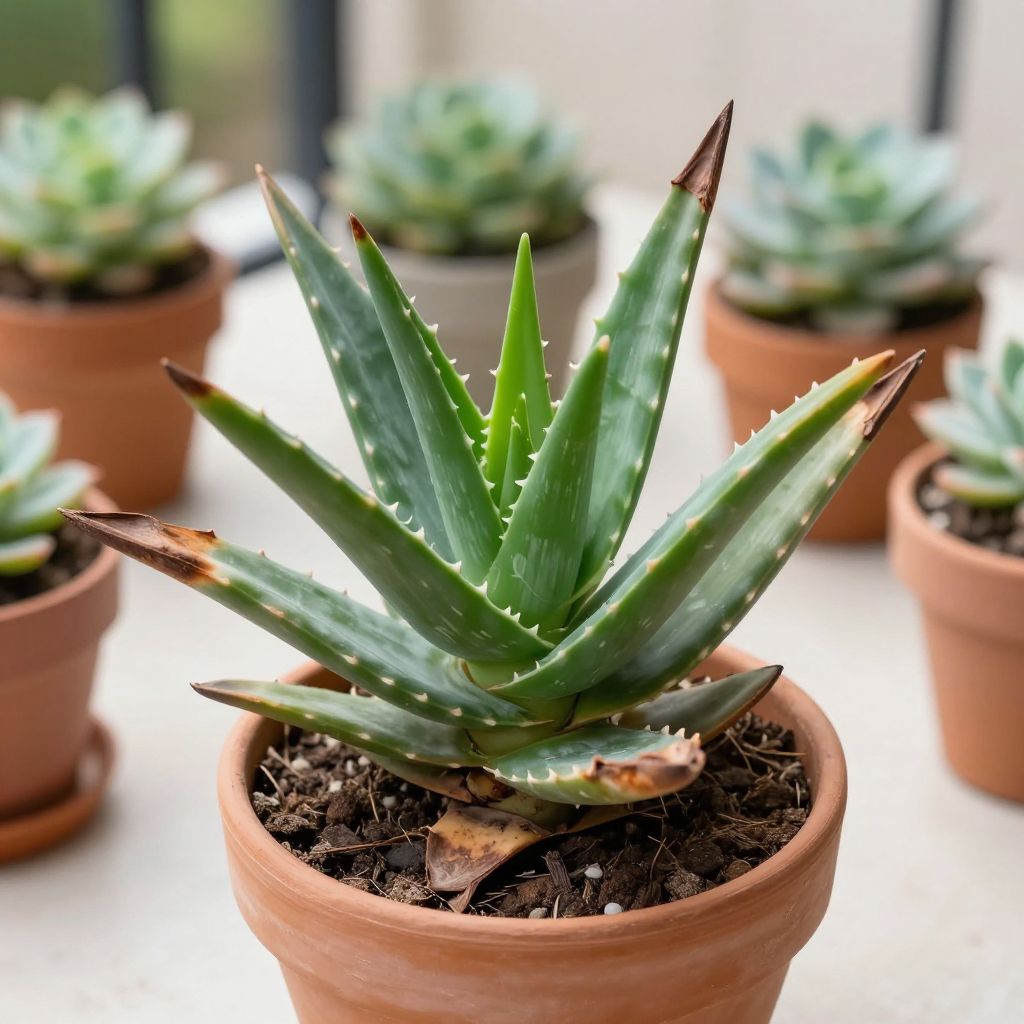
Why is my aloe plant turning brown? In most cases, aloe turns brown because it’s stressed by too much sun, too much water, cold damage, or poor drainage. Brown tissue can also appear after physical damage, pests, or normal aging of lower leaves.
The good news is that aloe usually recovers well once you identify the cause and correct it. The key is to look closely at where the browning starts, how the leaves feel, and what the roots and soil are doing.
Why is my aloe plant turning brown?
Aloe turns brown when its leaves are damaged by stress, most often from sun scorch, overwatering, underwatering, or cold exposure. Check whether the brown areas are dry and crispy, soft and mushy, or patchy and bleached. The texture and location of the damage usually point to the real problem.
Common causes of brown aloe leaves
1. Too much direct sun
Aloe likes bright light, but sudden exposure to intense direct sun can scorch the leaves. Sunburn usually shows up as brown, tan, or reddish patches on the side facing the window or afternoon sun.
This is especially common if you moved an indoor aloe outdoors too quickly, or if a houseplant was placed in a very hot south- or west-facing window without acclimation.
- Signs: dry, bleached, or papery brown patches
- Common location: top leaves or the sun-facing side
- Fix: move the plant to bright indirect light or filtered sun and acclimate gradually
2. Overwatering and root rot
Overwatering is one of the most common reasons aloe plants turn brown. Aloe stores water in its leaves, so it does not need frequent watering. If the soil stays wet too long, roots can rot and the leaves may turn brown, yellow, translucent, or mushy.
If the base of the plant feels soft or the pot smells sour, suspect root rot. A plant with damaged roots cannot take up water properly, so it may look thirsty even while the soil is wet.
- Signs: soft leaves, brown mushy areas, drooping, wet soil that never dries
- Fix: stop watering, unpot the plant, trim rotten roots, and repot in dry, fast-draining soil
- Prevention: use a pot with drainage holes and a gritty cactus/succulent mix
3. Underwatering or long dry spells
Although aloe tolerates drought, it still needs occasional deep watering. If the plant stays dry for too long, the leaves may become thin, curled, and brown at the tips or edges. Severe drought stress can cause lower leaves to dry out and die.
Underwatered aloe usually feels firm but wrinkled, not soft. The soil may pull away from the pot sides and become hard to rewet.
- Signs: shriveled leaves, brown tips, dry potting mix, leaf curl
- Fix: water thoroughly, then let excess drain completely
- Tip: if soil is very dry and compacted, soak the pot briefly from below or water in stages
4. Cold damage or frost exposure
Aloe is sensitive to cold. Exposure to chilly drafts, frost, or temperatures that drop too low can cause leaves to brown, become watery, or collapse. Outdoor aloe in cool climates may show damage after a cold night, while indoor plants can suffer near drafty windows in winter.
Cold injury often appears as a sudden change rather than a slow decline. Damaged tissue may darken over several days after the exposure.
- Signs: translucent, brown, or blackened leaves after cold weather
- Fix: move the plant to a warmer spot and remove badly damaged tissue once it is fully dead
- Prevention: keep aloe away from frost, cold glass, and unheated spaces
5. Poor drainage or the wrong soil
Aloe needs fast-draining soil. Heavy potting mix, clay soil, or a container without drainage can trap water around the roots and lead to browning. Even if you water carefully, the plant can still suffer if the root zone stays soggy.
For potted aloe, a cactus or succulent mix is usually a better choice than standard houseplant soil. If you grow aloe outdoors, raised beds or sandy, well-drained soil work much better than dense ground soil.
- Better setup: pot with drainage holes, gritty mix, and a shallow container if the plant is small
- Avoid: decorative pots without drainage unless used as cachepots
- Helpful amendment: coarse sand, pumice, or perlite can improve drainage in many mixes
6. Normal aging of lower leaves
Not every brown leaf means trouble. Aloe naturally sheds its oldest lower leaves as it grows upward. These leaves may dry, brown, and shrivel near the base while the center of the plant stays healthy.
If only the bottom leaves are browning and the rest of the plant looks firm and green, this may simply be normal aging. You can remove the dead leaves once they are fully dry.
- Normal sign: one or two oldest lower leaves fading over time
- Not normal: multiple leaves browning quickly or the crown turning soft
7. Pests and disease
Pests are less common on aloe than on many houseplants, but mealybugs, scale, and fungus issues can still cause stress. Mealybugs look like white cottony clusters in leaf joints, while scale appears as small brown bumps. Damaged tissue may brown where pests feed.
Fungal problems are more likely when the plant stays wet, airflow is poor, or water sits in the crown. Soft, spreading brown spots can be a warning sign.
- Check: leaf bases, undersides, and the crown for pests
- Action: isolate the plant, wipe pests off with a cotton swab dipped in rubbing alcohol, and improve growing conditions
- For disease: remove badly affected tissue and correct moisture problems immediately
How to diagnose the browning correctly
Before you treat the plant, inspect the leaves, roots, and soil. The pattern of damage matters more than the color alone. A crisp brown patch points to sun or drought, while soft brown tissue usually points to rot or cold injury.
- Check the soil with your finger 1 to 2 inches down.
- Look at the base of the plant for softness, smell, or blackened tissue.
- Inspect the leaf surfaces for scorch, pests, or spots.
- Consider recent changes in light, temperature, or watering.
- Compare the browning pattern to the likely cause.
Quick symptom guide
- Dry, crispy brown patches: usually sunburn or drought
- Soft, translucent, or mushy brown areas: usually overwatering or cold damage
- Brown tips only: often inconsistent watering, mineral buildup, or mild stress
- Lower leaves browning one at a time: often normal aging
How to fix a brown aloe plant
Adjust light gradually
If sunburn is the issue, move the plant to bright indirect light or morning sun with afternoon shade. If you want to increase light, do it slowly over 1 to 2 weeks so the leaves can acclimate.
For indoor aloe, a bright window is usually best, but hot glass can still scorch the leaves. Rotate the pot occasionally so the plant grows evenly.
Correct watering
Water aloe deeply only when the soil has dried out well. Then let excess water drain away completely. Do not keep the soil evenly moist.
If the plant is already overwatered, let the mix dry out before watering again. If root rot is present, repot into fresh dry mix and remove damaged roots.
Repot if drainage is poor
If the pot has no drainage hole or the soil stays wet for days, repot the aloe into a container with drainage holes and a fast-draining succulent mix. Choose a pot only slightly larger than the root ball, because oversized pots hold too much moisture.
Remove damaged tissue carefully
You can trim off fully dead, dry outer leaves with clean scissors or a knife. Do not cut into healthy tissue unless necessary. If the crown is soft and rotting, the plant may be too far gone, but healthy offsets may still be saved.
Check for pests and treat early
Remove visible mealybugs or scale by hand, then keep watching for new activity. If the infestation is heavy, repeat treatment as needed and improve airflow and light. Healthy, unstressed aloe is less likely to be attacked again.
How to prevent aloe from turning brown again
Prevention is mostly about matching aloe’s needs to your growing conditions. Aloe does best in bright light, warm temperatures, and a dry, airy root zone. The plant is forgiving, but it does not tolerate constant moisture.
- Use a pot with drainage holes.
- Plant in a gritty cactus or succulent mix.
- Water only after the mix has dried well.
- Keep the plant away from frost and cold drafts.
- Acclimate slowly if moving it outdoors or into stronger light.
- Remove dead lower leaves so you can spot problems early.
For outdoor aloe, make sure the planting site drains quickly after rain. In humid or rainy climates, containers often perform better than in-ground planting because you can control moisture more easily.
When to worry
Brown leaves are not always serious, but you should act quickly if the browning is spreading, the base is soft, or the plant is collapsing. A healthy aloe should feel firm, with plump leaves and a stable center.
If the crown is mushy, the roots are black and slimy, or the entire plant has turned translucent and brown, the damage may be severe. In that case, try to save any healthy offsets rather than focusing only on the main rosette.
Conclusion
If you’ve been asking, “Why is my aloe plant turning brown,” start by checking light, watering, and drainage first. Those are the most common causes, and they’re usually fixable. Make one change at a time, then watch for new healthy growth at the center of the plant.
For more help with placement, see do aloe plants need sun, and if you grow other houseplants, you may also find why is my snake plant turning yellow useful for comparing common care problems.