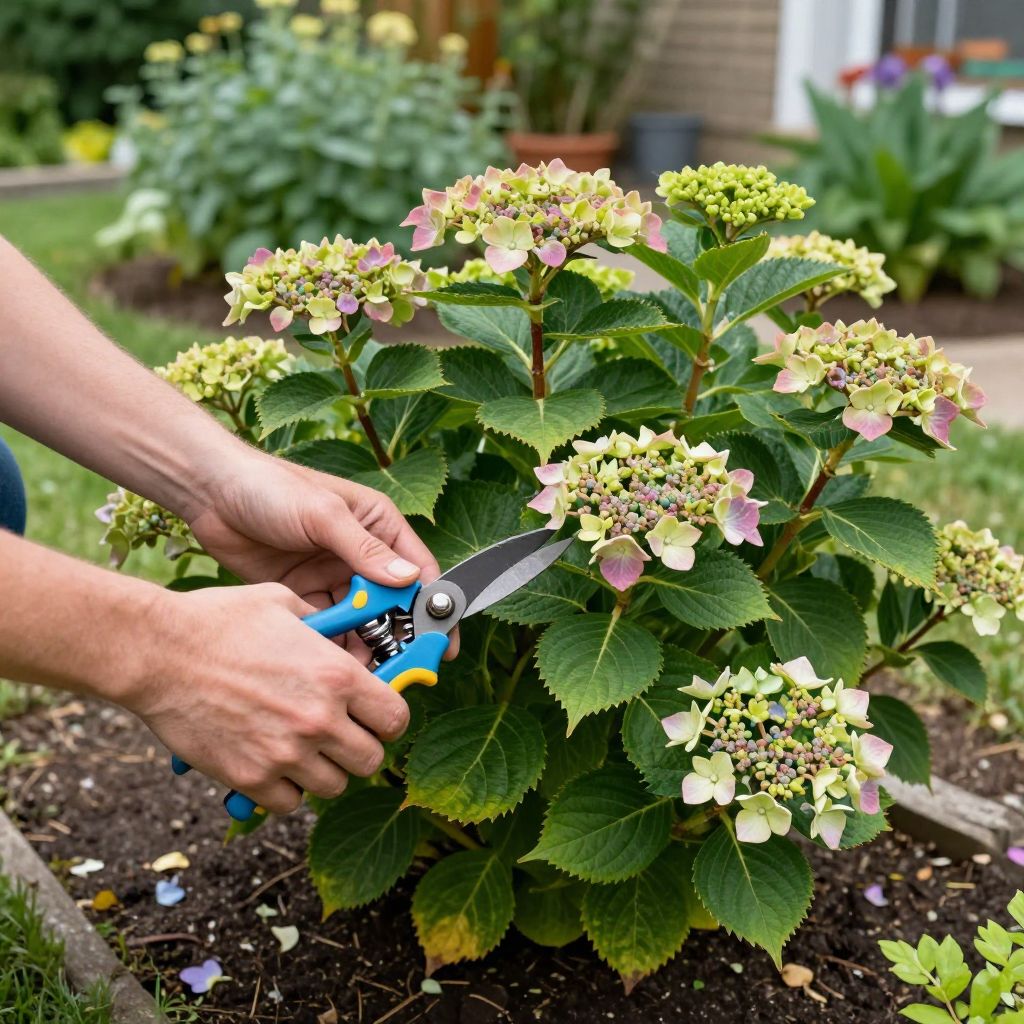
When do you trim hydrangeas? The short answer is: it depends on the type of hydrangea you grow. Some bloom on old wood and should be trimmed right after flowering, while others bloom on new wood and are best cut back in late winter or early spring.
If you prune at the wrong time, you can remove next season’s flower buds. The good news is that once you know which hydrangea you have, timing becomes much easier and the plant usually responds well to light, thoughtful pruning.
When do you trim hydrangeas?
Trim hydrangeas based on when they set flower buds. Old-wood bloomers are pruned soon after they finish flowering, usually in summer. New-wood bloomers are trimmed in late winter or early spring before new growth starts. If you are unsure, do only light cleanup pruning until you identify the plant.
Know which hydrangea you have first
Pruning timing changes with the species, and that is the key to avoiding lost blooms. Before you cut anything, look at the flower shape, growth habit, and when it blooms in your garden.
Common hydrangea groups and pruning timing
- Bigleaf hydrangea (Hydrangea macrophylla) and many lacecap types: usually bloom on old wood, so prune right after flowering.
- Oakleaf hydrangea (Hydrangea quercifolia): also blooms on old wood, so prune lightly after flowering if needed.
- Panicle hydrangea (Hydrangea paniculata): blooms on new wood, so prune in late winter or early spring.
- Smooth hydrangea (Hydrangea arborescens): blooms on new wood, so prune in late winter or early spring.
If you do not know the exact type, avoid a hard cutback until you can confirm it. A cautious approach is better than removing a season’s flowers by mistake.
Best pruning time by season
Late winter to early spring
This is the right window for hydrangeas that bloom on new wood, such as panicle and smooth hydrangeas. Pruning before active growth begins helps shape the shrub and encourages strong new stems that will carry flowers later in the season.
In colder climates, wait until the worst of winter has passed. In milder climates, you can prune a little earlier, but avoid cutting during a hard freeze.
Right after flowering
Old-wood bloomers should be trimmed soon after they finish blooming, usually in summer. This gives the plant time to grow new stems and form flower buds for the next year before autumn and winter arrive.
If you wait until fall or spring to prune these types, you may accidentally remove the buds already formed on last year’s stems.
Fall pruning: usually avoid it
Fall is not the best time for most hydrangeas. Fresh cuts can be more vulnerable to winter damage, and on old-wood bloomers you may remove buds that are already set for next season.
There are a few exceptions, but for most home gardeners, fall pruning should be limited to removing broken stems or dead material.
How to trim hydrangeas without hurting blooms
Hydrangeas do not usually need heavy pruning every year. In many gardens, a light, selective trim is enough to keep the shrub healthy, tidy, and flowering well.
- Remove dead, damaged, or diseased stems first. Cut them back to healthy wood or to the base.
- Cut spent flower heads if you want a neater look, but leave healthy buds below the bloom on old-wood types.
- Thin crowded stems by removing a few of the oldest canes at the base.
- Shape lightly by shortening overly long stems to a pair of healthy buds or a side branch.
- Stop before overdoing it. A modest trim is usually better than a hard cutback.
Use clean, sharp hand pruners for smaller stems and loppers for thicker canes. Wipe blades between plants if you are removing diseased wood.
What to do if your hydrangea is overgrown
Overgrown hydrangeas often need a gradual approach, especially if they bloom on old wood. A one-time hard prune can reduce flowering for a year or more.
Safer way to renew an older shrub
- Remove no more than about one-third of the oldest stems in a single season.
- Cut those stems at the base to encourage fresh growth.
- Repeat over the next one to two years if the shrub still needs thinning.
For new-wood bloomers, you can usually cut more confidently in late winter because flowers form on the current season’s growth. Even then, avoid leaving the plant too bare if it is weak or newly planted.
Common pruning mistakes to avoid
- Pruning at the wrong time on old-wood hydrangeas, which removes flower buds.
- Shearing into a round ball, which can leave a dense outer shell and weak interior growth.
- Cutting everything to the ground without knowing the species.
- Pruning during a drought or heat wave, which adds stress.
- Using dull tools that crush stems instead of making clean cuts.
If your hydrangea is not blooming, timing is often the first thing to check. The second is how much sun it gets, because too much shade can reduce flowering, while too much hot sun can stress the plant.
Growing conditions that affect pruning success
Pruning works best when the plant is already growing in suitable conditions. Hydrangeas generally do well in rich, moisture-retentive soil that drains well, with regular watering during dry spells.
Light and soil
Most hydrangeas prefer morning sun and afternoon shade, especially in warm climates. Good drainage matters as much as moisture, because soggy roots can weaken the plant and make pruning recovery slower.
Adding compost around the root zone can improve soil structure and help retain even moisture. Keep mulch a few inches away from the stems so the base does not stay wet.
Watering after pruning
After trimming, water deeply if the soil is dry. Hydrangeas recover better when the root zone stays evenly moist, but not waterlogged. Newly planted shrubs need more attention than established ones.
During hot weather, watch for wilting leaves in the afternoon. If the soil is dry several inches down, the plant likely needs water rather than more pruning.
Pests, disease, and damaged stems
Pruning is also a chance to remove problem growth. Dead stems, canes with cankers, or branches with obvious disease should be cut out promptly and discarded, not composted if disease is suspected.
Hydrangeas can occasionally suffer from leaf spots, powdery mildew, or insect damage. These problems are usually reduced by good spacing, airflow, and careful watering at the soil level rather than overhead.
Can you deadhead hydrangeas?
Yes, you can remove spent blooms, and many gardeners do. Deadheading improves appearance, but it does not always change next year’s flowering. On old-wood types, cut just above the first healthy pair of buds below the flower head.
If you enjoy dried blooms for arrangements, you can leave some heads on the plant until they age and dry naturally. Just remember that deadheading is different from major pruning.
Propagation and trimming
If you are taking softwood cuttings from hydrangea, do it from healthy, non-flowering shoots during the active growing season. Pruning and propagation are related, but they are not the same task.
For most gardeners, the main goal is simply to keep the shrub healthy and flowering. A well-timed trim is usually enough without needing to propagate new plants.
Quick timing guide
- Old wood bloomers: prune right after flowering.
- New wood bloomers: prune in late winter or early spring.
- Unsure of type: prune lightly only, and wait to identify the plant.
- Need to remove damage: do that any time you see broken or diseased stems.
Conclusion
When do you trim hydrangeas? Trim according to bloom type, not just the calendar. If your plant flowers on old wood, prune after bloom; if it flowers on new wood, prune before spring growth starts. When in doubt, make only light cuts until you know the shrub well.
For more help with hydrangea care, look for guidance on hydrangea growing basics and pruning shrubs the right way if those topics fit your garden needs.