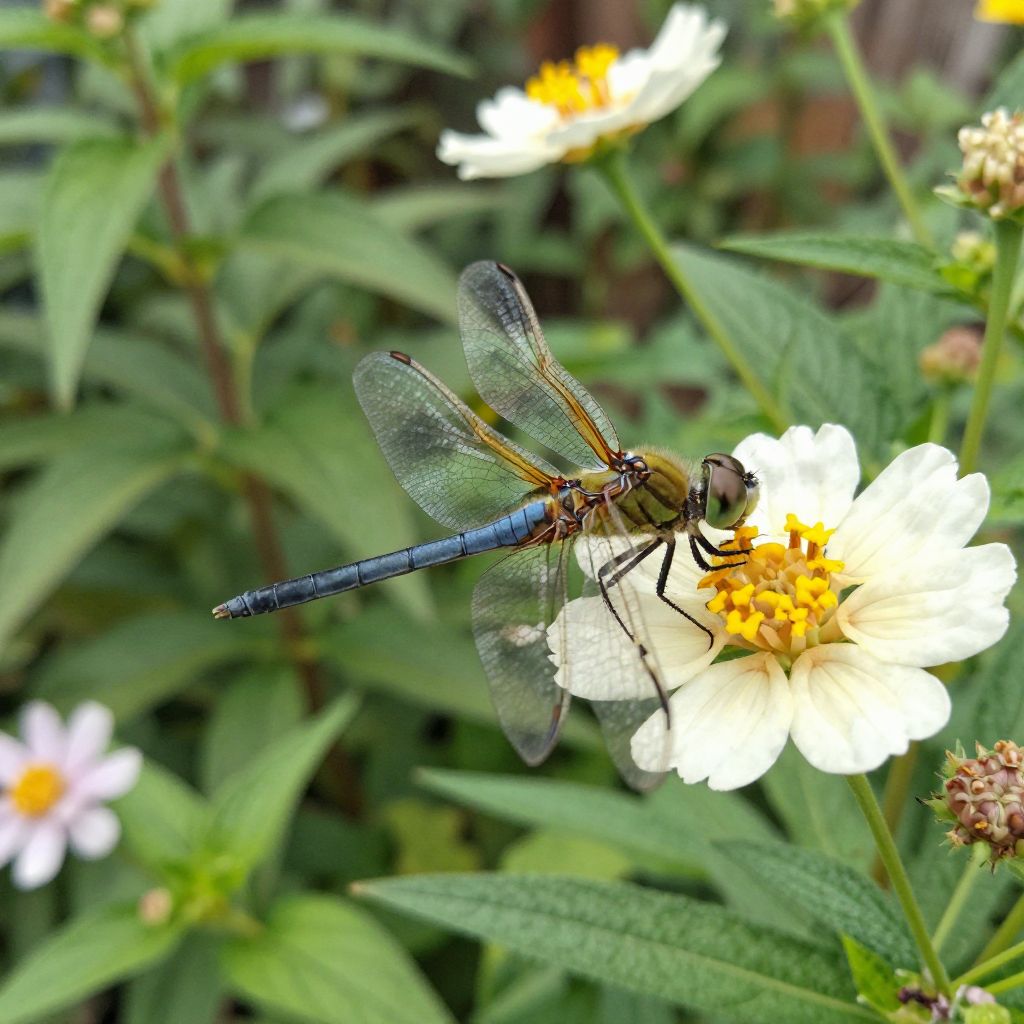
Are dragonflies pollinators? If you’ve seen them hovering over flowers, it’s an easy question to ask. Dragonflies are common in gardens with ponds, damp borders, and plenty of insects, so they often get noticed around blooming plants.
The short answer is no: dragonflies are not true pollinators. They are beneficial predators that eat mosquitoes, gnats, and other small flying insects. Still, a garden that attracts dragonflies can also support pollinators, because the same habitat features—water, native plants, and shelter—help many helpful insects thrive.
Are dragonflies pollinators?
Dragonflies do not intentionally transfer pollen from flower to flower the way bees, butterflies, moths, and some flies do. They mainly hunt other insects in flight. If a dragonfly brushes against pollen while landing briefly on a bloom, that is incidental, not reliable pollination.
Why dragonflies are helpful in a garden
Even though they are not pollinators, dragonflies are valuable garden allies. Their presence often signals a healthy outdoor space with water, insect life, and habitat diversity, and they can help reduce nuisance insects around patios, vegetable beds, and ornamental borders.
What dragonflies actually do
- Catch flying insects in midair
- Help keep mosquito numbers lower near water features
- Spend part of their life cycle as aquatic nymphs in ponds or slow water
- Use perches such as stems, grasses, and fence lines to hunt
Why gardeners like them
Dragonflies are a sign that your garden may be supporting a balanced ecosystem. They do best where there is clean water, plenty of prey, and nearby plants for resting and shelter.
How to attract dragonflies without harming your garden
If you want more dragonflies, think habitat first. The goal is not to “feed” them directly, but to create conditions that support both dragonflies and the insects they rely on.
1. Add water the right way
Dragonflies need water for reproduction, and their young develop in aquatic habitats. A pond, wildlife tub, or water garden can help, but it does not need to be large.
- Use still or gently moving water rather than fast, turbulent flow
- Include shallow edges or shelves so plants can root
- Avoid steep-sided containers that trap wildlife
- Keep water free of pesticides and unnecessary chemicals
Important: A healthy pond should support life, not sterilize it. Over-cleaning or over-treating water can reduce the insects and aquatic plants dragonflies need.
2. Plant for structure, shelter, and insects
Dragonflies use plants as perches and protection. At the same time, flowering plants attract the small insects that adult dragonflies eat and that support a broader garden food web.
Good choices include a mix of:
- Native grasses and sedges
- Perennial flowers with staggered bloom times
- Shrubs that provide windbreaks and resting spots
- Marginal pond plants if you have a water feature
Choose plants suited to your climate, sun exposure, and soil moisture. A plant that thrives in your local conditions will support more insects with less maintenance.
3. Reduce pesticide use
Pesticides can harm dragonflies directly and also reduce the insect populations they depend on. If you need pest control, use the least disruptive option first and target the specific problem.
- Hand-pick pests when practical
- Use barriers, row covers, or traps where appropriate
- Encourage beneficial insects with diverse planting
- Avoid broad-spectrum sprays near ponds and flowering plants
How to support real pollinators while welcoming dragonflies
Because dragonflies are not pollinators, you should still design your garden for bees, butterflies, moths, and hoverflies if pollination matters for flowers, fruit, or vegetables. The good news is that many pollinator-friendly practices also help dragonflies.
Plant a long-blooming garden
Pollinators need nectar and pollen through the growing season. A succession of flowers keeps the garden active from spring through fall.
- Include early, midseason, and late-blooming plants
- Group the same plant type in clumps so insects can forage efficiently
- Choose open, accessible flowers for bees and hoverflies
- Leave some areas less manicured for nesting and shelter
Use native plants when possible
Native plants often support more local insects than highly bred ornamentals. They also tend to be better adapted to local rainfall patterns and soil conditions, which means less stress and less maintenance.
If you are unsure what is native in your area, check with a local extension office, native plant society, or reputable nursery that specializes in regional plants.
Common mistakes gardeners make
Many people try to attract dragonflies and pollinators with the same broad idea—“more flowers”—but miss the habitat details that matter most. A few common mistakes can limit both groups.
Too much cleanup
Overly tidy gardens can remove the stems, leaf litter, and sheltered corners that insects use for resting and overwintering. Leave some plant structure standing through the season unless it is diseased or unsafe.
Using stagnant, neglected water
Dragonflies need water, but a neglected container can become a mosquito nursery rather than a wildlife feature. Refresh small water features as needed and keep them balanced with plants or circulation appropriate to the setup.
Relying on one flower type
A single mass planting may look attractive, but a diverse garden usually supports more insects. Mix flower shapes, heights, and bloom times for better results.
Spraying near blooms
Even products labeled for garden pests can affect beneficial insects if applied carelessly. Spray only when necessary, follow the label, and avoid treating open flowers whenever possible.
Building a dragonfly-friendly pond or water garden
If you want to go beyond general habitat planting, a small pond can be one of the best features for dragonflies. Keep the design simple and wildlife-friendly.
Basic pond features that help
- Choose a sunny location with some nearby shelter
- Include shallow margins for emergent plants
- Add a mix of submerged, floating, and marginal plants where suitable
- Use natural stones, logs, or stems as perches near the water
- Avoid fish if your main goal is supporting dragonfly nymphs, since fish may eat them
In colder climates, water features may need seasonal care to prevent damage from freezing. In warm climates, evaporation and algae control become more important. Adjust maintenance to your local conditions rather than following a fixed schedule.
What not to do
- Do not add pesticides, herbicides, or fertilizer runoff to the pond
- Do not keep the water feature completely bare of plants
- Do not drain and scrub it so often that aquatic life cannot establish
How to tell dragonflies from true pollinators
It helps to know what you are seeing in the garden. Dragonflies are often mistaken for pollinators because they visit the same sunny, flower-rich spaces.
Signs you’re looking at a dragonfly
- Large eyes and a long, slender body
- Fast, agile flight with hovering and sudden direction changes
- Perching on stems, rocks, or pond edges
- Little or no interest in feeding from flowers
Signs of actual pollinators
- Bees carrying pollen on their legs or bodies
- Butterflies and moths feeding from nectar-rich blooms
- Hoverflies lingering on flowers and moving between blossoms
Practical garden takeaways
If your goal is a productive, lively garden, think of dragonflies as part of the support team rather than the pollination crew. They help with pest control, especially around water, while pollinators handle fruit and seed set.
The best approach is to build a garden that offers both: diverse flowers for pollinators, clean water and shelter for dragonflies, and minimal pesticide use for everyone’s benefit.
Start with one improvement this week—add a shallow water source, plant a native flowering patch, or reduce spray use near blooms—and you’ll make your garden more welcoming to beneficial insects of all kinds.
If you want to keep improving your habitat planting, you may also enjoy reading about native pollinator-friendly garden plants and how to build a small wildlife pond.