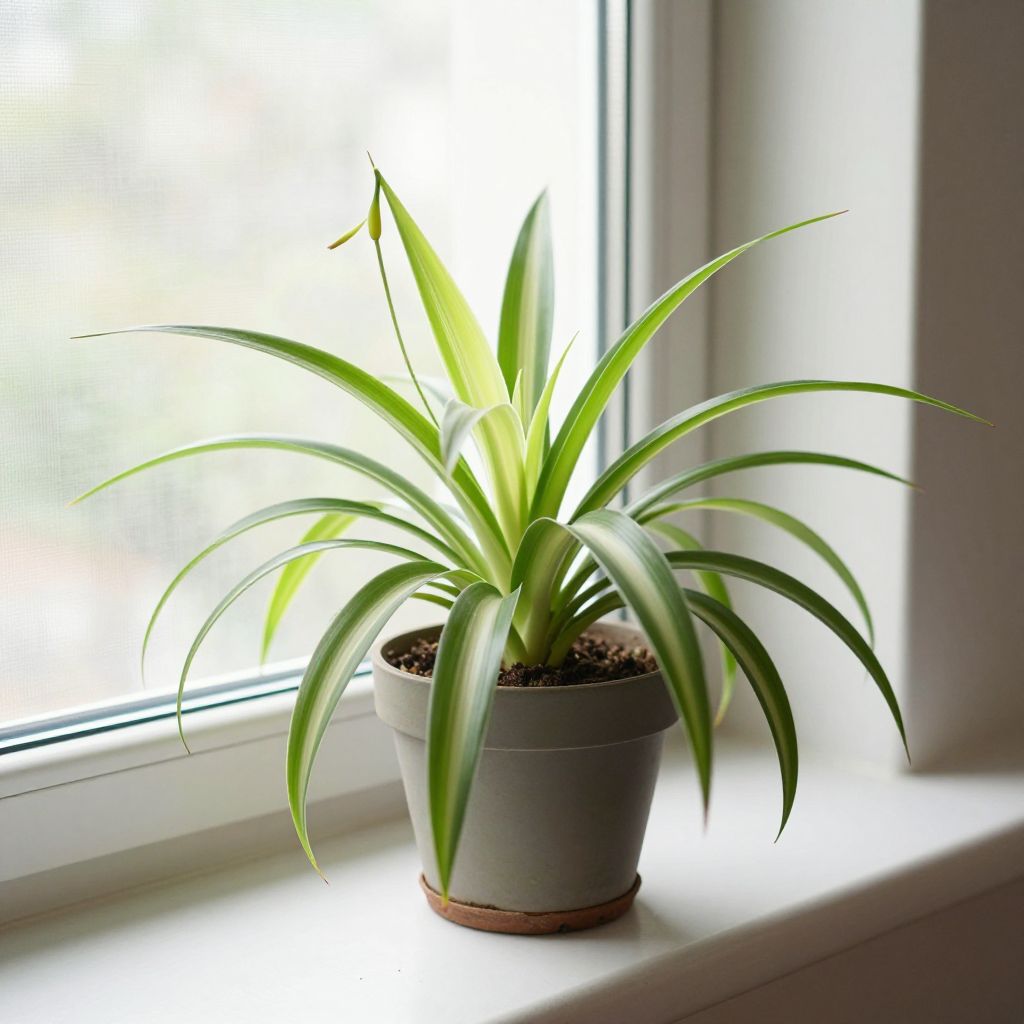
Do spider plants need a lot of light? Not really—but they do best with bright, indirect light. Spider plants can tolerate lower light than many houseplants, yet too little light often leads to slow growth, pale leaves, and fewer plantlets. Give them the right balance, and they stay full, green, and easy to grow.
If you’re trying to place a spider plant indoors, think “bright room, not harsh sun.” The goal is steady light that supports growth without scorching the foliage. With a few simple adjustments, you can keep Chlorophytum comosum looking healthy in homes, offices, and sheltered outdoor spots.
Do spider plants need a lot of light?
Spider plants do not need a lot of direct sunlight. They grow best in bright, indirect light, but they can also survive in medium or lower light. In too much direct sun, the leaves may bleach or scorch; in very low light, growth slows and variegation can fade.
How much light is best for a spider plant?
For the healthiest growth, place your spider plant where it gets bright, filtered light for much of the day. An east-facing window is often ideal, while a few feet back from a south- or west-facing window can also work well if the light is softened by a sheer curtain.
Light levels that usually work well
- Bright indirect light: Best overall for growth, color, and plantlet production.
- Medium light: Acceptable, but growth may be slower and the plant may become less full.
- Low light: Survives, but often looks sparse over time and may produce fewer babies.
- Direct hot sun: Usually too intense, especially in summer or through glass.
Signs the light is too strong
- Brown or crispy leaf tips and edges
- Pale, washed-out patches on the leaves
- Leaves curling or looking dry despite regular watering
- Bleached appearance near a sunny window
Signs the light is too low
- Slow or stunted growth
- Long, floppy leaves with less bounce
- Fewer spiderettes or runners
- Variegated types becoming greener and less distinct
Can spider plants grow in low light?
Yes, spider plants can tolerate low light better than many houseplants, which is one reason they’re so popular. But “tolerate” does not mean “thrive.” In dim corners, they usually stay alive rather than actively growing, so they may need more time to recover from stress or look full again.
If your only option is a low-light room, keep the plant near the brightest available window and rotate it every week or two so all sides receive some light. You can also use a grow light if the room is consistently dim.
Where should you place a spider plant indoors?
Placement matters as much as the amount of light. A spider plant near the right window often performs better than one across the room from a bright source. The best spot is usually where it gets strong ambient light without the leaves sitting in harsh, direct midday sun.
Good indoor locations
- Near an east-facing window
- Near a north-facing window with plenty of brightness
- Several feet from a south- or west-facing window with filtered light
- Under a grow light if your home is naturally dim
Places to avoid
- Right against a hot south-facing pane in summer
- Dark hallways or rooms with no nearby window
- Drafty spots near heating vents or cold winter glass
What about outdoor light?
Spider plants can be grown outdoors in warm climates or moved outside for summer, but they still prefer partial shade or bright filtered light. Outdoors, the sun is much stronger than it looks through a window, so a spot that seems “bright” can still be too intense for the leaves.
If you move a spider plant outside, acclimate it gradually over 7 to 10 days. Start in deep shade or very bright shade, then slowly increase the light if needed. Avoid placing it in full afternoon sun unless the plant is already adapted and the climate is mild.
How light affects spider plant care
Light changes how fast the plant uses water and how quickly it grows. A spider plant in brighter light usually needs water a bit more often than one in lower light, while a plant in dim conditions dries out more slowly. That’s why light and watering should always be adjusted together.
Watering and light go hand in hand
- Bright light: soil may dry faster, so check more often.
- Low light: soil stays moist longer, so overwatering becomes more likely.
- Always water based on soil dryness, not a fixed schedule.
A simple rule is to water when the top 1 to 2 inches of potting mix feel dry. Make sure excess water drains away, because spider plants dislike soggy roots.
Pruning and grooming
Light affects how tidy the plant looks, but you can improve appearance with basic grooming. Trim brown tips with clean scissors if they bother you, and remove old, damaged leaves at the base. If the plant leans toward the window, rotate the pot regularly to keep growth even.
Should you use a grow light?
If your home has limited natural light, a grow light can help spider plants stay fuller and healthier. This is especially useful in winter, in basements, or in rooms far from windows. You don’t need a complicated setup; even a simple bulb designed for houseplants can make a difference.
Using a grow light effectively
- Place the light above or slightly to the side of the plant.
- Keep it at a moderate distance so the leaves do not overheat.
- Run it for a consistent period each day, adjusted to your room’s natural light.
- Watch the plant for signs of stress and move the light if needed.
If the leaves start fading or drying at the tips, the light may be too intense or too close. If the plant still stretches toward the window, it likely needs more light overall.
Common spider plant light problems and fixes
Pale leaves
Pale leaves often mean the plant is getting too much direct sun or not enough nutrients and light balance. Move it to brighter indirect light first, then reassess watering and feeding. If the plant is in deep shade, increasing light usually improves color over time.
Brown tips
Brown tips are not always caused by light alone. They can also come from dry air, mineral buildup, inconsistent watering, or fertilizer salts. If the plant sits in direct sun, move it to filtered light and check whether the soil dries out too fast.
Leggy growth
Long, weak leaves and a sparse center usually point to low light. Move the plant closer to a brighter window and rotate it regularly. New growth should become stronger, though older stretched leaves will not shorten again.
Few or no spiderettes
Spider plants often produce more runners in good light. If yours is healthy but not making babies, it may simply need brighter conditions, a slightly tighter pot, or more maturity. Avoid overfertilizing in an attempt to force growth; light is usually the first thing to improve.
Best growing conditions beyond light
Light is important, but spider plants also need the right potting mix and drainage to stay healthy. Use a well-draining indoor potting mix and a container with drainage holes. A pot that is slightly snug can be helpful, but severely rootbound plants may dry out too quickly or stop growing well.
- Soil: Light, well-draining potting mix
- Pot: Container with drainage holes
- Humidity: Average home humidity is usually fine
- Temperature: Comfortable indoor temperatures are best; avoid cold drafts and hot vents
Seasonal care tips
Spider plant light needs can shift with the seasons. In winter, daylight is weaker and shorter, so a plant may need a brighter windowsill or supplemental light. In summer, the same window may become too intense, especially if direct sun moves across the room for several hours.
Watch the plant instead of relying only on the calendar. If growth slows in winter, that is normal. If summer sun causes bleaching, move the plant back from the glass or add a sheer curtain.
Quick checklist for healthy spider plant light
- Give bright, indirect light whenever possible
- Keep out of harsh midday sun
- Rotate the pot for even growth
- Water based on soil dryness, not a rigid schedule
- Use a grow light if your room is dim
- Adjust placement with the seasons
Conclusion
Spider plants do not need a lot of light, but they do need the right kind of light to look their best. Aim for bright, indirect conditions, avoid harsh direct sun, and adjust watering to match the plant’s growth rate. If you want more help keeping yours healthy, you may also find whether spider plants like to be root bound and why a spider plant turns yellow useful next reads.