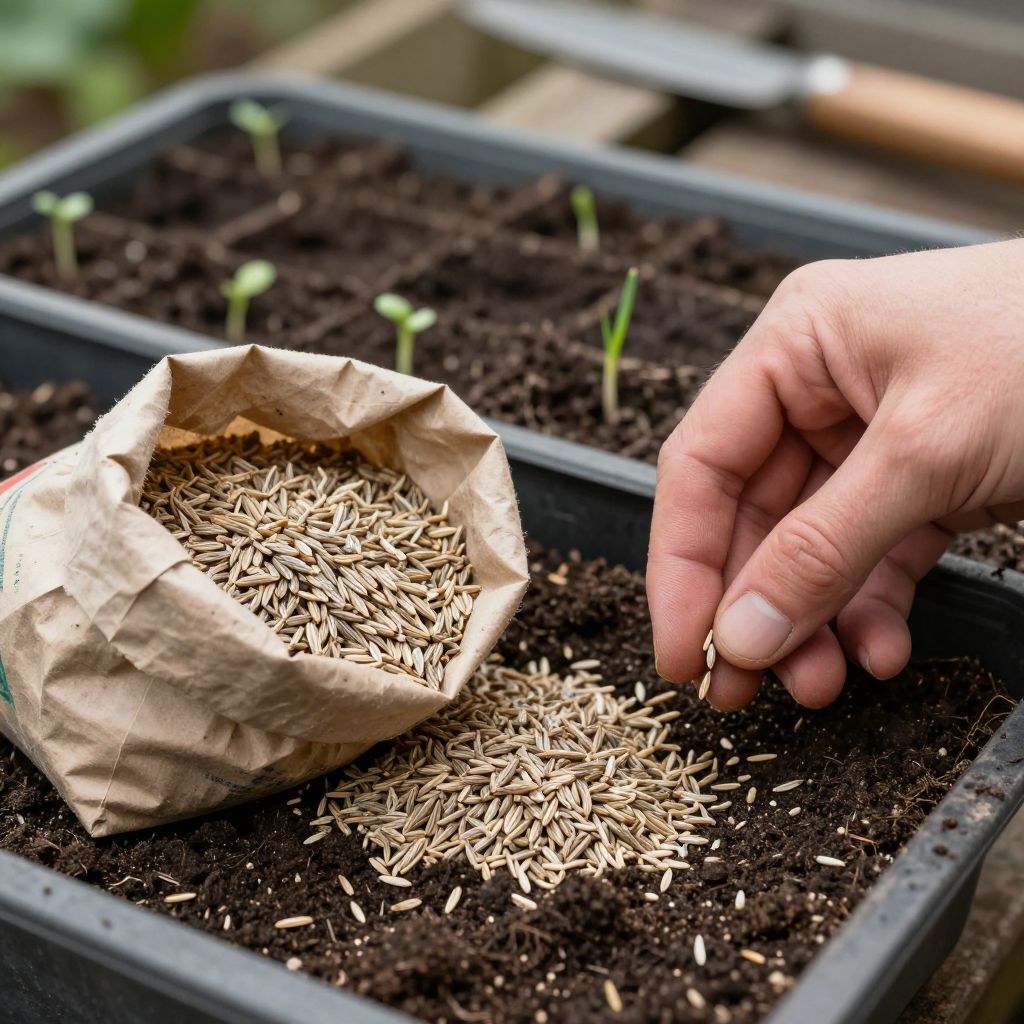
Can grass seed go bad? Yes—grass seed can lose viability over time, especially if it has been exposed to heat, moisture, or pests. Fresh, properly stored seed usually germinates best, while old or poorly stored seed may sprout unevenly or not at all.
If you are planning a new lawn or overseeding thin spots, it pays to know how to judge seed quality before you spread it. A few simple checks can save you from wasted effort, patchy growth, and the frustration of reseeding later.
Can grass seed go bad?
Yes. Grass seed can go bad when its stored energy declines, which lowers germination rates. Seed kept cool, dry, and sealed may remain usable for years, but heat, humidity, and damage from insects or rodents can shorten its life. Old seed may still sprout, but usually less reliably.
How long does grass seed stay good?
Most grass seed stays viable for a few years if stored well, but the exact lifespan depends on the grass type and storage conditions. Cool-season grasses often hold up reasonably well in dry storage, while warm, damp, or fluctuating conditions can reduce viability much faster.
What affects seed longevity?
- Moisture: Damp seed can mold, clump, or begin to deteriorate.
- Heat: High temperatures speed up aging and reduce germination.
- Air exposure: Open bags absorb humidity and invite pests.
- Damage: Crushed or cracked seed is less likely to germinate well.
- Storage time: Even ideal storage does not keep seed perfect forever.
Why the expiration date matters
Many seed bags include a packed-for date or sell-by date, but those are not always the same as a true expiration date. Think of the date as a guide to likely germination, not an absolute cutoff. Older seed may still work if it has been stored properly.
How to tell if grass seed is still good
The easiest way to test old seed is with a simple germination check. If only a small percentage sprout, you can adjust your seeding rate or replace the seed before planting a large area.
Do a paper towel germination test
- Count out 10 to 20 seeds.
- Place them on a damp paper towel.
- Fold the towel over the seeds and place it in a labeled plastic bag or container.
- Keep it in a warm indoor spot, not in direct sun.
- Check daily and keep the towel lightly moist, not soaked.
- Count how many seeds sprout after the typical germination window for that grass type.
If most seeds sprout, the seed is likely usable. If only a few germinate, the seed is probably too old or has been damaged in storage.
Look for warning signs
- Musty, sour, or moldy smell
- Clumping from moisture exposure
- Visible mold, mildew, or webbing
- Seed that feels soft, swollen, or broken
- Evidence of insects or rodent damage
Important: Seed that looks fine can still have poor germination, so appearance alone is not enough. A quick test is the most reliable way to judge older seed.
What happens when you plant bad grass seed?
Bad grass seed usually leads to thin, uneven turf, slower coverage, and more weeds filling in the gaps. You may also see patchy germination, especially if the seed lot has mixed viability or if some seed was damaged while the rest stayed intact.
Common signs after planting
- Patches that stay bare while other areas sprout
- Weak, sparse seedlings
- Uneven lawn density
- More weed seedlings than grass seedlings
- Repeated need to overseed the same area
Sometimes the problem is not old seed at all. Poor soil contact, drying out, too much shade, or planting at the wrong time can also reduce germination. If your seed is old, those problems become even more noticeable.
How to store grass seed so it lasts longer
Good storage is the best way to keep grass seed usable. Your goal is simple: keep it cool, dry, and sealed from pests and humidity.
Best storage practices
- Keep seed in its original bag or a tightly sealed container.
- Store it in a cool indoor location, such as a dry basement or climate-controlled room.
- Avoid garages, sheds, and attics where temperatures swing widely.
- Keep it off the floor if flooding or dampness is possible.
- Label the container with the purchase date.
If you live in a humid climate, extra protection matters. A sealed plastic bin or metal container can help keep moisture and pests out, especially if the original bag has been opened.
What not to do
- Do not leave seed in a hot car or truck bed.
- Do not store seed beside fertilizer that may leak moisture.
- Do not keep opened seed bags in damp sheds.
- Do not assume seed is fine just because the bag is unopened.
Should you use old grass seed?
Sometimes yes, but only if the germination test shows acceptable results. Older seed can still be worth using for patching small areas, but for a full lawn renovation, fresh seed is usually the safer choice because you need more reliable coverage.
When old seed is worth using
- You only need to fill a few bare spots.
- The seed has been stored cool and dry.
- Your germination test shows strong sprouting.
- You are willing to overseed a little more heavily if needed.
When to replace it
- The seed smells musty or shows mold.
- Very few seeds sprout in your test.
- The bag was stored in heat or humidity for a long time.
- You need dependable results on a large area.
Tip: If you use seed with reduced germination, do not simply spread it as if it were fresh. You may need to increase the seeding rate somewhat, but only after checking the test results and the recommended rate on the bag.
How to improve germination, even with good seed
Even fresh seed can fail if the site is not prepared well. Grass seed needs good seed-to-soil contact, steady moisture, and the right growing conditions for the grass type you are planting.
Prepare the soil properly
- Rake away dead grass, stones, and debris.
- Loosen the top layer of soil if it is compacted.
- Level low spots so water does not pool.
- Add a thin layer of compost only if your soil is poor or very low in organic matter.
- Press or lightly rake the seed into the surface so it makes contact with soil.
Grass seed should not be buried deeply. Most varieties germinate best when they are lightly covered or pressed into the soil surface, not planted several inches down.
Water correctly after seeding
Keep the seedbed consistently moist until germination. The surface should not dry out, but it also should not stay soggy. In warm or windy weather, you may need to water lightly more often; in cool, cloudy weather, less frequent watering may be enough.
Once seedlings emerge, gradually shift to deeper, less frequent watering so roots grow downward. If you water too heavily too soon, you can wash seed away or encourage shallow roots.
Match the grass type to your site
Different grasses prefer different conditions. Cool-season grasses generally perform best in cooler temperatures, while warm-season grasses grow best in heat. Shade, full sun, soil drainage, and local climate all affect success, so choose seed suited to your region and yard conditions.
Common mistakes that make seed seem “bad”
Sometimes seed gets blamed when the real issue is planting technique or site conditions. Before you discard seed, check whether one of these common problems is the real cause.
- Planting at the wrong time: Soil may be too cold or too hot for the grass type.
- Poor watering: Seed dries out before it can sprout.
- Poor soil contact: Seed sits on top of loose debris instead of touching soil.
- Too much shade: Grass seedlings struggle in dense shade.
- Birds or runoff: Seed is eaten or washed away.
- Soil crusting: A hard surface blocks emerging seedlings.
If the seed test is good but the lawn still fails, focus on these growing conditions before buying more seed.
Troubleshooting patchy germination
Patchy growth can be caused by old seed, but it can also point to uneven moisture, compacted soil, or inconsistent seeding depth. Walk the area and look for patterns.
What the pattern may mean
- Random bare spots: Seed distribution or soil contact may be uneven.
- Edges worse than center: Wind, runoff, or drying may be affecting the perimeter.
- Shady spots thin: Light levels may be too low for strong growth.
- Low areas fail: Waterlogging may be reducing germination.
If you reseed, lightly rake the surface, add seed evenly, and keep the area moist. For very thin lawns, a second overseeding pass can help fill gaps once the first seedlings are established.
When to buy fresh grass seed
Buy fresh seed when you need reliable germination for a larger project, when your current seed has been stored poorly, or when a germination test shows weak results. Fresh seed costs more upfront, but it often saves time, labor, and frustration.
For the best chance of success, choose a seed mix suited to your climate, site, and sun exposure, then store any leftovers properly for future touch-ups.
If you want to keep improving your lawn results, it also helps to read about soil preparation, overseeding, and lawn watering basics before your next planting project.