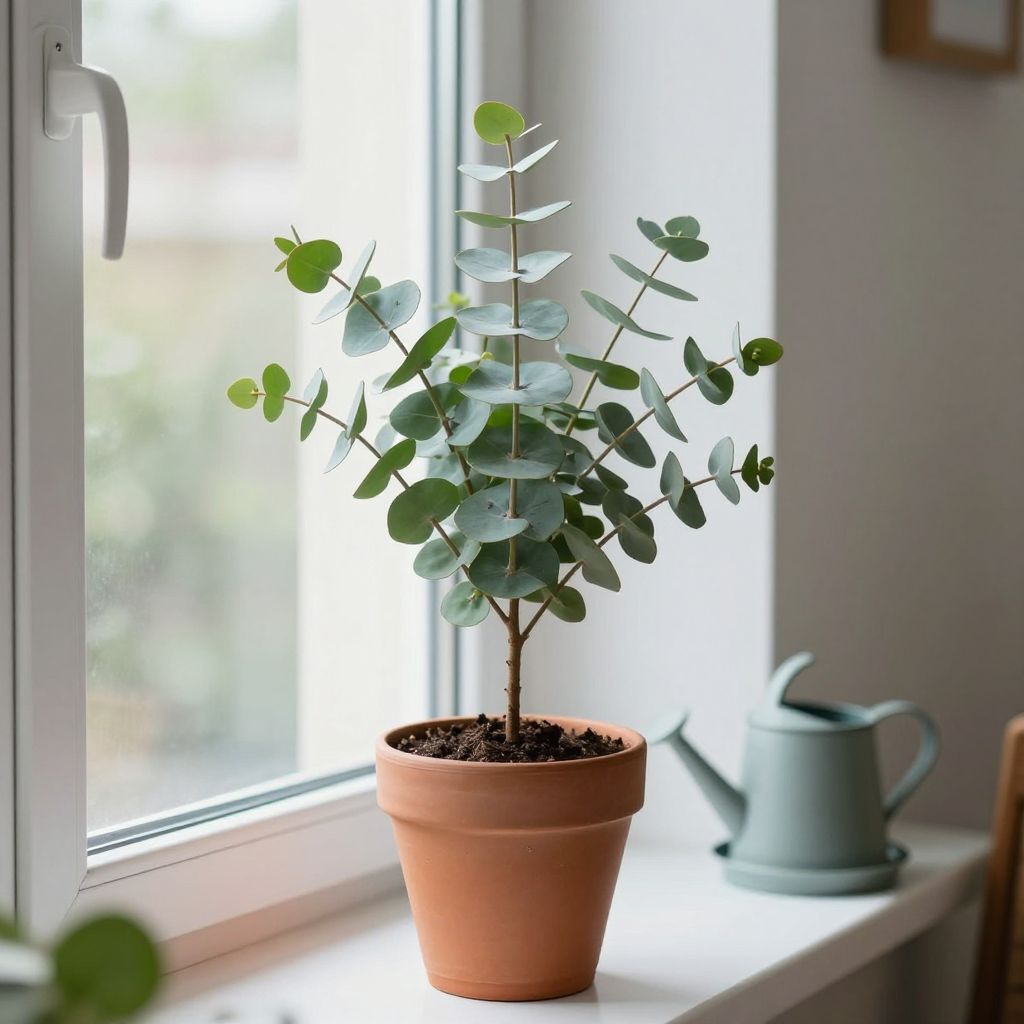
Can you grow eucalyptus indoors? Yes, but only if you can give it very bright light, excellent drainage, and regular pruning to keep it compact. Eucalyptus is naturally a fast-growing tree, so indoor success depends on managing its size and meeting its needs without overwatering.
For most home gardeners, the best indoor eucalyptus is a young plant grown in a pot for foliage, not a long-term house tree. With the right setup, you can enjoy aromatic leaves for months or even years, but this plant will usually perform better in a sunroom, greenhouse, or very bright window than in a dim living room.
Can you grow eucalyptus indoors?
Yes, you can grow eucalyptus indoors if you provide intense light, a fast-draining potting mix, and room to prune it often. The biggest challenge is that eucalyptus wants more sun and airflow than most houses provide, so indoor plants usually stay healthiest as juvenile, container-grown specimens rather than full-sized trees.
What eucalyptus needs indoors
Eucalyptus is a sun-loving plant from open, airy habitats. Indoors, your job is to imitate those conditions as closely as possible.
Light
Light is the make-or-break factor. Place eucalyptus in the brightest window you have, ideally south-facing in the Northern Hemisphere. If natural light is limited, use a grow light for 12 to 16 hours a day.
- Bright direct sun is best.
- Rotate the pot every week or two so growth stays even.
- If stems stretch and leaves become sparse, the plant needs more light.
Temperature and airflow
Most eucalyptus species prefer moderate indoor temperatures and good air movement. They do not like stuffy rooms, and they dislike sudden cold drafts from windows or heating vents.
- Keep the plant away from radiators, fireplaces, and hot vents.
- Avoid placing it right next to icy winter glass.
- Good airflow helps reduce fungal problems and pest pressure.
Humidity
Eucalyptus generally tolerates average indoor humidity better than many tropical houseplants. You usually do not need to mist it, and excess moisture on leaves can sometimes encourage disease.
Choosing the right eucalyptus for indoor growing
Not every eucalyptus species is equally suited to indoor life. Many grow too quickly or too large for a house, so choose a young plant and be prepared to keep it pruned.
- Start small: a young nursery plant is easier to manage than a large one.
- Look for compact growth and healthy, undamaged foliage.
- Choose a container-friendly specimen rather than a landscape tree.
If you are unsure which species you have, focus on the plant’s behavior rather than the exact variety. Indoor care is similar: strong light, drainage, and frequent shaping are the priorities.
Best pot and soil for indoor eucalyptus
Eucalyptus hates soggy roots. The pot and soil you choose matter just as much as the light.
Container selection
Use a pot with drainage holes, and do not oversize it. A pot that is too large holds excess moisture and can slow root growth.
- Choose a sturdy pot that will not tip as the plant grows.
- Terracotta can help the mix dry more evenly.
- Repot only when roots begin circling the container or water runs straight through too quickly.
Soil mix
Use a well-draining potting mix rather than heavy garden soil. A mix made for containers, amended with perlite or coarse sand if needed, usually works well.
- The goal is moisture retention with quick drainage.
- Avoid dense, peat-heavy mixes that stay wet for too long.
- Never let the pot sit in a saucer of water.
How to water eucalyptus indoors
Watering eucalyptus correctly is about timing, not a fixed schedule. Check the potting mix with your finger and water only when the top layer has dried.
- Insert a finger about 1 to 2 inches into the soil.
- If it feels dry at that depth, water thoroughly.
- Let excess water drain completely.
- Empty the saucer after watering.
In brighter, warmer conditions, the plant may dry out faster. In winter or low light, it will usually need less frequent watering. Overwatering is one of the most common reasons indoor eucalyptus fails.
Signs of watering problems
- Too much water: yellowing leaves, drooping despite wet soil, root rot smell, leaf drop.
- Too little water: crisp leaves, curling foliage, dry potting mix pulling away from the sides of the pot.
Pruning and shaping indoor eucalyptus
Pruning is essential if you want eucalyptus to stay indoors. Left alone, it can outgrow a room quickly.
How to prune
Use clean, sharp pruners and remove stems just above a leaf node or branching point. Regular light pruning is better than waiting for the plant to become too tall and woody.
- Pinch or trim young growth to encourage bushier form.
- Remove weak, damaged, or crossing stems.
- Keep the top growth balanced so the plant does not lean toward the light.
If you want foliage for arrangements, pruning can actually improve the plant by encouraging fresh, usable stems. Just avoid removing too much at once, especially from a small plant.
Feeding and repotting
Indoor eucalyptus does not need heavy feeding. Too much fertilizer can create weak, overly soft growth that is more prone to pests and stretching.
Fertilizer
During active growth, a light application of a balanced houseplant fertilizer may be enough if your plant is in a container and receiving strong light. Reduce feeding in winter or during slower growth.
- Feed only when the plant is actively growing.
- Do not fertilize a stressed, wilted, or recently repotted plant.
- If growth is weak, check light first before adding more fertilizer.
Repotting
Repot when roots fill the container or when water moves through the pot too fast because the root ball has become crowded. Move up only one pot size at a time.
Fresh potting mix can refresh nutrients and improve drainage, but repotting is stressful, so do it only when needed.
Common indoor eucalyptus problems
Most indoor problems come from too little light, too much water, or poor air circulation. Catching the issue early makes recovery much easier.
Leggy growth
If stems are long and thin with wide gaps between leaves, the plant is not getting enough light. Move it to a brighter spot or add a grow light, then prune back stretched growth to encourage branching.
Yellowing leaves
Yellow leaves often point to overwatering, poor drainage, or root stress. Check the soil first, then inspect the pot for drainage holes and make sure the roots are not sitting in water.
Leaf drop
Some leaf drop is normal as eucalyptus adjusts to indoor conditions, but heavy shedding can mean light stress, watering problems, or sudden temperature changes. Stabilize the environment and avoid moving the plant repeatedly.
Pests
Indoor eucalyptus can attract common houseplant pests such as spider mites, aphids, and scale, especially if the air is dry or the plant is stressed.
- Inspect leaf undersides and stems regularly.
- Wipe small infestations off with a damp cloth.
- Isolate affected plants to prevent spread.
- Improve airflow and reduce stress to help prevent repeat outbreaks.
Can eucalyptus grow indoors long term?
Sometimes, but not always. Eucalyptus is naturally vigorous, and many plants eventually become too large for typical indoor spaces. Some gardeners keep it indoors for a season or two, then move it outdoors when weather allows.
If you live in a climate where eucalyptus can grow outside year-round, you may want to use the indoor plant as a temporary container specimen and then transition it outdoors in suitable conditions. If you do move it outside, harden it off gradually so leaves do not scorch in direct sun or wind.
How to start eucalyptus indoors from seed or cuttings
Starting eucalyptus from seed is possible, but it is often slower and less predictable than buying a young plant. Cuttings are also not always easy to root, depending on the species and plant age.
From seed
- Use a clean, fine-textured seed-starting mix.
- Keep the medium lightly moist, not wet.
- Provide warmth and bright light.
- Transplant seedlings carefully once they are sturdy enough to handle.
From cuttings
Take healthy, non-flowering stem cuttings from vigorous growth if you are trying propagation. Success can vary, so expect some trial and error. For beginners, buying a young plant is usually the easiest route.
Indoor eucalyptus care checklist
- Give the brightest light available.
- Use a pot with drainage holes.
- Plant in fast-draining potting mix.
- Water only when the top layer of soil dries.
- Prune regularly to control size.
- Watch for spider mites, aphids, and scale.
- Repot only when rootbound.
Final thoughts
So, can you grow eucalyptus indoors? Yes, if you treat it like a high-light, fast-growing plant that needs careful watering and regular pruning. Start with a small plant, place it in the sunniest spot you have, and adjust care based on how quickly the soil dries and how the plant responds.
If you want to expand your indoor plant care skills, you may also enjoy reading more about how to choose the right potting mix for container plants and simple pruning tips for keeping houseplants compact.