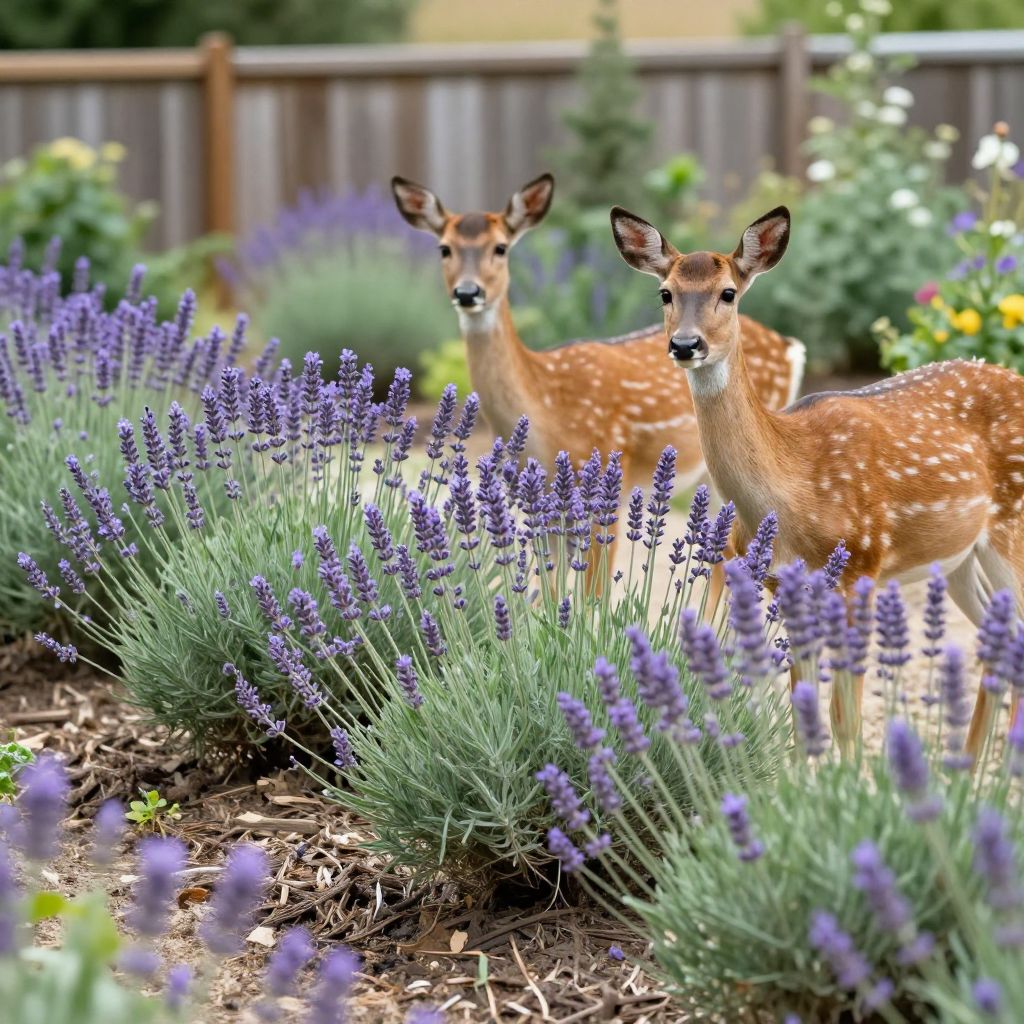
If you’re wondering, “Do deer like lavender?” the short answer is usually no. Lavender’s strong scent, fuzzy foliage, and aromatic oils make it one of the plants deer tend to avoid, especially when other food is available.
That said, no plant is completely deer-proof. Hungry deer, young plants, or gardens under heavy pressure can still see some browsing, so it helps to pair lavender with good planting and protection strategies.
Do deer like lavender?
Deer usually avoid lavender because of its strong fragrance, silvery foliage, and resinous oils. It is considered deer-resistant rather than deer-proof, which means it may stay untouched in many gardens but can still be nibbled if deer are hungry, populations are high, or other food is scarce.
Why deer usually leave lavender alone
Lavender is not a preferred deer plant. The leaves contain aromatic compounds that many deer find unappealing, and the plant’s texture is also less attractive than tender, juicy growth.
In practical terms, lavender works well in borders and foundation plantings where deer pressure is moderate. It is especially useful when planted near other deer-resistant herbs and ornamentals.
What makes lavender less appealing
- Strong fragrance: Deer often avoid highly scented plants.
- Woody stems: Mature plants are less tender than many garden favorites.
- Dry, aromatic foliage: The leaves are not as palatable as lush, high-water plants.
- Low-nutrient preference: Deer often choose richer, softer growth first.
When deer may still eat lavender
Even though deer usually dislike lavender, they may sample it when conditions push them to be less selective. Young plants are more vulnerable because their stems and leaves are softer, and newly planted lavender can be easier to browse than established shrubs.
Deer may also nibble lavender in late winter, during drought, or in gardens where other food is limited. If deer are very accustomed to people and gardens, they can become less picky.
Common situations where browsing happens
- Lavender is newly planted and still small.
- Nearby plants are heavily damaged, leaving lavender as a backup snack.
- Deer pressure is high in suburban or rural areas.
- The planting is not protected by fencing or repellents.
How to grow lavender so it stays healthy and resilient
Healthy lavender is more likely to shrug off minor browsing and recover quickly. The plant’s biggest needs are full sun, sharp drainage, and lean soil. If you give it too much water or rich compost, it may grow soft and weak, which can make it less resilient overall.
Best planting conditions
- Sun: Aim for at least 6 to 8 hours of direct sun daily.
- Soil: Use well-drained soil; sandy or gritty soil is often ideal.
- Drainage: Avoid low spots where water collects after rain.
- Airflow: Space plants so air can move around them.
Soil and compost tips
Lavender prefers soil that is not overly rich. If your soil is heavy clay, improve drainage by planting in raised beds, mounds, or containers with a gritty mix. A small amount of compost can help poor soil, but avoid making the planting hole too fertile or moisture-retentive.
If your soil stays wet, lavender may decline even if deer leave it alone. Root problems often look like yellowing, stunted growth, or dieback at the base.
Watering lavender correctly
Newly planted lavender needs regular watering until roots establish, but mature plants prefer drier conditions. Water deeply, then let the soil dry partly before watering again. The exact timing depends on your climate, rainfall, and soil type.
Overwatering is one of the most common mistakes. If the soil feels damp several inches down, wait before watering again.
Pruning and maintenance for better deer resistance
Well-pruned lavender plants stay compact, woody, and less tempting than soft, overgrown growth. Pruning also improves airflow and helps prevent splitting or flopping, especially in larger plants.
How to prune lavender
- Trim after flowering, once the blooms fade.
- Remove spent flower stems and lightly shape the plant.
- Avoid cutting into old, leafless wood unless the variety tolerates it well.
- Keep the plant rounded and open rather than tall and leggy.
Do not shear lavender too hard into bare stems. Severe cutting can weaken the plant or prevent regrowth from older wood.
How to protect lavender from deer
Because lavender is only deer-resistant, not deer-proof, protection is still smart in high-pressure areas. The best approach is to combine plant choice with physical barriers and garden design.
Best deer-control methods for lavender beds
- Fencing: The most reliable option for repeated deer pressure.
- Planting near the house: Deer often avoid areas with frequent human activity.
- Mixed plantings: Combine lavender with other deer-resistant herbs and shrubs.
- Repellents: Useful as a backup, especially after rain or new growth.
If you use repellents, follow the label and reapply as directed. They tend to work best as part of a rotation or combined strategy, not as a one-time fix.
Design tips that help
- Plant lavender in groups rather than as isolated single plants.
- Place it where deer must cross open, exposed ground to reach it.
- Use gravel paths, edging, or raised beds to make access less inviting.
- Keep vulnerable young plants protected until they are established.
Common lavender problems that can look like deer damage
Not every missing leaf is caused by deer. Lavender can also suffer from weather stress, poor drainage, or insect damage, and these issues can be mistaken for browsing.
How to tell the difference
- Deer damage: Ragged, clipped stems and missing tips at browsing height.
- Weather damage: Browning after frost, wind, or winter wetness.
- Root issues: Yellowing, wilting, or collapse in soggy soil.
- Insect damage: Usually smaller, more localized chewing or stippling.
If you suspect deer, look for tracks, droppings, or repeated damage on nearby plants. Deer often browse the most tender growth first and may leave woody stems behind.
Can you propagate lavender if deer damage it?
Yes. If a plant is repeatedly browsed or damaged, you can often replace it with new plants or take cuttings from healthy growth. Lavender is commonly propagated from softwood or semi-ripe cuttings, depending on the season and plant type.
For home gardeners, propagation is useful when you want to fill a border, replace a weak plant, or keep a favorite lavender going after winter damage. Use healthy, non-flowering shoots and well-drained propagation mix.
Best uses for lavender in a deer-resistant garden
Lavender is especially useful in sunny, dry gardens where deer are a problem. It pairs well with plants that share similar growing needs, which reduces maintenance and keeps the whole planting healthier.
Good companion planting ideas
- Rosemary
- Sage
- Thyme
- Yarrow
- Catmint
Choose companions that also like full sun and good drainage. Avoid pairing lavender with plants that need frequent irrigation or rich, moisture-holding soil.
Quick care checklist for lavender
- Plant in full sun.
- Use fast-draining soil.
- Water carefully, especially after planting.
- Prune lightly after bloom.
- Protect young plants if deer pressure is high.
- Watch for soggy soil and root decline.
Conclusion
So, do deer like lavender? Usually not. Lavender is one of the better choices if you want a fragrant, low-water plant that deer tend to ignore, but it still needs the right growing conditions and some protection in high-pressure areas.
If you’re planning a deer-resistant border, start by planting lavender in full sun with sharp drainage, then pair it with fencing or repellents if needed. For more ideas on what deer prefer and how to plan around them, see what to feed deer.