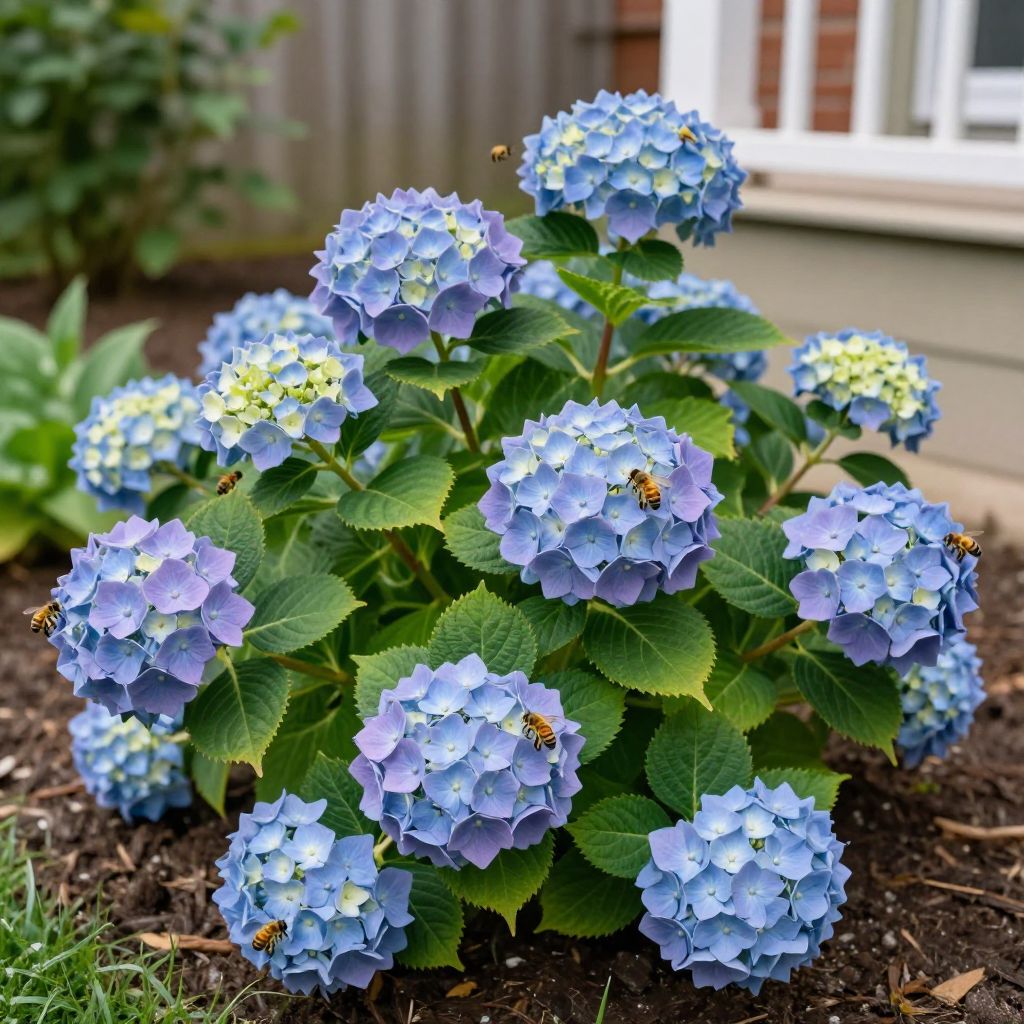
Do hydrangeas attract bees? In many gardens, yes—especially when the flowers are fertile and easy for pollinators to reach. But the answer depends on the hydrangea type, bloom form, and what else is flowering nearby.
If you want more pollinator activity, the right hydrangea can help. If you want fewer bees near a patio or walkway, you can also choose varieties and care practices that make the plant less appealing to them.
Do hydrangeas attract bees?
Yes, hydrangeas can attract bees, but not all hydrangeas are equally attractive. Lacecap and oakleaf hydrangeas usually draw more bees because their fertile flowers are easier to access, while many bigleaf hydrangeas with showy sterile florets offer less nectar and pollen. Plant health, bloom stage, and weather also affect bee visits.
Why some hydrangeas get more bee traffic than others
Hydrangea flowers are not all built the same. What looks like one big bloom is often a mix of tiny fertile flowers and larger decorative florets.
Lacecap and fertile blooms
Lacecap hydrangeas, such as some forms of Hydrangea macrophylla and Hydrangea serrata, have a flatter flower head with visible fertile flowers in the center. Bees can land easily and collect pollen and nectar from these smaller blooms.
Big mophead blooms
Mophead hydrangeas often have a dense ball of showy sterile florets. These are beautiful, but they may offer fewer rewards to bees because the fertile flowers are hidden or reduced.
Species that often attract pollinators
- Oakleaf hydrangea (Hydrangea quercifolia) often attracts bees when in bloom.
- Lacecap hydrangeas usually draw more bee activity than mopheads.
- Panicle hydrangea (Hydrangea paniculata) can attract bees, especially when the flower clusters are open and fertile.
What bees want from hydrangeas
Bees visit flowers for nectar and pollen, but they also need easy access. A flower that is rich in pollen but difficult to reach may still get fewer visits than a simpler bloom.
Bloom shape matters
Flat or open flower heads are easier for bees to land on. Dense, double, or heavily sterile flowers are often less useful to them.
Timing matters too
Bees are more active on warm, dry, sunny days. Even a bee-friendly hydrangea may see little action during cool weather, rain, or strong wind.
Nearby flowers influence visits
If your garden has lavender, salvia, catmint, borage, clover, or other pollinator favorites, bees may ignore hydrangeas unless the hydrangeas are especially rewarding.
How to make hydrangeas more attractive to bees
If your goal is to support pollinators, you do not need to do anything extreme. Good plant care and smart variety selection are usually enough.
- Choose open-flowered types such as lacecap, oakleaf, or panicle hydrangeas.
- Plant in full sun to part shade based on the species and your climate. More sun often means stronger flowering, which can support more bee activity.
- Avoid overfertilizing, especially with high-nitrogen products that push leafy growth at the expense of blooms.
- Provide consistent moisture so the plant does not abort buds during dry spells.
- Skip pesticide sprays on open flowers whenever possible, since these can harm bees and other beneficial insects.
Best planting conditions for healthy blooms
Hydrangeas generally do best in rich, well-drained soil with steady moisture. Compost improves soil structure and helps roots grow strongly, which supports flowering.
- Soil: Moist but not soggy
- Drainage: Good drainage is essential to prevent root stress
- Light: Morning sun with afternoon shade is a common sweet spot in hotter climates
- Mulch: A 2–3 inch layer helps conserve moisture and moderate soil temperature
If you want fewer bees around hydrangeas
Some gardeners love pollinators, while others prefer to reduce bee activity near entryways, patios, or play areas. You can lower bee interest without harming the plant.
Practical ways to reduce bee visits
- Choose mophead varieties with more sterile florets.
- Plant hydrangeas a little farther from seating areas and doorways.
- Deadhead spent blooms if your variety reblooms or if you want to limit late-season flower activity.
- Keep other bee-attracting plants away from high-traffic spaces.
- Water early in the day so flowers dry quickly and stay less appealing to some insects.
Do not spray flowers with insecticides to discourage bees. That can harm pollinators and may create more problems than it solves.
How to care for hydrangeas so they bloom well
Healthy hydrangeas usually produce better flowers, and better flowers are more likely to attract bees when the bloom type is suitable. Care needs vary by species, but the basics are similar.
Watering
Hydrangeas like even moisture, especially while establishing and during hot weather. Water deeply when the top few inches of soil begin to dry, rather than giving light daily sprinkles.
Container-grown hydrangeas dry out faster than garden plants, so check them more often in warm, windy weather.
Mulching
Apply organic mulch around the root zone, but keep it a few inches away from the stems. Mulch helps reduce stress that can interfere with flowering.
Feeding
Use compost or a balanced, slow-release fertilizer only if your soil needs it. Too much nitrogen can create lush foliage and fewer blooms, which means fewer flowers for bees to use.
Pruning
Pruning mistakes are a common reason hydrangeas fail to bloom. Some types bloom on old wood, others on new wood, and some on both. If you prune at the wrong time, you may remove flower buds before they open.
- Old wood bloomers are usually pruned lightly right after flowering.
- New wood bloomers are often pruned in late winter or early spring, depending on climate.
- If you are unsure of the type, prune conservatively until you identify it.
Common problems that reduce bee activity
Sometimes a hydrangea should attract bees but does not. The issue is often plant stress, bloom type, or weather rather than a lack of bees in the area.
Few or no blooms
If the plant is producing mostly leaves, check for too much shade, excess nitrogen, improper pruning, or winter bud damage. Without flowers, there is nothing for bees to visit.
Heat stress
In very hot climates, some hydrangeas may bloom less or wilt during the day. Afternoon shade and deeper watering help keep flowers open longer.
Diseases and pests
Powdery mildew, leaf spot, aphids, and spider mites can weaken the plant. While these problems do not always stop bee visits, stressed plants often flower less and look less appealing overall.
Good air circulation, proper watering at the base, and removing badly damaged leaves can help. Avoid wetting the foliage late in the day if disease pressure is high.
How to choose a hydrangea for your goal
The best hydrangea for bees is not always the best hydrangea for every garden. Start with your purpose.
If you want to support pollinators
- Choose lacecap, oakleaf, or panicle hydrangeas.
- Plant several flowering species nearby so bees have a steady food source.
- Use fewer pesticides and keep the soil evenly moist.
If you want a decorative shrub with less bee activity
- Look for mophead forms with more sterile florets.
- Place the shrub away from paths and outdoor seating.
- Maintain the plant for good health, but avoid overfeeding.
Propagation and seasonal care
If you already grow a hydrangea you love, you may want more of it. Many gardeners propagate hydrangeas from cuttings, though success depends on the type and your local conditions.
Take softwood or semi-ripe cuttings only when the plant is actively growing and healthy. Keep new cuttings in bright, indirect light with consistent moisture until roots form.
Seasonally, the main job is to protect buds and maintain moisture. In colder regions, winter injury can reduce flowering on old-wood types. In hot regions, summer heat and drought can shorten bloom life and reduce bee visits.
Quick troubleshooting guide
- No bees on flowers: The blooms may be too sterile, too new, or the weather may be too cool.
- Lots of leaves, few flowers: Check pruning, light levels, and fertilizer use.
- Flowers fade quickly: Increase watering consistency and reduce heat stress where possible.
- Plant looks healthy but still gets little bee activity: Nearby flowers may be more attractive, or your hydrangea may be a less bee-friendly form.
Conclusion
So, do hydrangeas attract bees? They can, especially open-flowered types like lacecaps, oakleaf hydrangeas, and some panicle hydrangeas. If you want more bee activity, focus on bloom type, sunlight, moisture, and avoiding pesticides. If you want fewer bees, choose more sterile-flowered forms and site them away from busy areas. For more plant care ideas, you may also want to read about hydrangea pruning basics and pollinator-friendly shrubs for home gardens.