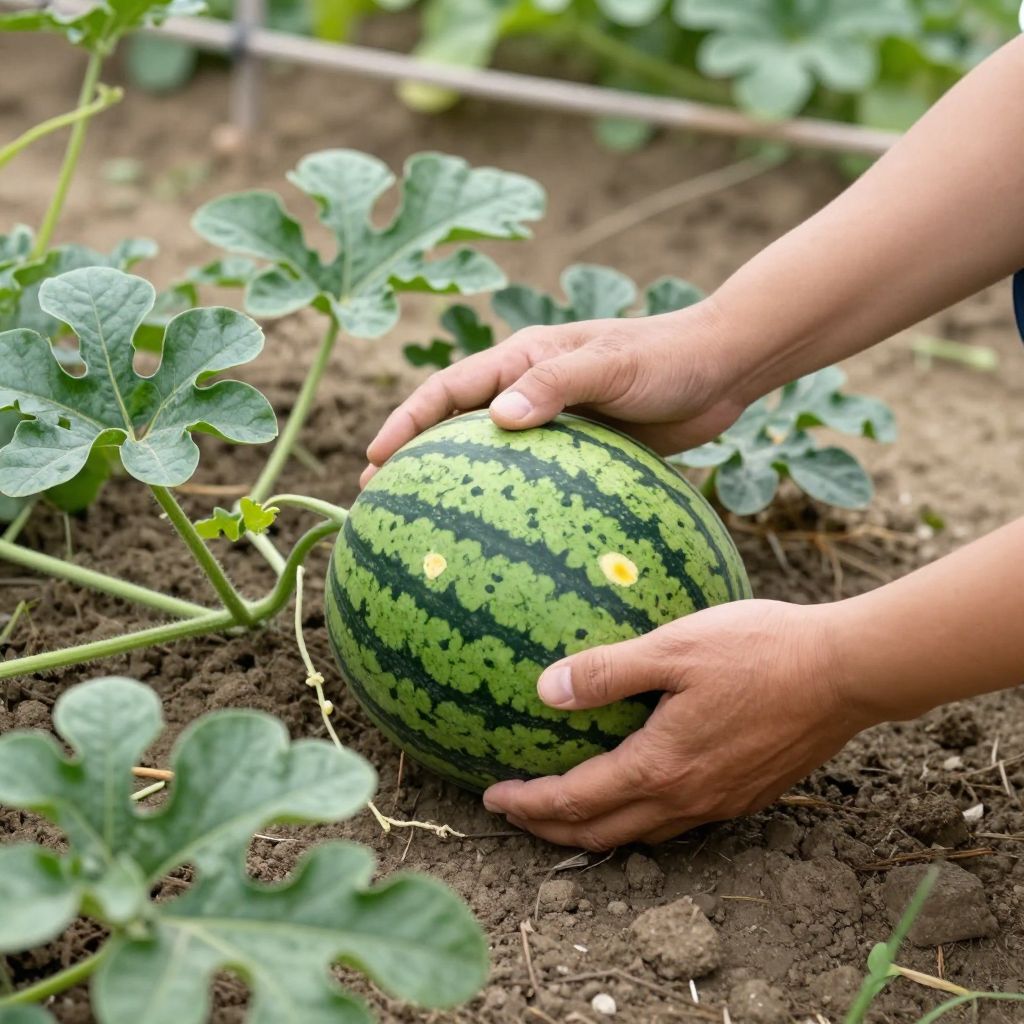
Wondering when to harvest Sugar Baby watermelon so it’s sweet, crisp, and not overripe? Timing matters because this compact watermelon cultivar can go from perfect to mealy if you wait too long, but picking too early leaves you with pale, bland flesh.
The good news is that Sugar Baby watermelon gives several reliable ripeness clues. By combining days to maturity with visual and physical signs, you can harvest at the right moment even if you’ve never grown melons before.
When To Harvest Sugar Baby Watermelon?
Harvest Sugar Baby watermelon when the fruit has reached full size for the variety, the nearest tendril has dried, the underside has turned creamy yellow, and the rind looks dull rather than shiny. Most fruits are ready about 75 to 90 days after planting, but weather, soil, and plant vigor can shift timing.
How To Tell Sugar Baby Watermelon Is Ready
No single sign is perfect on its own. Use several clues together for the best result.
1. Check the tendril closest to the fruit
Look at the curly tendril on the vine nearest the melon stem. When it turns brown and dry, that is one of the best harvest signals.
- Best sign: the tendril is fully dried and brittle.
- If it is still green, the fruit is usually not ready.
- If the vine is declining from disease or drought, use other signs too.
2. Inspect the ground spot
The part of the melon resting on the soil, called the field spot, should change from white or pale green to a creamy yellow or buttery yellow. A white field spot often means the fruit needs more time.
3. Look at the rind
As Sugar Baby watermelon matures, the rind often loses its glossy shine and becomes duller. The stripes may still be visible, but the skin should look less bright and more settled in color.
4. Judge the size and shape
Sugar Baby is a smaller watermelon, but fruit size alone is not enough to tell ripeness. A mature melon should feel heavy for its size and have a firm, rounded shape without soft spots.
5. Use the calendar as a guide, not the only rule
Count the days from planting or transplanting, then compare that with the fruit’s appearance. In warm, sunny weather, melons often mature faster than expected. In cool or cloudy conditions, they may take longer.
What Sugar Baby Watermelon Usually Looks Like At Harvest
At harvest, a Sugar Baby watermelon is typically small to medium in size for a watermelon, with a dark green rind and lighter striping. The rind should feel firm, the field spot should be yellow, and the vine signs should point to maturity. If you cut one open and the flesh is pale or watery, it was probably picked too early.
Step-By-Step Harvesting Tips
Once you think the fruit is ready, harvest carefully to avoid damaging the melon or the vine.
- Check the melon on a dry day if possible.
- Confirm at least two or three ripeness signs, not just one.
- Use clean, sharp pruners or a knife.
- Cut the stem, leaving about 1 to 2 inches attached to the fruit.
- Lift the melon gently rather than pulling it off the vine.
- Place it in shade right away if the sun is hot.
Do not twist or yank the fruit free. That can tear the stem and bruise the melon, which shortens storage life.
Common Mistakes When Picking Sugar Baby Watermelon
Many gardeners miss the harvest window because they rely on one clue or wait for the melon to “sound” right. Here are the most common errors to avoid.
- Picking by size alone: Sugar Baby can look full-sized before it is ripe.
- Waiting for a hollow thump only: the sound test is inconsistent and hard for beginners to judge.
- Ignoring the field spot: this is one of the most dependable signs.
- Harvesting too early after cool weather: ripening slows when temperatures drop.
- Leaving fruit too long on the vine: overripe melons can become mealy or lose sweetness.
Growing Conditions That Affect Harvest Timing
Harvest timing depends on how well the plant grew. Strong vines in warm conditions usually mature fruit more evenly than stressed plants.
Sunlight and heat
Watermelons need full sun to build sugar well. A plant that gets less than 6 to 8 hours of direct sun may produce fruit that takes longer to ripen and tastes less sweet.
Soil and drainage
Watermelons prefer loose, fertile soil with good drainage. Heavy, waterlogged soil can slow growth and increase disease pressure, which may delay ripening or reduce fruit quality.
Watering
Even moisture helps vines grow steadily, but soggy soil can cause problems. Inconsistent watering may lead to poor fruit development, cracking, or bland flavor. As harvest approaches, avoid sudden swings between drought and heavy watering.
Plant health
Powdery mildew, aphids, cucumber beetles, and vine stress can affect how well the plant finishes fruit. A healthy vine usually produces a better-tasting melon than a stressed one, even if both fruits look similar from the outside.
How To Improve Ripening Before Harvest
If your melon is close but not quite ready, give it the best chance to finish well.
- Keep the plant watered deeply when the top few inches of soil dry out.
- Remove weeds that compete for moisture and nutrients.
- Protect vines from pests that weaken foliage.
- Avoid heavy nitrogen feeding late in the season, which can push leaf growth instead of fruit ripening.
- Turn the fruit carefully only if needed to prevent a flat side from staying damp, but do not disturb the vine unnecessarily.
If frost is approaching and the melon is nearly ripe, it is usually better to harvest slightly early than risk cold damage. Sugar Baby watermelon can finish a little after picking if it is very close to maturity, but it will not become sweeter off the vine.
What To Do After Harvest
After picking, handle the fruit gently. Store whole melons in a cool, shaded place or in the refrigerator if space allows. Avoid leaving harvested fruit in direct sun, which can warm the flesh and shorten storage life.
Before cutting, wash the rind to remove soil and debris. Even though the rind is not eaten, clean handling helps keep the fruit sanitary.
Troubleshooting: If Your Watermelon Isn’t Sweet
If you cut into a Sugar Baby watermelon and it tastes watery or bland, the most likely reason is early harvest. Cool weather, cloudy conditions, too much shade, irregular watering, or nutrient stress can also reduce sweetness.
For future crops, choose a sunny site, keep soil evenly moist, and watch the ripeness signs closely as the fruit nears maturity. The more consistent the growing conditions, the easier it is to harvest at peak flavor.
Quick Ripeness Checklist
- The nearest tendril is brown and dry.
- The field spot is creamy yellow.
- The rind looks dull, not glossy.
- The fruit feels heavy for its size.
- It has been about 75 to 90 days since planting, depending on weather and growing conditions.
If you want to time when to harvest Sugar Baby watermelon with confidence, start checking fruit regularly as it nears maturity and use several signs together. A careful look at the tendril, field spot, and rind will tell you far more than guessing by size alone. For more seasonal fruit-growing guidance, you may also want to read related gardening articles on melon care and harvesting techniques.