Wondering when to harvest oregano so it tastes best and keeps growing well? The right time depends on the plant’s age, the weather, and whether you want a light pinch for fresh use or a larger cut for drying. Harvesting at the right stage gives you the strongest flavor and encourages bushier growth.
Oregano is easy to overcut or harvest too late, but with a few simple checks you can pick it at peak quality. Here’s how to tell when it’s ready, how much to take, and how to harvest without weakening the plant.
When to harvest oregano?
Harvest oregano when the plant is well established, actively growing, and just before or as it begins to flower, when the leaves are most flavorful. Pick in the morning after dew dries for the best oils and aroma. You can start taking small sprigs once plants are 4–6 inches tall and bushy enough to handle it.
How to tell oregano is ready to pick
Oregano is ready when stems are long enough to cut without leaving the plant sparse. Look for healthy, leafy growth and avoid harvesting a newly planted or stressed herb too heavily.
Good signs the plant is ready
- Stems are at least 4–6 inches tall, with several sets of leaves.
- The plant has filled out and branched rather than growing as a single thin stem.
- Leaves are fully developed and strongly aromatic when rubbed.
- Flower buds are just forming, or the plant is in early bloom.
When to wait a little longer
- The plant was recently transplanted and is still settling in.
- Growth is weak, yellowed, or sparse.
- The plant is very young and has only a few stems.
- It has been stressed by drought, heat, or heavy pruning.
Tip: If you want the strongest flavor, harvest oregano before it flowers heavily. Once flowering is underway, the leaves can still be used, but the taste may become slightly less intense.
Best time of day and season to harvest
The best time of day to harvest oregano is late morning, after the dew has dried but before the afternoon heat. At that point, the leaves usually hold more aromatic oils and are less likely to wilt quickly.
Seasonal timing
- Spring and early summer: Ideal for the first harvest once plants are established and growing vigorously.
- Midsummer: Often the peak harvest period, especially before or during early flowering.
- Late summer to early fall: Good for a final cutting, depending on your climate and how much the plant has recovered.
In warm climates, oregano may keep producing for a longer season. In cooler regions, harvest before cold weather slows growth, and take only what the plant can replace before frost.
How much oregano to harvest at one time
Take only what you need, especially from young plants. A light, regular harvest helps oregano branch and become fuller, while a hard cut can slow recovery.
Safe harvesting rule
- Remove no more than about one-third of the plant at a time.
- Leave plenty of leafy growth on each stem.
- Avoid cutting into old, woody stems unless you are doing a careful renovation prune on an established plant.
If you are harvesting for drying, it is better to take several small cuttings over time than one severe harvest. That keeps the plant productive and reduces stress.
How to harvest oregano correctly
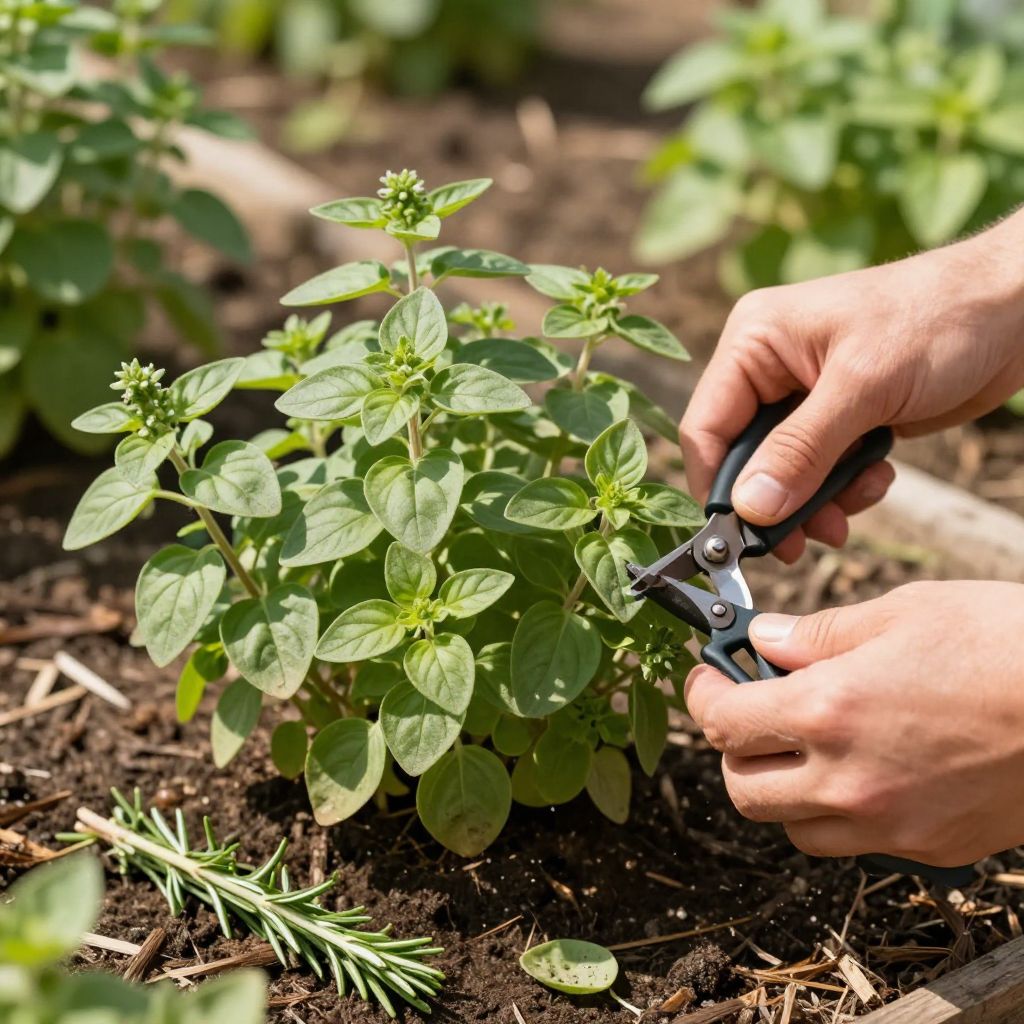
Use clean scissors, pruning snips, or your fingers for tender stems. Make cuts just above a leaf pair or branching point so the plant can send out new shoots from below the cut.
- Choose healthy stems with plenty of leaves.
- Follow the stem down to a point just above a leaf node.
- Cut 2–4 inches from the tip, or as much as you can remove without stripping the stem bare.
- Leave several sets of leaves on the plant to support regrowth.
- Inspect the plant after cutting and remove only damaged or weak stems if needed.
Important: Do not shear oregano like a hedge right down to the base. That can leave too little leaf area for recovery and may expose woody stems that do not resprout well.
Harvesting oregano for fresh use vs. drying
For fresh use
Pick young, tender stems as needed. Fresh oregano is at its best when the leaves are soft, green, and strongly scented. You can harvest small amounts throughout the growing season without needing a full cut.
For drying
Harvest stems before the plant gets too woody and before flowers open widely. Stems with healthy leaves dry well and keep better flavor than overmature growth.
- Choose clean, dry stems.
- Gather them in small bundles.
- Dry them in a warm, airy, shaded place.
- Strip the leaves only after they are fully dry.
If you plan to dry oregano, avoid harvesting after rain or heavy watering. Wet foliage dries slowly and is more likely to discolor or mold.
Should you harvest oregano before it flowers?
Yes, if flavor is your priority. Oregano often has the best balance of aroma and leaf quality just before flowering. That said, a plant in early bloom is still usable, and the flowers can attract pollinators if you leave some stems uncut.
Many gardeners let a portion of the plant flower while harvesting the rest. This gives you both useful leaves and a healthier garden ecosystem.
How often can you harvest oregano?
Oregano can usually be harvested repeatedly during the growing season as long as you do not remove too much at once. Frequent light harvesting often produces a bushier plant than occasional severe cutting.
Practical rhythm for home gardeners
- Pinch or cut tips whenever stems are long enough to use.
- Allow the plant time to regrow between cuttings.
- Pause harvesting if growth slows in extreme heat, drought, or cool weather.
Container-grown oregano may need a little more rest between harvests because pots dry out faster and plants have less root space to recover.
What affects oregano harvest timing?
Several growing conditions influence when oregano is ready and how often you can cut it. A healthy plant in full sun and well-drained soil will usually recover faster than one growing in shade or heavy, wet soil.
Sunlight
Oregano grown in full sun tends to be more compact and flavorful. In partial shade, stems may stretch and the plant may take longer to reach harvestable size.
Soil and drainage
Well-drained soil helps oregano stay vigorous. Poor drainage can slow growth, reduce leaf quality, and increase the risk of root problems, which can limit harvesting.
Watering
Moderate watering supports steady growth, but constantly wet soil can make the plant soft and less aromatic. Let the soil dry slightly between waterings, especially in containers.
Climate
In hot climates, oregano may bolt or flower sooner, so you may need to harvest earlier. In cooler climates, growth may be slower, and the best harvest window may be shorter.
Common mistakes to avoid when harvesting oregano
- Cutting too much at once: This can weaken the plant and reduce future harvests.
- Waiting too long: Older stems become woody and less pleasant to use.
- Harvesting wet foliage: Wet herbs are harder to dry and store.
- Ignoring flowering stage: Very mature flowering growth may have less tender leaves.
- Cutting into bare woody stems: These may not regrow well from old wood.
How to encourage more oregano after harvesting
Harvesting oregano the right way is also a form of pruning. Each cut can encourage branching, giving you a fuller plant over time.
- Pinch stem tips regularly when plants are young.
- Cut above a leaf node to stimulate side shoots.
- Remove flower buds if you want more leaf growth.
- Keep the plant in bright light so new growth stays compact and flavorful.
If your oregano is getting leggy, a light shaping cut can help, but do it gradually. A stressed plant is better improved with several small trims than one drastic cut.
What to do after harvesting
After cutting, check the plant for any weak, damaged, or crossing stems and remove them if needed. Water lightly if the soil is dry, but do not overwater just because you harvested.
If the plant is in a container, consider rotating the pot so all sides get even light. This helps the plant regrow evenly and prevents one-sided stretching.
Quick harvest checklist
- Plant is established and growing strongly.
- Stems are leafy and at least several inches long.
- Harvest is done in the morning after dew dries.
- No more than one-third of the plant is removed.
- Cut just above a leaf node or branching point.
- Leaves are processed fresh or dried promptly.
Conclusion
The best answer to when to harvest oregano is simple: pick it once the plant is established, leafy, and just before or during early flowering, then harvest lightly and often. Use clean snips, cut above leaf nodes, and leave enough growth for recovery. If you want, go check your oregano today and take just a few healthy stems for your next use.
For more herb-growing help, you may also find it useful to read about how to prune herbs and growing herbs in containers.