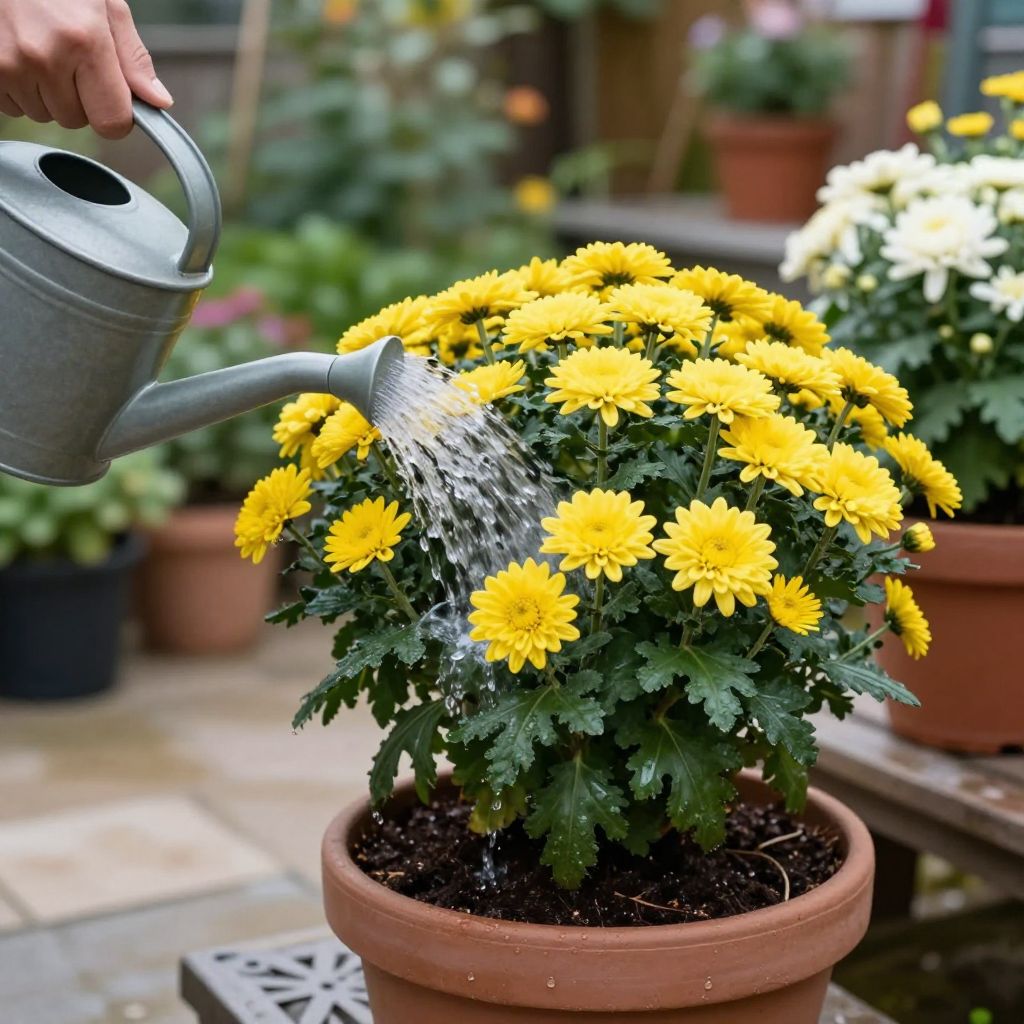
Do mums need a lot of water? Not usually—but they do need consistent moisture, especially while they’re actively growing, budding, and flowering. Chrysanthemums can dry out quickly in pots and in hot, sunny weather, yet they also dislike soggy soil, which can lead to root problems.
The sweet spot is evenly moist, well-drained soil. How often you water depends on the plant’s size, container or garden location, temperature, wind, and soil type, so the best approach is to check the soil rather than follow a fixed schedule.
Do mums need a lot of water?
Mums do not need constant soaking, but they do need regular watering to keep the root zone from drying out. Aim for soil that feels lightly moist, not wet, and water deeply when the top 1 inch of soil starts to dry. Container mums usually need water more often than garden mums.
How much water mums need in different situations
Garden mums vs. potted mums
In the ground, established mums can usually handle short dry spells better because roots can spread into surrounding soil. In pots, the root ball is confined and dries much faster, so container-grown mums often need closer attention.
- Garden mums: Water when the top inch of soil is dry, especially during warm or windy weather.
- Potted mums: Check daily in hot weather; containers may need watering every day or every other day.
- Newly planted mums: Keep the soil evenly moist until roots settle in.
Weather and season matter
Mums use more water during active growth, flowering, and warm spells. Cool, cloudy weather slows evaporation, while heat, strong sun, and wind can dry soil very quickly. Rainfall also changes everything, so always check the soil before watering.
In fall, flowering mums may still need frequent watering because cool air can hide how fast pots dry out. In spring and summer, newly planted mums need careful moisture while they establish roots.
Best watering method for healthy mums
The goal is to water deeply enough to moisten the root zone, then let the surface begin to dry before watering again. Shallow, frequent splashes encourage weak roots near the surface and can leave the lower soil dry.
- Check the soil with your finger about 1 inch deep.
- If it feels dry at that depth, water slowly at the base of the plant.
- Keep watering until the soil is evenly moist and excess water begins to drain away.
- Empty saucers under pots so roots do not sit in water.
Water the soil, not the flowers or leaves. Wet foliage can invite disease, especially in crowded plantings or humid weather.
How to tell if you are underwatering mums
- Leaves droop or curl, especially during the afternoon
- Flower buds dry up or fail to open
- Lower leaves turn crispy or yellow
- Potting mix pulls away from the sides of the container
How to tell if you are overwatering mums
- Soil stays wet for long periods
- Leaves yellow and feel soft or limp
- Stems may look weak or blacken near the base
- The plant declines even though the soil is wet
Soil, drainage, and container care
Mums grow best in soil that drains well but still holds some moisture. Heavy clay soil can stay too wet after rain, while very sandy soil may dry out too fast. Amending garden beds with compost can improve moisture balance and root health.
For garden beds
- Work compost into the top layer of soil before planting.
- Avoid low spots where water collects after rain.
- Mulch lightly to slow evaporation and reduce stress.
For pots and planters
- Use containers with drainage holes.
- Choose a quality potting mix, not garden soil.
- Do not let pots sit in standing water.
- Use a larger container if the plant dries out too fast.
If your potted mum dries out in only a few hours, the container may be too small, the mix may be too coarse, or the plant may be rootbound. Repotting into a slightly larger container can help the soil hold moisture more evenly.
When to water mums for the best results
Morning is usually the best time to water. It gives the plant time to absorb moisture before the heat of the day and allows any splashed leaves to dry quickly. Evening watering can work in some climates, but wet foliage overnight may increase disease risk.
During very hot weather, check mums again later in the day. A plant that looked fine in the morning may wilt by afternoon, especially in pots or exposed beds.
Common watering mistakes to avoid
- Watering on a strict schedule instead of checking the soil
- Giving light sprinkles that never reach the roots
- Letting pots dry out completely, then flooding them
- Keeping the soil soggy for long periods
- Wet leaves and flowers repeatedly, especially at night
Chrysanthemums are more forgiving when moisture changes gradually. Big swings from bone-dry to waterlogged stress the roots and can shorten bloom time.
Practical care tips to help mums use water well
Pinch and prune for fuller plants
Pinching back young mums can create a bushier plant with more stems and better coverage. A fuller plant shades its own root zone a little better and may dry out less quickly than a sparse one.
Mulch lightly in the garden
A 1- to 2-inch layer of mulch can help conserve moisture and reduce temperature swings. Keep mulch a small distance away from the stems so the crown does not stay too wet.
Protect from harsh afternoon sun
Mums bloom best in bright light, but intense afternoon sun can increase water loss. In very hot climates, some afternoon shade can help keep foliage from wilting too quickly.
Pests and diseases linked to watering problems
Improper watering can make mums more vulnerable to disease and pests. Stressed plants are less resilient, and overly wet conditions especially encourage fungal issues.
Watch for these problems
- Powdery mildew: Often worse with crowded plants and poor air circulation
- Root rot: Common in soggy soil or pots without drainage
- Aphids: Can cluster on tender growth and buds
- Spider mites: More likely in hot, dry conditions
Good spacing, steady watering, and clean foliage help prevent many of these issues. If a plant is declining despite wet soil, check the roots and drainage before adding more water.
How to adjust watering as mums grow
Young mums and newly divided plants need more careful watering than established plants. Their roots are smaller, so they dry out faster and can be damaged by drought more easily. Once established, mums become a bit more tolerant, though flowering plants still need regular moisture.
- New plantings: Water more often until roots spread into surrounding soil.
- Established plants: Water deeply when the top inch dries out.
- Flowering mums: Keep moisture steady to support bud development and bloom quality.
Simple troubleshooting guide
If your mum is wilting
First, check the soil. If it is dry, water thoroughly. If the soil is already wet, the problem may be root stress, poor drainage, or heat rather than thirst.
If the leaves are yellowing
Yellow leaves can mean too much water, too little water, poor drainage, or natural aging of older leaves. Look at the soil moisture and the overall plant condition before changing your routine.
If buds are dropping
Inconsistent watering is a common cause. Keep the root zone evenly moist and avoid letting the plant dry out between waterings, especially during bud formation.
Conclusion: the best watering habit for mums
Mums do not need a lot of water all at once, but they do need steady moisture and excellent drainage. Check the soil often, water deeply when the top inch dries, and adjust for weather, container size, and plant age. If you want healthier blooms, start by improving the watering rhythm rather than watering more often.
For more practical plant care, you may also enjoy reading about how to care for potted plants and choosing the best mulch for garden beds.