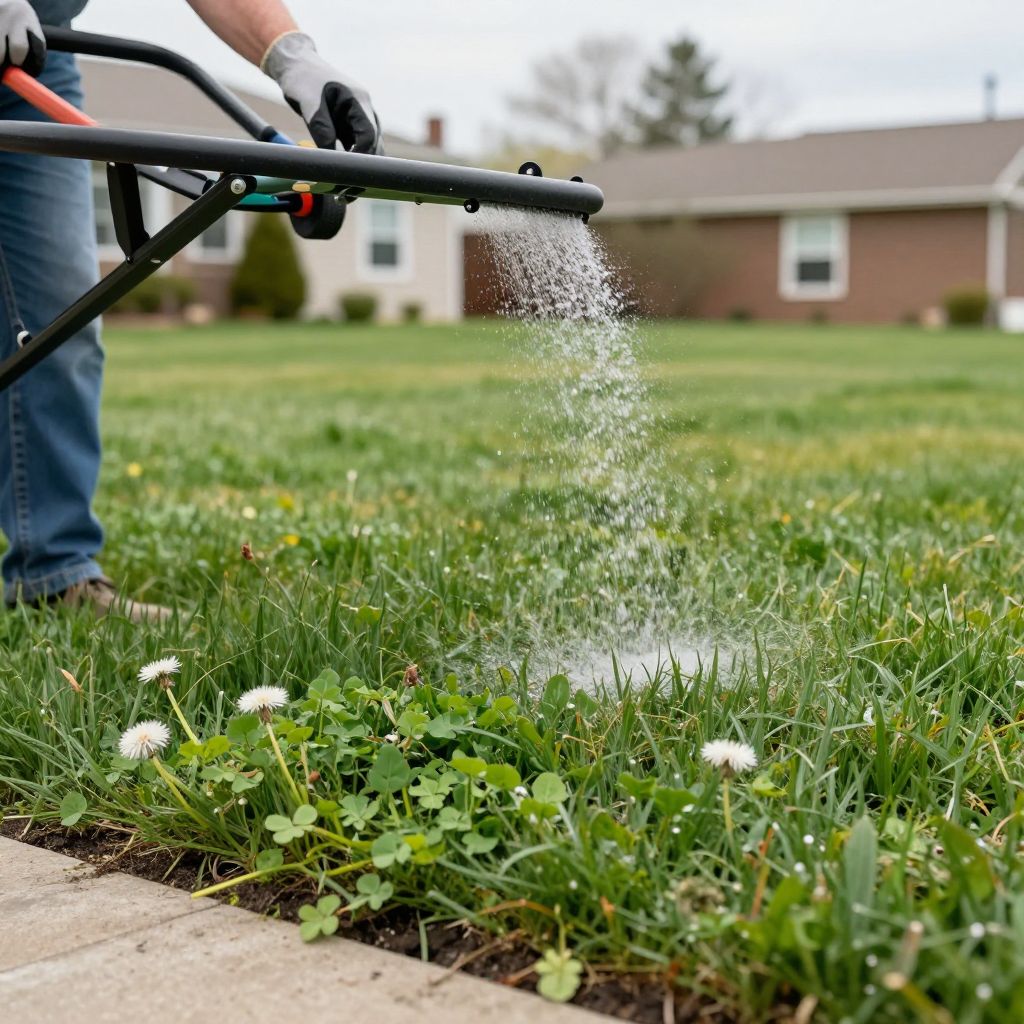
Wondering when to use weed and feed so it actually helps your lawn instead of wasting time or stressing the grass? Timing matters more than most people think. The right application depends on your grass type, local weather, the weeds you’re targeting, and whether your lawn is actively growing.
Used at the wrong time, weed and feed can miss weeds, burn tender turf, or do little at all. Used correctly, it can be a convenient way to combine lawn feeding with broadleaf weed control, especially for established lawns that need seasonal maintenance.
When To Use Weed And Feed?
Use weed and feed when your lawn is actively growing, weeds are small and actively growing too, and the weather is mild and calm. In many areas, that means spring for cool-season lawns and late spring through early summer for warm-season lawns. Avoid applying during drought, heat stress, or immediately before heavy rain.
How Weed And Feed Works
Weed and feed products combine a fertilizer with a selective herbicide that targets common broadleaf weeds such as dandelion, clover, and plantain. The fertilizer supports turf growth while the herbicide is absorbed through weed leaves, so timing and leaf contact are both important.
Why timing matters
- Weeds must be actively growing to absorb the herbicide well.
- The lawn should be growing too so it can recover and fill in thin areas.
- Extreme heat, drought, or cold can reduce effectiveness and increase turf stress.
Best Seasons To Apply Weed And Feed
Spring application
Spring is often the most common time to use weed and feed on cool-season lawns such as Kentucky bluegrass, perennial ryegrass, tall fescue, and fine fescues. Apply after the grass has started active growth and after the first mowing or two, when weeds are visible and growing.
For warm-season lawns such as bermudagrass, zoysiagrass, St. Augustinegrass, and centipedegrass, spring timing depends on when the lawn has fully greened up. Wait until the grass is actively growing and has recovered from winter dormancy.
Fall application
Fall can be an excellent time for cool-season lawns because many broadleaf weeds are storing energy and moving nutrients through their leaves and roots. If your lawn is healthy and temperatures are moderate, a fall application may be more effective than a hot-weather treatment.
Fall is usually less useful for warm-season lawns in cooler climates, since growth slows as temperatures drop. In those lawns, weed and feed is often better used in late spring or early summer, if needed at all.
When not to rely on it
Weed and feed is not the best choice for every lawn problem. If you have mostly grassy weeds, severe infestations, bare soil, or a lawn that needs renovation, you may need a different approach such as overseeding, spot treatment, or a proper lawn repair plan.
How To Tell If Your Lawn Is Ready
Before you apply weed and feed, check the lawn conditions carefully. The product works best when both the turf and the weeds are actively growing and the lawn is not under stress.
- The grass is green and growing, not dormant.
- Weeds have enough leaf surface to absorb the herbicide.
- The soil is moist, but not soggy.
- Daytime temperatures are moderate, not extreme.
- No heavy rain or irrigation is expected immediately after application unless the label says otherwise.
Signs you should wait
- Brown or dormant turf
- Heat wave or drought stress
- Recently seeded lawn
- Very wet soil or standing water
- Weeds covered by mowing clippings or dust
How To Apply Weed And Feed Correctly
Read the product label first. Different products vary in application method, lawn compatibility, and watering instructions, and the label is the final authority for safe use.
- Mow the lawn a day or two before application if needed, but do not scalp it.
- Make sure the lawn is dry unless the label gives different directions.
- Apply evenly with a spreader for granular products or a sprayer for liquid products.
- Keep the application uniform to avoid streaks, skips, or overlap.
- Water only if the label instructs you to do so, and wait the recommended time before mowing again.
Important application tips
- Do not apply more than the label rate.
- Avoid windy days to reduce drift onto flowers, shrubs, or vegetable beds.
- Keep children and pets off the lawn until the product has been watered in or dried as directed.
- Clean your spreader or sprayer after use to prevent accidental damage to other plants.
Common Mistakes To Avoid
Applying to new lawns
Do not use weed and feed on newly seeded lawns unless the label specifically says it is safe. Young grass can be damaged, and many herbicides interfere with seed germination or seedling establishment.
Using it during drought or heat
Hot, dry conditions can make turf more vulnerable to injury and reduce weed uptake. If your lawn is stressed, water it appropriately first and wait until it is actively growing again.
Expecting it to solve every weed problem
Weed and feed works best on small, broadleaf weeds. It is less effective on mature weeds with thick leaves, deep roots, or heavy infestations. In those cases, a follow-up treatment or a different control method may be needed.
Overlapping applications
Too much product in one area can scorch grass or create patchy growth. Walk at a steady pace and use the spreader setting the label recommends for your product type.
Weed And Feed Vs. Other Lawn Care Options
Sometimes a separate fertilizer and weed control plan is better than a combined product. The right choice depends on your lawn’s condition and your goals.
- Weed and feed: convenient for routine care on established lawns with light to moderate broadleaf weeds.
- Fertilizer only: better when weeds are minimal and the lawn mainly needs feeding.
- Spot weed treatment: useful when weeds are scattered and you want to avoid blanket applications.
- Overseeding and soil improvement: best for thin lawns, compacted soil, or areas with recurring weed pressure.
Seasonal Lawn Care That Improves Results
Weed and feed works best as part of broader lawn maintenance, not as a stand-alone fix. Healthy turf naturally crowds out weeds and uses fertilizer more efficiently.
Support your lawn before and after application
- Mow at the correct height for your grass type.
- Water deeply but infrequently when conditions are dry.
- Aerate compacted soil if water runs off or roots stay shallow.
- Topdress thin areas with compost if appropriate for your lawn.
- Overseed bare patches at the proper time for your grass type, but not at the same time as most weed and feed products.
If your lawn has repeated weed problems, the real issue may be thin turf, poor drainage, shade, compacted soil, or mowing too short. Fixing those conditions usually improves weed control more than repeated feeding alone.
Special Situations To Consider
Shady lawns
Grass growing in shade is often weaker and slower to recover, so weed and feed may not be enough on its own. Improving light, choosing a shade-tolerant grass, and reducing competition from tree roots can help more than extra fertilizer.
Wet or poorly drained areas
If the soil stays soggy, weeds often outcompete turf. Improve drainage, reduce compaction, and avoid applying products when the ground is saturated. A waterlogged lawn is less able to respond well to either fertilizer or herbicide.
Lawns near flower beds or vegetable gardens
Be especially careful with drift and runoff. Broadleaf herbicides can injure ornamentals and edible plants, so use shields, avoid windy conditions, and keep product off patios, driveways, and mulched beds.
Quick Troubleshooting Guide
- Weeds are still alive after treatment: they may have been too mature, the weather may have been too cold or hot, or the product may not target that weed species.
- Grass looks stressed: check for overapplication, heat stress, or watering issues.
- Uneven results: spreader calibration or overlap may be the problem.
- Weeds return quickly: the lawn may be thin, and underlying soil or mowing issues may need attention.
Conclusion: Choose The Right Window, Not Just The Right Product
The best time to use weed and feed is when your lawn is actively growing, weeds are young and receptive, and the weather is mild enough for the grass to recover. If conditions are wrong, wait. A well-timed application is usually more effective than rushing the job.
For more lawn-care help, you may also want to read related guidance on when to fertilize your lawn and how to control weeds in lawns.